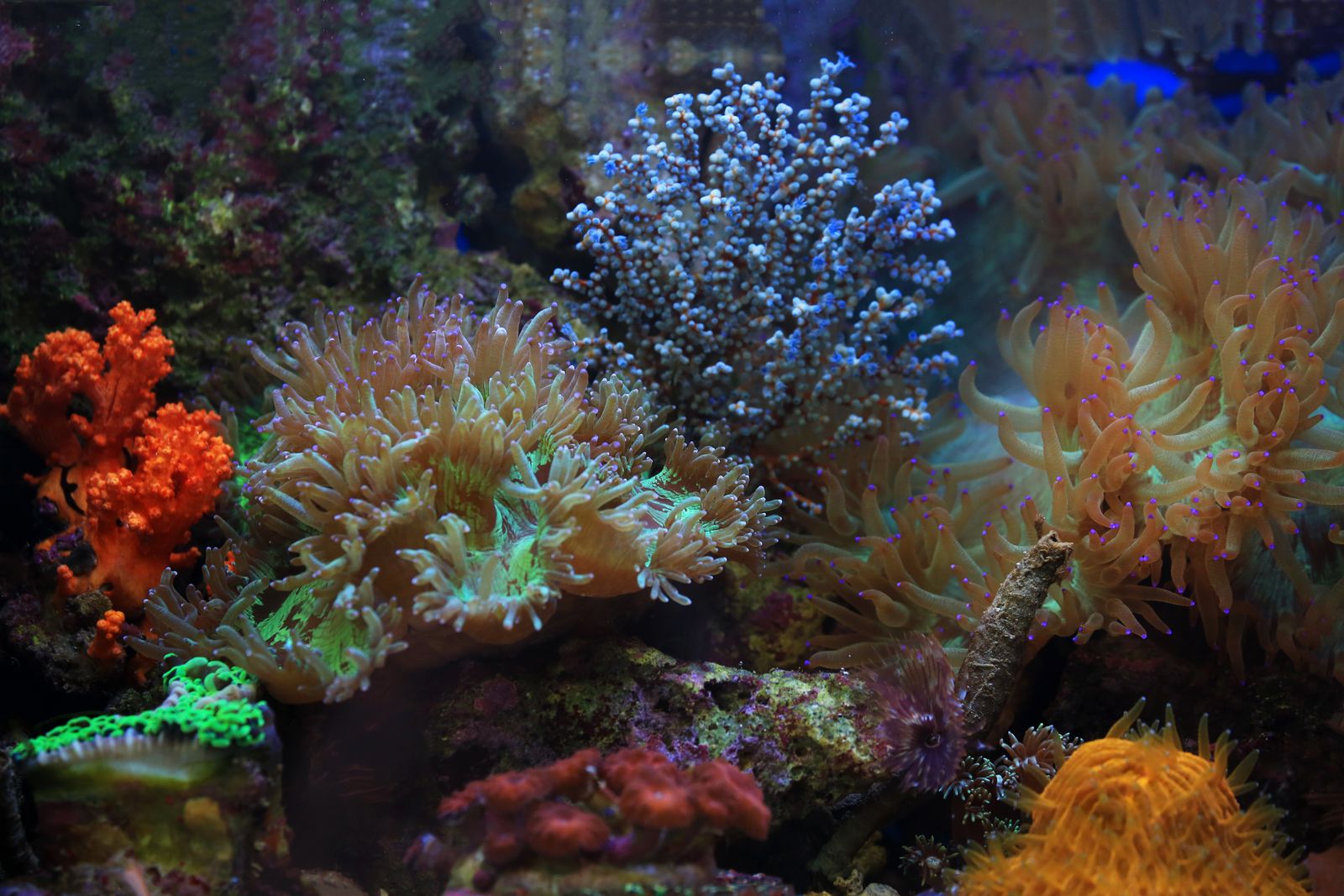
The first corals in a new reef tank should be forgiving: tolerant of small swings in water chemistry, happy under moderate light and quick to show you whether the tank is stable. These are the ones we suggest most often to customers whose tank has been running for at least two months with steady test results.
Soft corals to start
Green star polyps spread across rock in a carpet of bright green and adapt to a wide range of conditions; give them their own rock, because they spread. Zoanthids come in hundreds of colour patterns, grow in small colonies and do well under moderate light. Toadstool leather corals grow into a large mushroom shape and tolerate most beginner tanks.
Mushrooms and a first LPS
Mushroom corals prefer lower light and gentle flow, which makes them a good fit for the lower rocks. When your tests stay steady for a few months, a hammer or frogspawn coral is a good first large-polyp stony coral. Give it space, because it can sting its neighbours.
Placement and flow
Start every new coral low in the tank and move it up over a couple of weeks if it looks closed or pale. Most beginner corals want moderate, indirect flow: enough to move the polyps, not enough to blow them flat. Glue frags to rock with coral glue rather than leaving them loose on the sand.
Keep the numbers steady
Stability matters more than chasing perfect numbers. Test salinity, alkalinity and temperature weekly, top off evaporation with RO/DI water every day and keep a log. Our full reef test costs $15 and covers calcium, alkalinity, magnesium, phosphate and nitrate.
Every coral frag we sell is aquacultured and grown in our own system for at least four weeks before it goes on the rack.