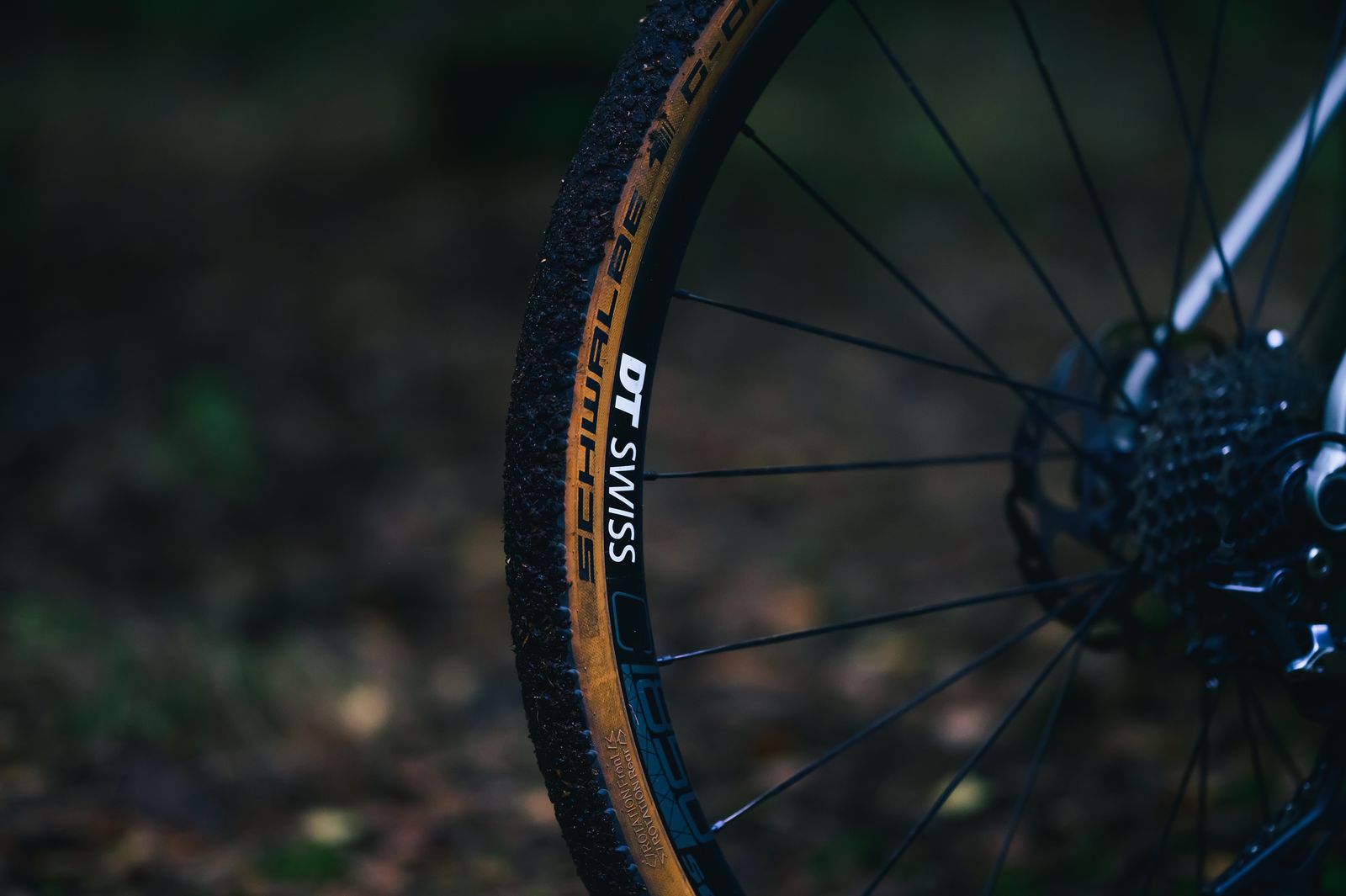
Tubeless tyres are one of the best upgrades for gravel and mountain bikes. They let you run lower pressures for grip and comfort, and the liquid sealant inside plugs most small punctures before you notice them. But the sealant does not last forever.
Why sealant dries out
Sealant is a liquid latex mix that slowly evaporates and forms clumps inside the tyre. In our dry Colorado air it can be mostly gone in two to four months, sooner on bikes stored somewhere warm.
When it has dried, the tyre still holds air, so riders often do not realise the puncture protection has gone until a thorn leaves them walking.
How to check
Shake the wheel next to your ear: you should hear liquid sloshing. For a closer look, let some air out, unseat a short section of the bead and look inside.
If you see a thick rubbery layer or dry clumps but no liquid, it is time to top up.
Topping up
Most tyres need 40 to 90 ml, depending on width. You can add sealant through the valve with a small syringe after removing the valve core, then reinflate and spin the wheel to spread it.
Every few top-ups, it is worth removing the tyre to clean out the old clumps, which add weight and stop the fresh sealant moving freely.
Let us do it
A sealant refresh costs $20 per wheel in our workshop, including the sealant, and a full tubeless setup for wheels that are tubeless-ready costs $45 per wheel plus valves and tape. If your tyres or rims are not designed for tubeless, we will tell you, and a good tube with the right pressure is still a fine choice for many riders.