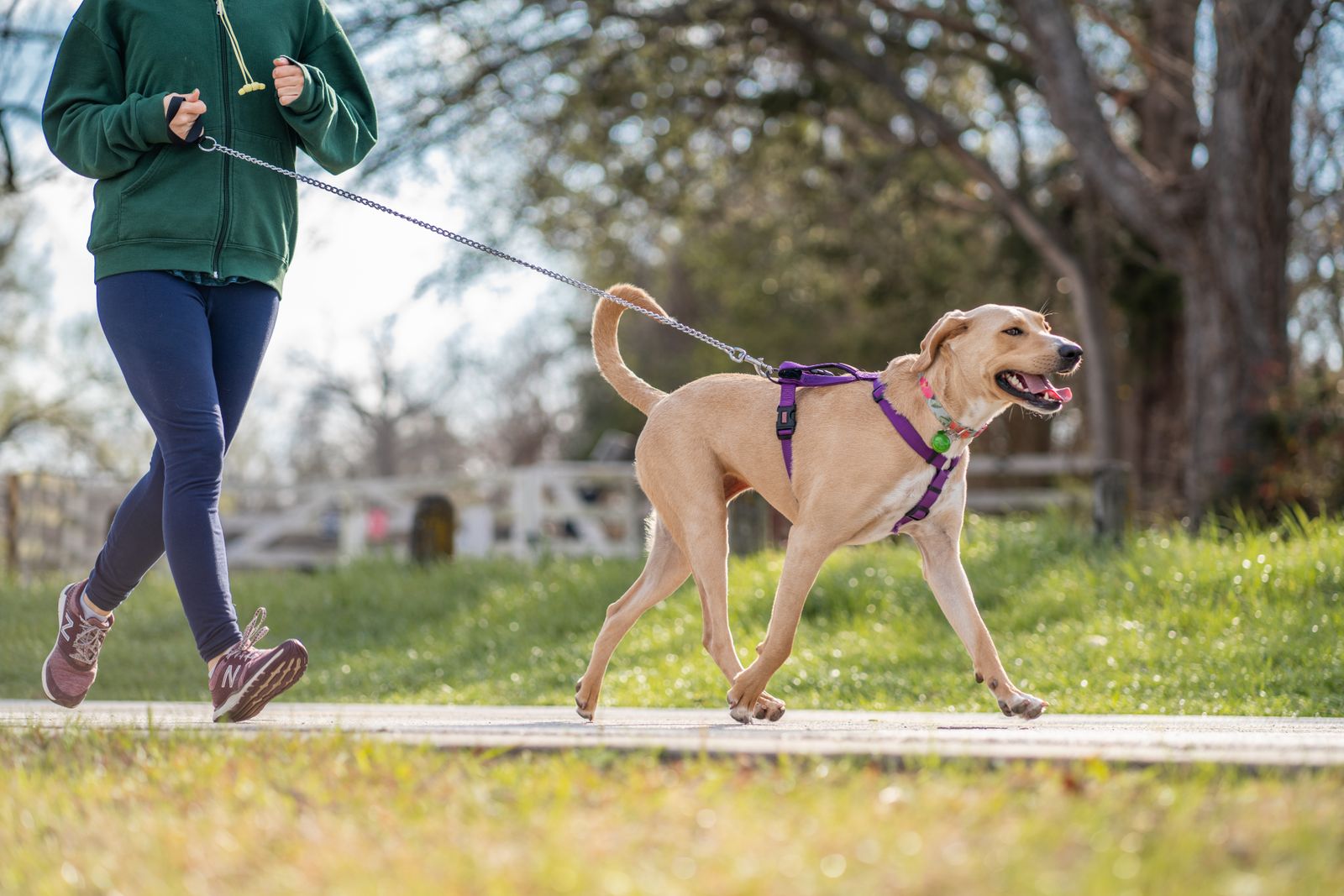
A harness that fits well is comfortable, hard to back out of and does not rub behind the front legs. A harness that does not fit is the reason many dogs pull, twist and slip free on the first walk. Getting the size right takes five minutes and a soft measuring tape.
Measure the chest
Wrap the tape around the widest part of the rib cage, just behind the front legs. Keep it snug but not tight, and take the measurement while your dog is standing. Write it down in inches, and measure twice to be sure.
If your dog is between two sizes, choose the larger one and tighten the straps; you cannot make a small harness bigger.
No tape at home? Use a piece of string or a phone charger cable, mark it with a pen and measure it against a ruler.
Measure the neck
Measure around the base of the neck, where a collar would sit when it slides down towards the shoulders. This is usually two or three inches more than the collar size your dog wears.
Check the fit
Once the harness is on, you should be able to slide two fingers flat under every strap. The chest strap should sit a hand’s width behind the front legs, so it does not rub the armpits.
Walk your dog a few steps and watch the shoulders. If the straps cross the point of the shoulder and restrict the stride, try a different style rather than a different size.
Try it on in the shop
Dogs on a lead are welcome inside, and fitting a harness is one of our favourite jobs. Bring your measurements and your dog, and we will adjust two or three styles until one fits. Puppies grow fast, so check the fit every couple of weeks.