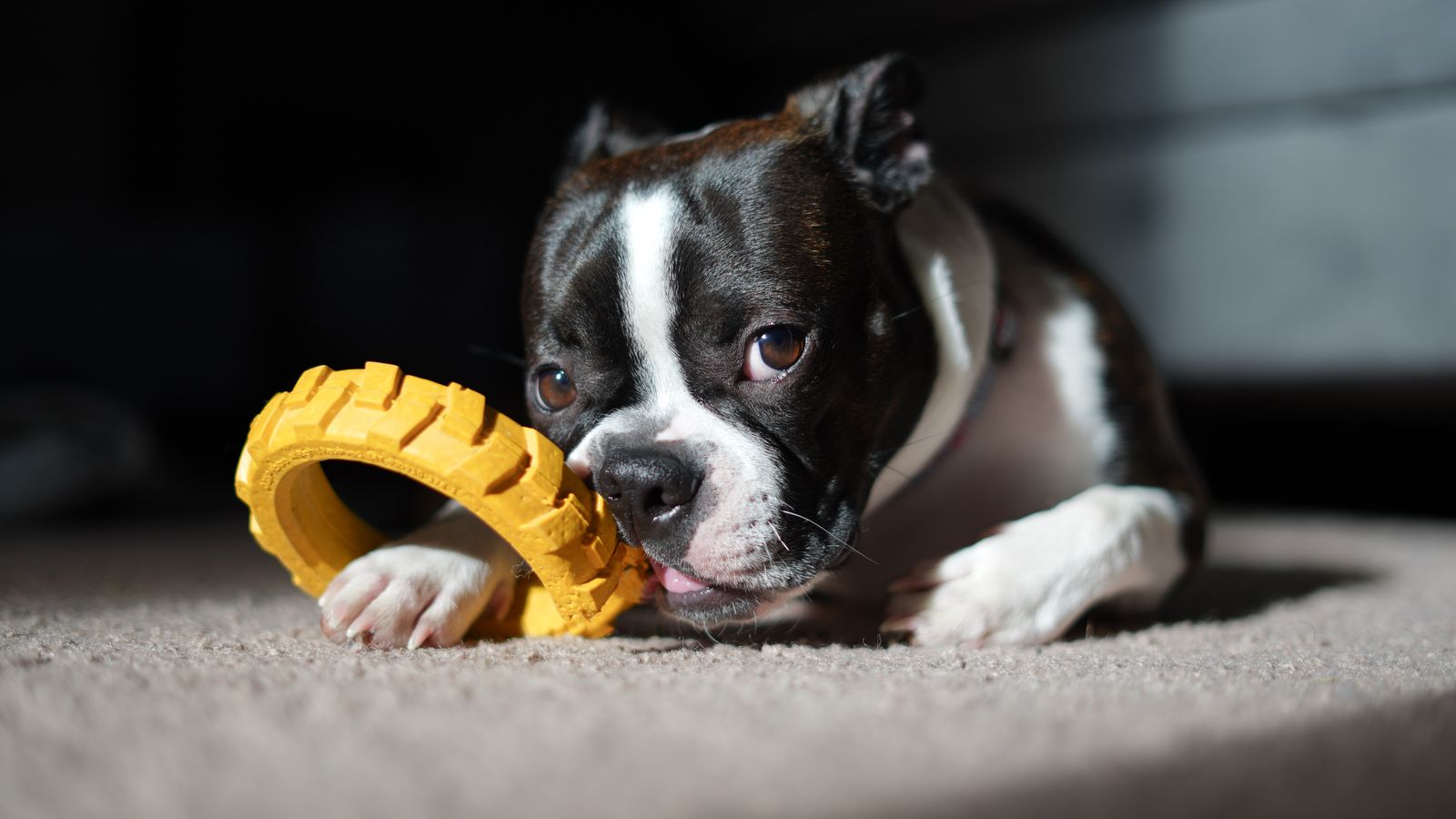
Every week someone brings a toy back to the counter in pieces and asks what to try next. The answer depends far less on the toy than on the dog. Before you buy another one, spend a few minutes watching how your dog plays.
Gentle mouthers
Some dogs carry toys around, cuddle them and lick them. These dogs do well with plush toys, soft rubber balls and squeakers, and those toys can last for months.
Choose toys without small sewn-on parts like plastic eyes, and wash plush toys in a laundry bag once a week.
Shredders
Shredders want to get to the stuffing, and they usually succeed. Look for toys sewn in layers of firm fabric, rope toys and stuffing-free plush. Puzzle toys that hide treats give the same reward with less mess.
Supervise shredders with any new toy for the first few sessions, and take it away once the outer layer is open.
Power chewers
If your dog grinds bones with their back teeth, skip plush entirely. Natural rubber toys, firm nylon bones and thick rope are the safer choices. A good test: if you cannot dent it with your thumbnail, it is probably too hard, and if your dog can chew pieces off, it is too soft.
Sizing and swapping
Pick a toy too big to fit fully inside your dog’s mouth; a ball should be larger than the gap between the back teeth. Rotate three or four toys each week so none of them gets boring.
Check toys every few days and throw away anything cracked or split. Our shop policy is simple: if a chew toy marked for strong chewers splits in the first month, bring it back and we swap it.