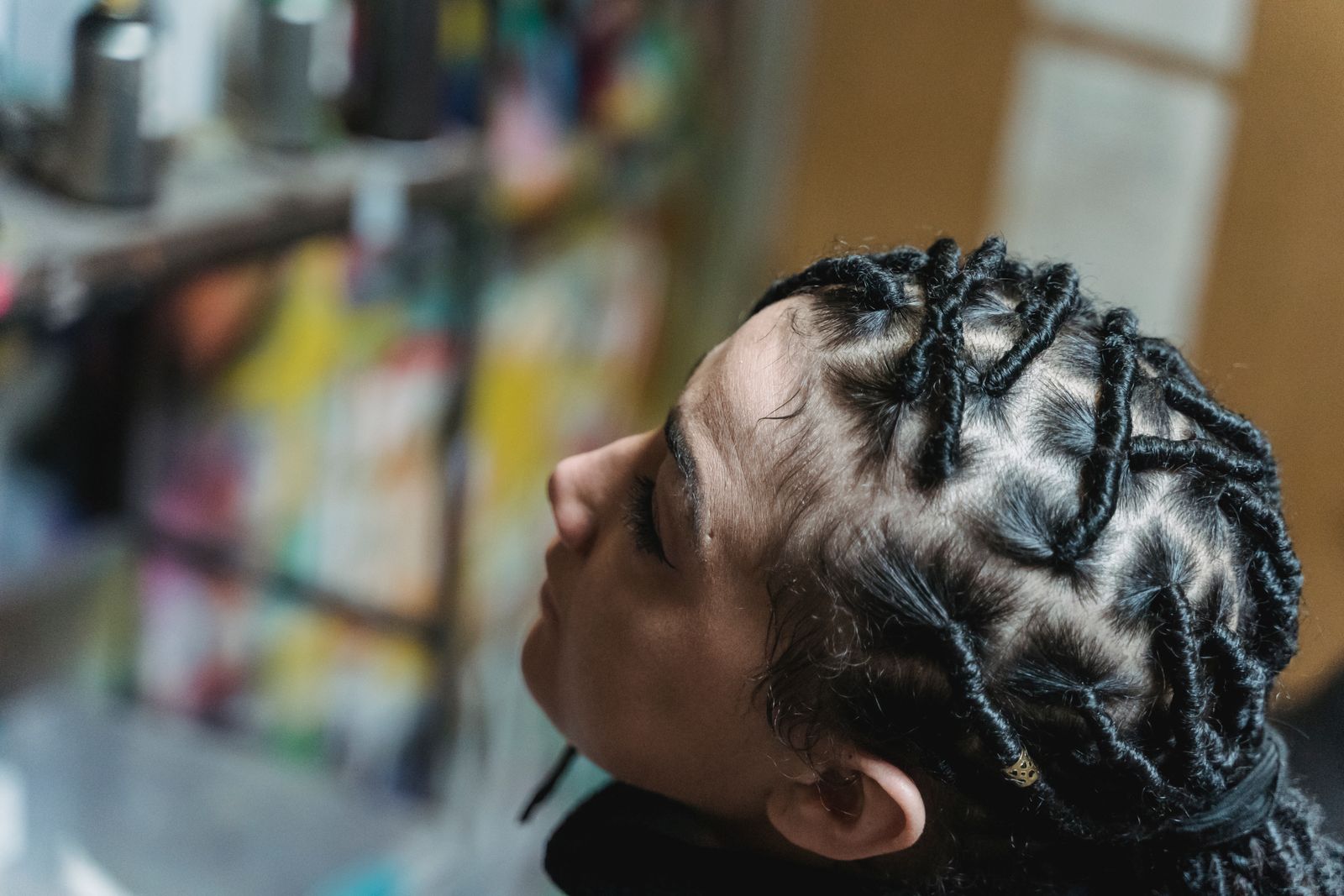
Starting locs is a commitment, and the first year is the part people find most surprising. Your locs will look neat, then fuzzy, then uneven, then suddenly like locs. Every stage is normal, and knowing what is coming makes it easier to leave them alone.
Months one to three: the starter stage
We start locs with comb coils, two-strand twists or interlocking, depending on your texture and how you want them to look. They are neat and defined, and they can unravel if you wash too hard. Wash every one to two weeks with a light shampoo, squeezing rather than scrubbing.
Resist retwisting at home every few days. Too much twisting at the root thins the base of each loc.
Months three to nine: budding
Your hair starts to matt inside each section, and you will notice small bumps, the buds, along the length. Frizz is part of this stage. It is the hair knitting itself together, not a sign that something is wrong.
A retwist every four to six weeks keeps the roots neat while the locs form. Longer gaps are fine if you like a freer look.
Months nine to twelve: settling
Locs begin to drop and hang rather than stand up, and they feel firmer in the middle. Some locs grow faster or thicker than others, and a few may try to join. We separate them at each visit so they keep the size you chose.
What we tell every new loc client
Keep products light, sleep on a satin pillowcase or bonnet, and let your hair dry fully after every wash. Most of all, be patient. Simone started her own locs in 2009 and still says the awkward months were worth it.