Every bean on our roast board has a row of five dots next to it. One dot is our lightest roast, five our darkest. The dots are not a ranking: they tell you what kind of cup to expect, so you can choose before you taste.
What happens in the roaster
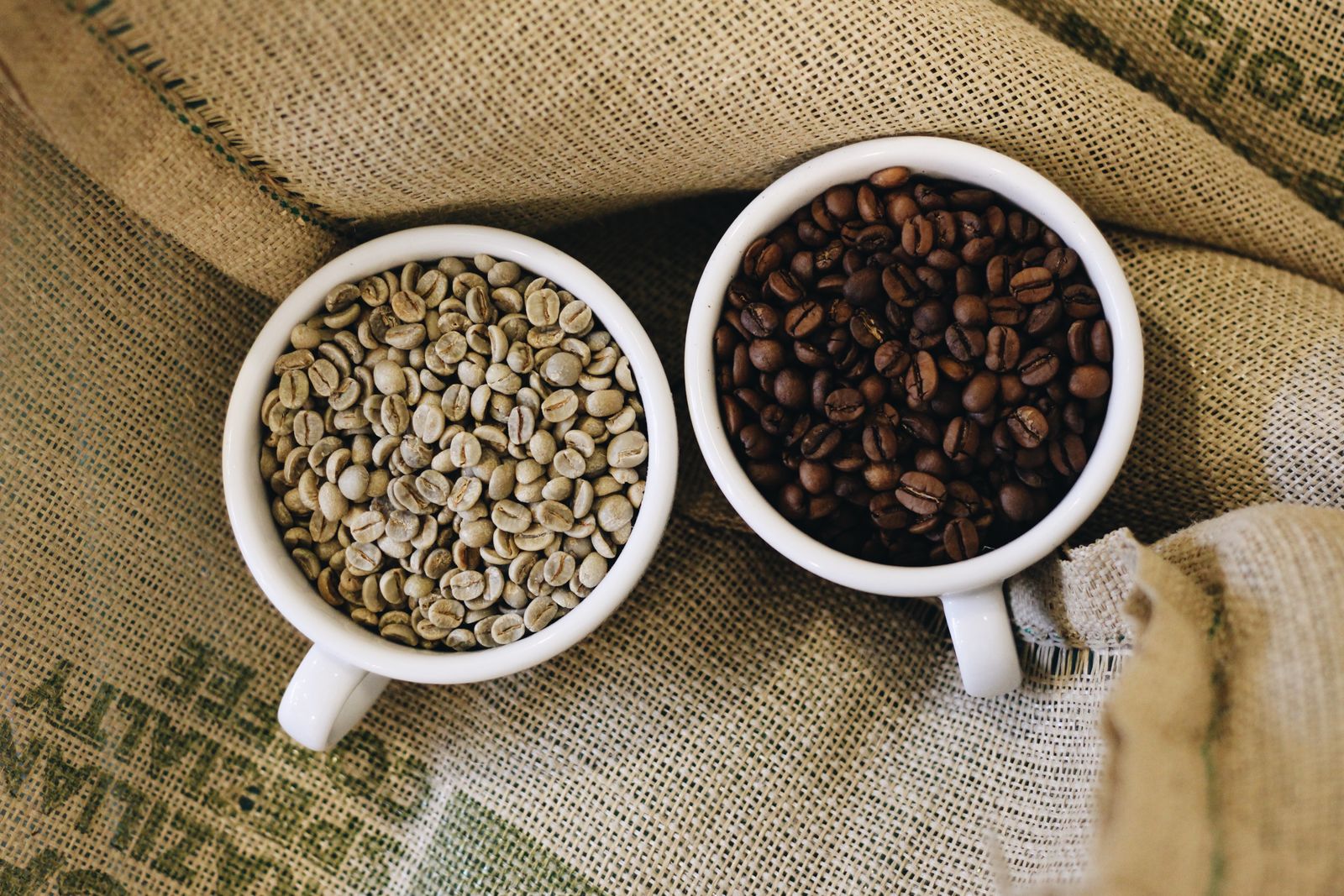
Green coffee is hard, grassy and pale. In the roaster it dries, turns yellow, then brown, and at around nine minutes it cracks audibly, a little like popcorn. Sugars caramelise and hundreds of aroma compounds form along the way.
The longer and hotter the roast, the more those original flavours give way to flavours from the roasting itself: toast, chocolate and, eventually, smoke.
Light roasts
We stop light roasts shortly after the first crack. They keep the character of the farm and the variety: fruit, flowers, tea-like textures and a bright acidity. Our Gedeb natural tastes of blueberry and jasmine because we roast it light.
Light roasts shine as pour-over and batch brew. As espresso they can taste sharp unless the barista dials them in carefully.
Medium and darker roasts
Medium roasts balance the two: fruit is still there, but with more caramel and a rounder body. Our Huehuetenango sits here, with plum and toffee notes.
Our house espresso, the Cerrado, is roasted medium-dark. It loses some fruit, gains chocolate and nut flavours and stands up to milk, which is why it goes into most of our lattes.
How to choose
If you drink your coffee black, try a light or medium roast first. If you add milk, a medium-dark bean will taste like coffee through the milk. And if you are not sure, ask for a taste at the counter: we always have the board open.