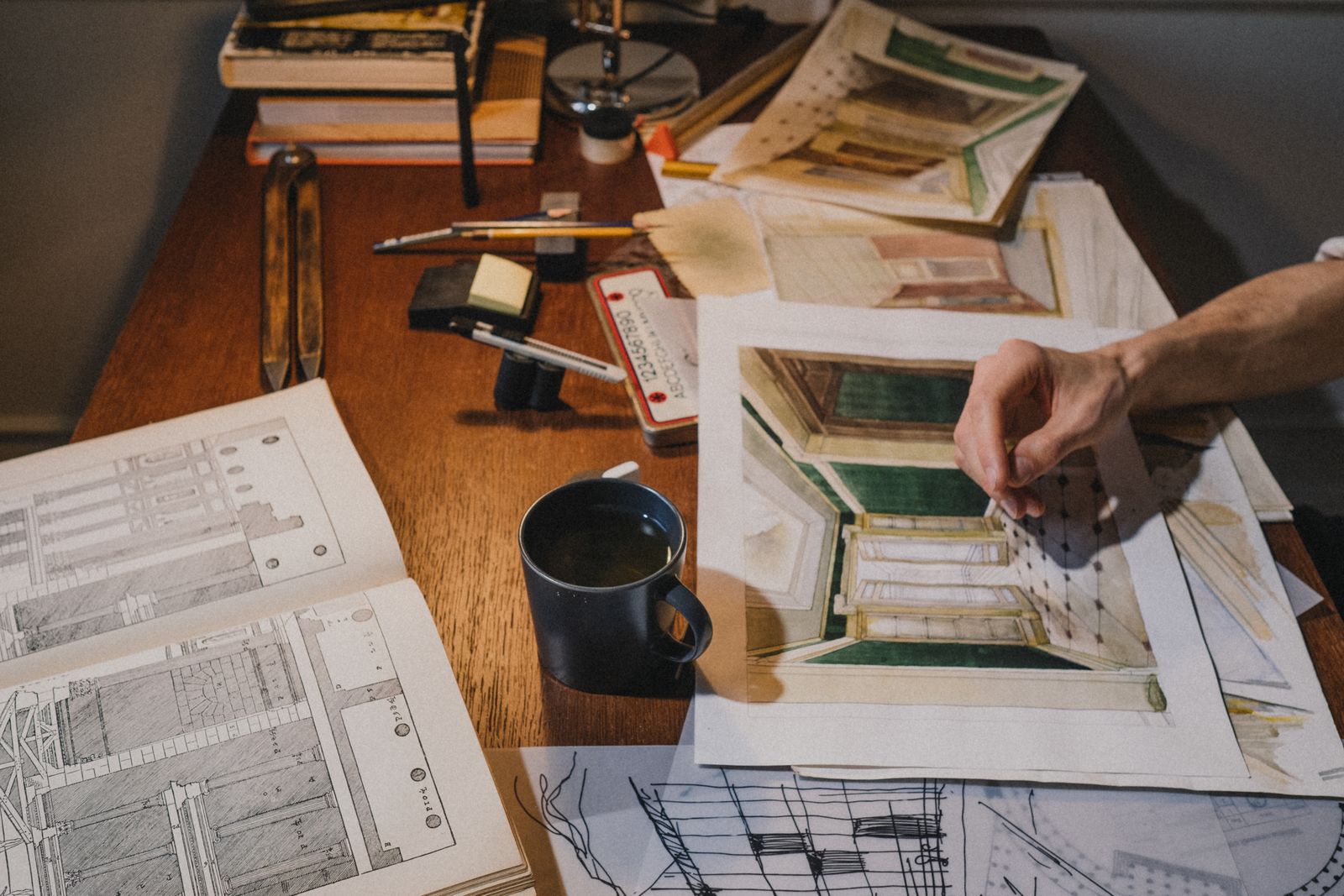
Every term, the students who improve the most are rarely the ones with the most talent on day one. They are the ones who drew a little between classes. A sketchbook habit does not need an hour a day or a beautiful book. It needs ten minutes, a pencil and a rule you can keep on a bad day.
Pick a cheap book and a time
Buy a sketchbook you are not afraid to ruin. An expensive book makes every page feel like an exam, and you will skip it. A plain A5 book with 100 pages of drawing paper is ideal.
Then tie the habit to something you already do: the first coffee, the bus ride, the ten minutes before the children wake up. A fixed time beats motivation every week of the year.
Draw what is in front of you
Do not wait for an interesting subject. Your mug, your shoes, the corner of the kitchen and your own left hand are all good practice. Ordinary objects teach you to look at shapes, edges and shadows instead of the idea of a thing.
Set a timer. When it rings, stop, even in the middle of a line. Stopping on time keeps the habit light enough to come back to tomorrow.
Use three simple exercises
Blind contour: draw an object without looking at the page. The result looks strange, and that is the point; you are training the eye, not the hand.
Five-minute value studies: squint at a scene and draw only three tones, light, middle and dark. Gesture drawings: thirty-second sketches of people in a café or a park, catching the pose, not the detail.
Look back once a month
At the end of each month, flip through the book from the first page. Most students are surprised by how much their lines have changed in four weeks. Bring the book to class too: our teachers love to see it, and it often shapes what we suggest you try next.