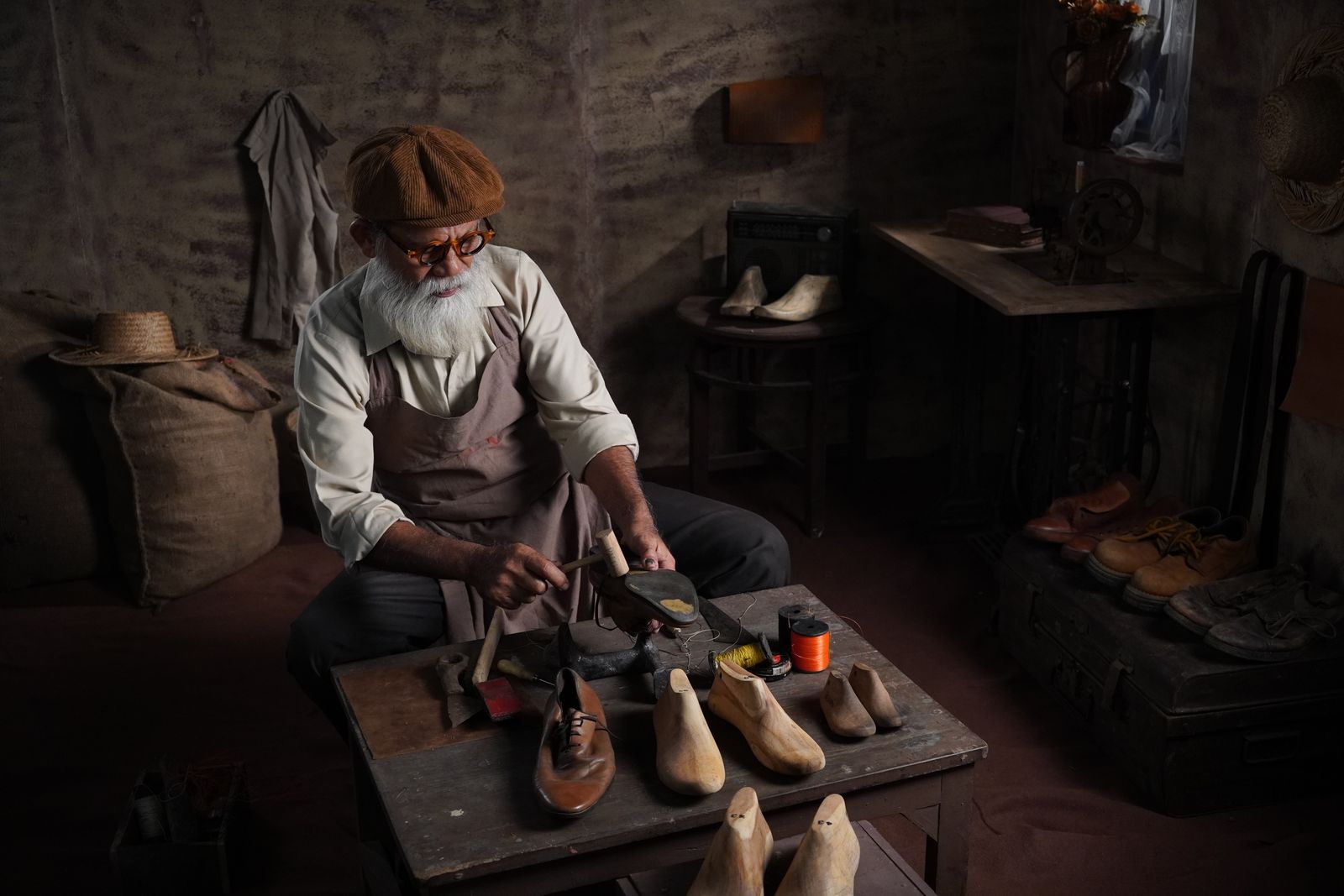
Almost every week someone puts a brand-new pair on the counter and asks whether we can make it fit. Often we can, but it depends on what the shoe is made of and where it pinches.
Width is easier than length
Leather uppers can be stretched in width by about a quarter to half a size. We soften the leather with a stretching liquid, fit an adjustable wooden stretcher and leave it to work for a day or two, checking as we go.
Length is harder. The sole and the stiff toe box hold the shape, so we can usually gain only a few millimetres. If your toes touch the end, a longer shoe is the honest answer.
Spot stretching
A bunion, a hammer toe or a single tight seam can be eased with a ball-and-ring tool that pushes out a small dome in the leather. This is often the most effective stretch of all, because it only changes the place that hurts.
If your podiatrist has given you a measurement for a heel lift or a sole build-up, we can make it to that measurement. We do not advise on the medical side; we follow what you are prescribed.
Materials that will not move
Patent leather can crack if pushed too far, so we stretch it gently and only a little. Synthetic uppers and most mesh sneakers barely stretch at all. We tell you before we try, and we do not charge if we think it will not work.
What it costs
Stretching starts at $20 a pair and usually takes one or two days. Bring the socks you plan to wear, and the insoles or orthotics if you use them, so we stretch for the fit you will actually walk in.