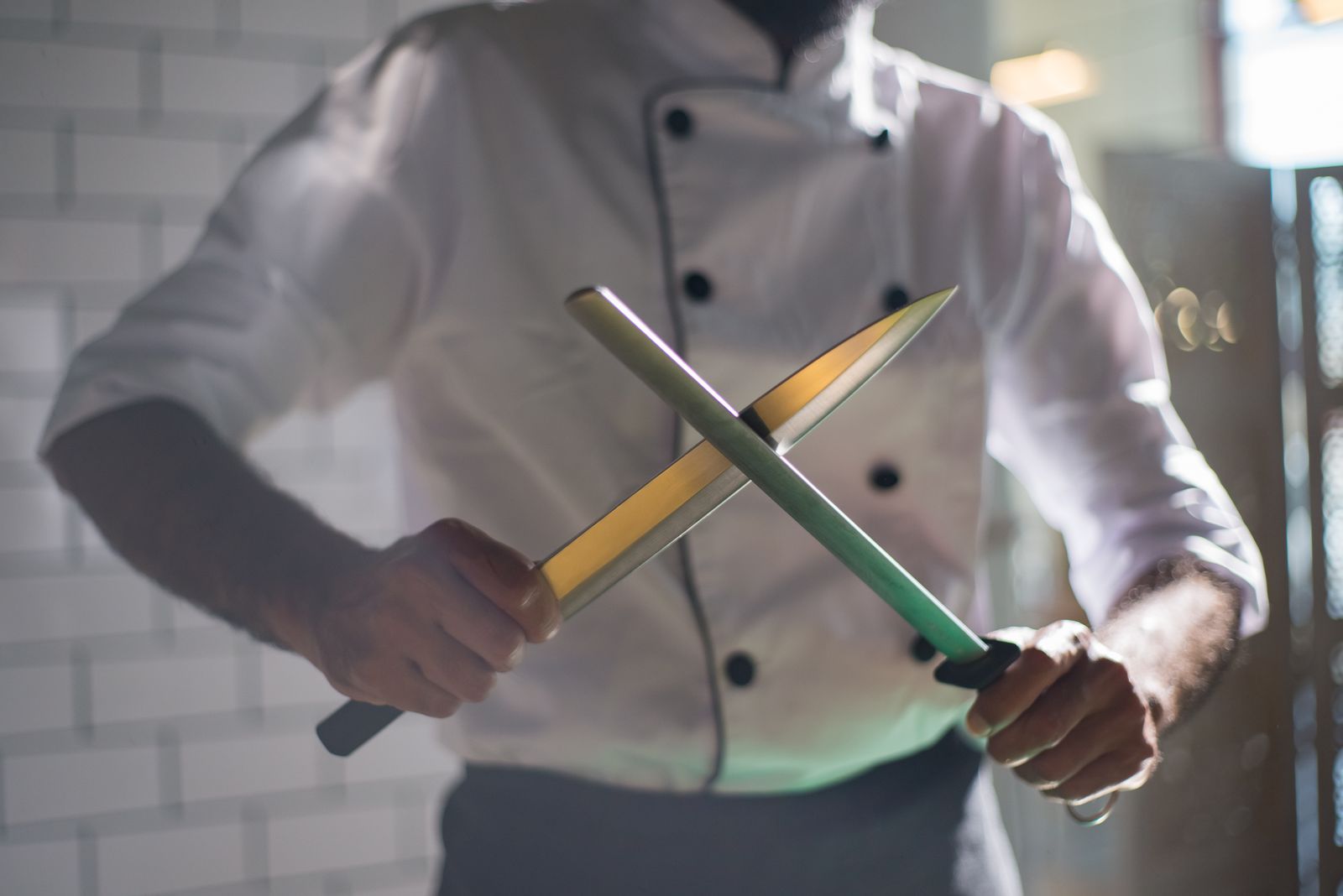
Almost every knife block comes with a long steel rod, and almost nobody uses it correctly. It is not a sharpener. Knowing the difference keeps your knives working for years.
What honing does
As you cut, the very thin edge of the blade bends slightly to one side. Honing straightens it again. A few light strokes on a steel before each use bring back an edge that feels dull but is not worn.
Hold the steel upright with its tip on a towel, place the heel of the knife against it at a slight angle, about the width of two stacked coins, and draw the blade down and towards you. Six strokes a side is plenty.
What sharpening does
Sharpening grinds away metal to make a new edge. A knife used every day needs it once or twice a year; a knife that has been neglected may need it now.
Whetstones give the best result but take practice. A good pull-through sharpener is fine for most home cooks, used gently.
The tomato test
Lay a ripe tomato on the board and slice it without holding it. A sharp knife bites the skin at once. If the knife slides or squashes the tomato, hone it and try again. If it still slides, it needs sharpening.
Look after the edge
Cut on wood or plastic boards, never on glass, stone or plates. Wash knives by hand and dry them at once; dishwashers dull and chip edges.
Store them on a magnetic strip or in a block, not loose in a drawer where the edges knock against other tools.
In our knife skills class you hone your own knife at the start and take home a one-page honing guide.