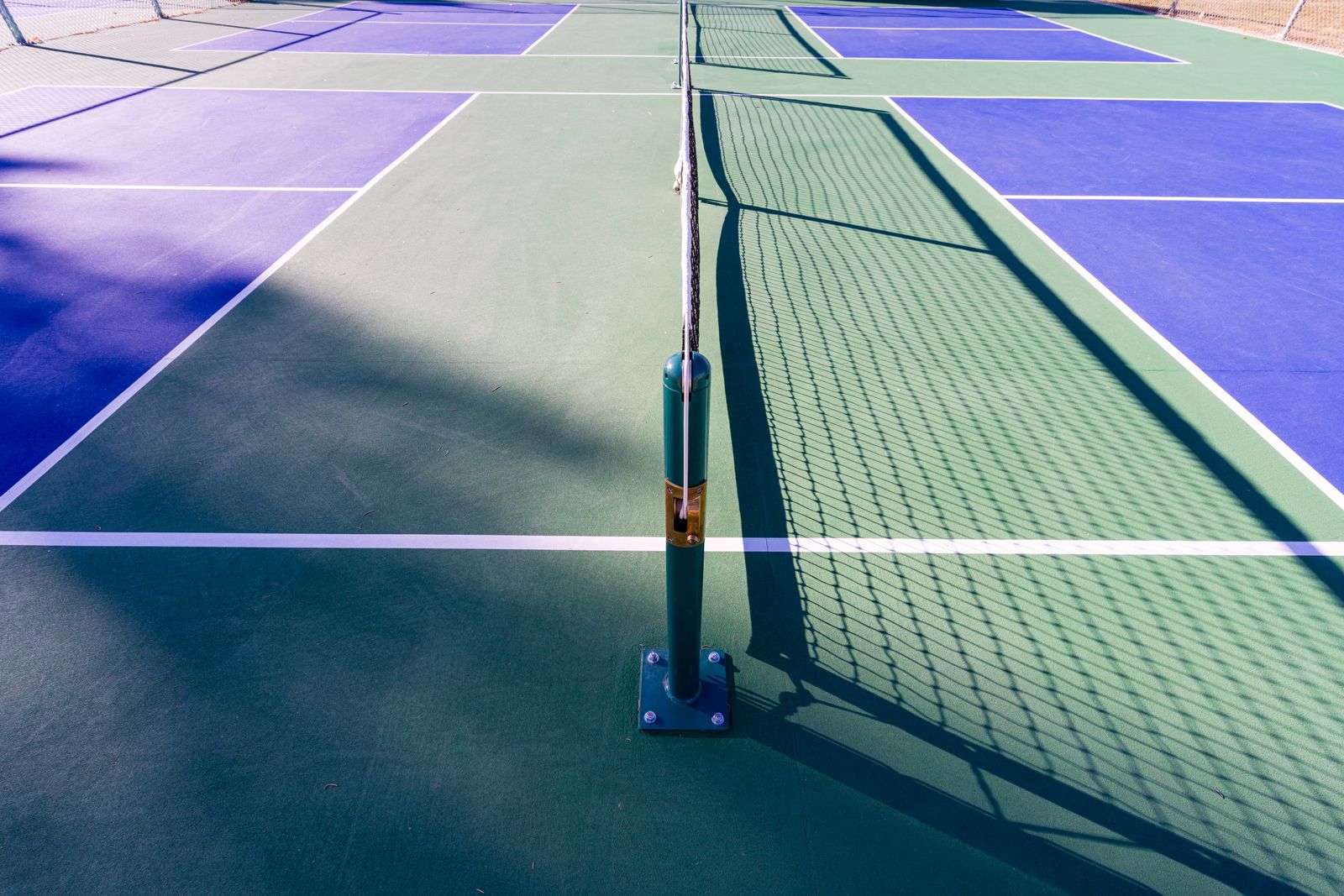
The kitchen is the seven-foot zone on each side of the net, marked by the line closest to it. Its official name is the non-volley zone, and it is the rule that makes pickleball feel so different from tennis. Once it clicks, the whole game slows down in a good way.
The rule in one sentence
You may not volley the ball, which means hit it before it bounces, while you are standing in the kitchen or touching its line. That is it. You can walk into the kitchen whenever you like, and you can stand there all day, as long as you let the ball bounce before you hit it.
The three mistakes we see most
The first is the follow-through. A player volleys from just behind the line, then their momentum carries them onto it. That is still a fault, even if the ball has already landed on the other side.
The second is the paddle or hat that falls into the kitchen after a volley. Anything you are wearing or carrying counts as you. The third is staying in the kitchen after a dink and then volleying the next ball. Step back out with both feet before you volley again.
Why the kitchen matters
Without the kitchen, the tallest player would stand at the net and smash every ball. With it, players have to win points with soft shots called dinks that land in the opponents’ kitchen. That is where the long, friendly rallies come from, and where the game gets its name in our club.
Practice it in a clinic
Our Beginner clinic spends a whole section on footwork at the kitchen line. Keisha uses chalk dots to show where to stand, and by the end most players stop thinking about the rule at all.