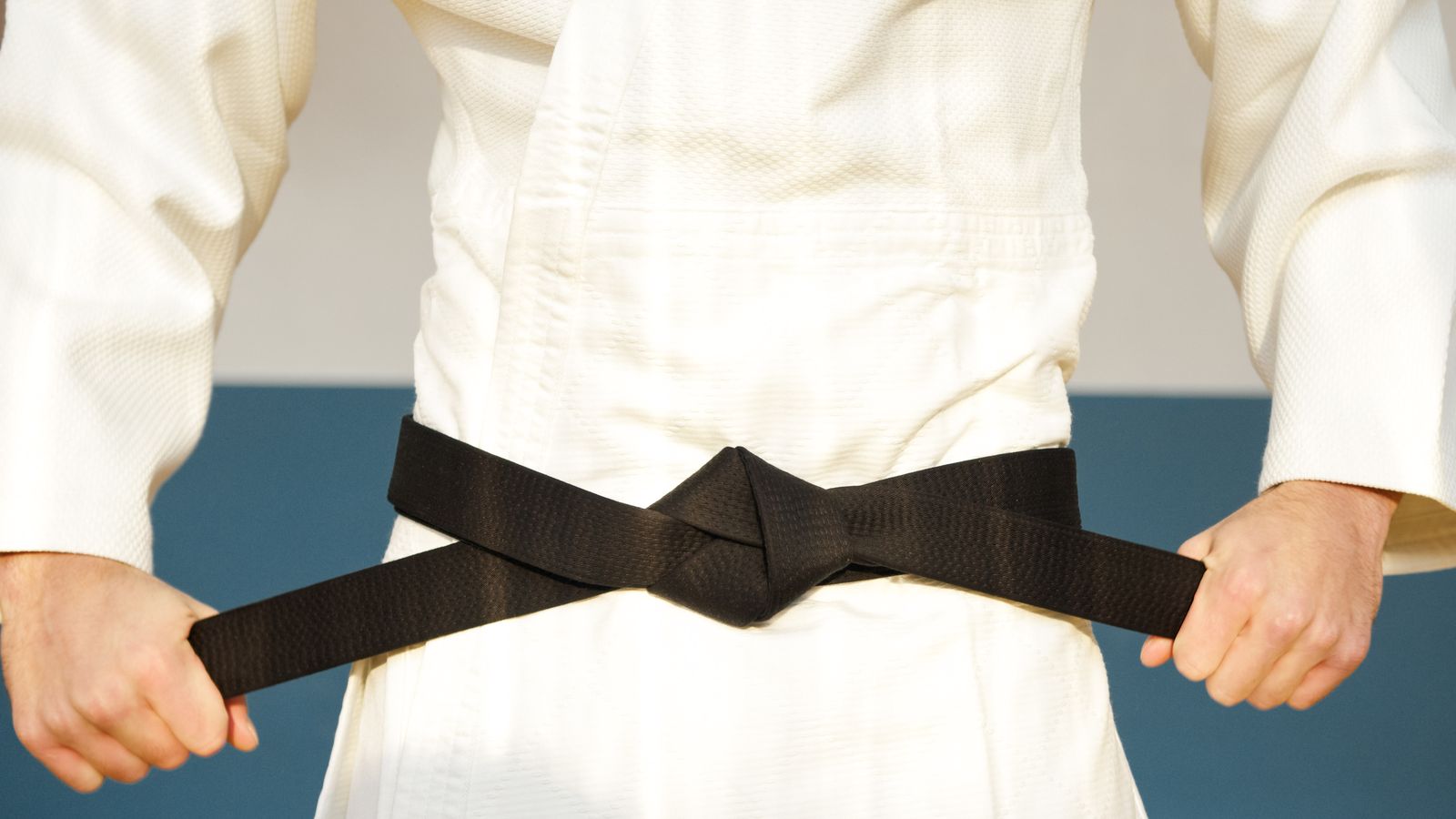
Belts are the part of martial arts that everyone recognises, and the part most families ask about first. At our dojo a belt shows what a student can do with control and respect. It is never a reward for attendance alone, and it is never promised by a date.
Stripes between belts
Between gradings, kids collect coloured tape stripes on the end of their belt. Each stripe marks one skill learned: a set of blocks, a breakfall, a short kata. Stripes are given in normal classes, so children see steady progress without waiting months for a big day.
Who is invited to grade
When a student has their stripes and the instructor sees the skills stay steady under a little pressure, we invite them to the next grading. Gradings run on a Saturday every three months. Students who are not invited this time get a short note on what to practise; they are not failing, just not ready yet.
Adults in Brazilian jiu-jitsu do not take a formal test. Luis promotes students in class when their technique and control are consistent over time.
What a grading looks like
A grading is a calm, structured class with parents watching. Students show the techniques for their next belt, a kata or a set of drills, and some partner work. The panel looks at technique, control and attitude together. Everyone who grades gets written feedback.
Kids colour-belt gradings cost $35, which covers the new belt and a certificate.
Typical times, not targets
For a child training twice a week, the gap between colour belts is usually three to nine months, and longer at the higher belts. Black belt typically takes five years or more. Illness, holidays, a growth spurt or a new school all change the pace, and that is fine.
The best thing a parent can do is praise effort and regular training rather than the colour of the belt. The belts follow on their own.