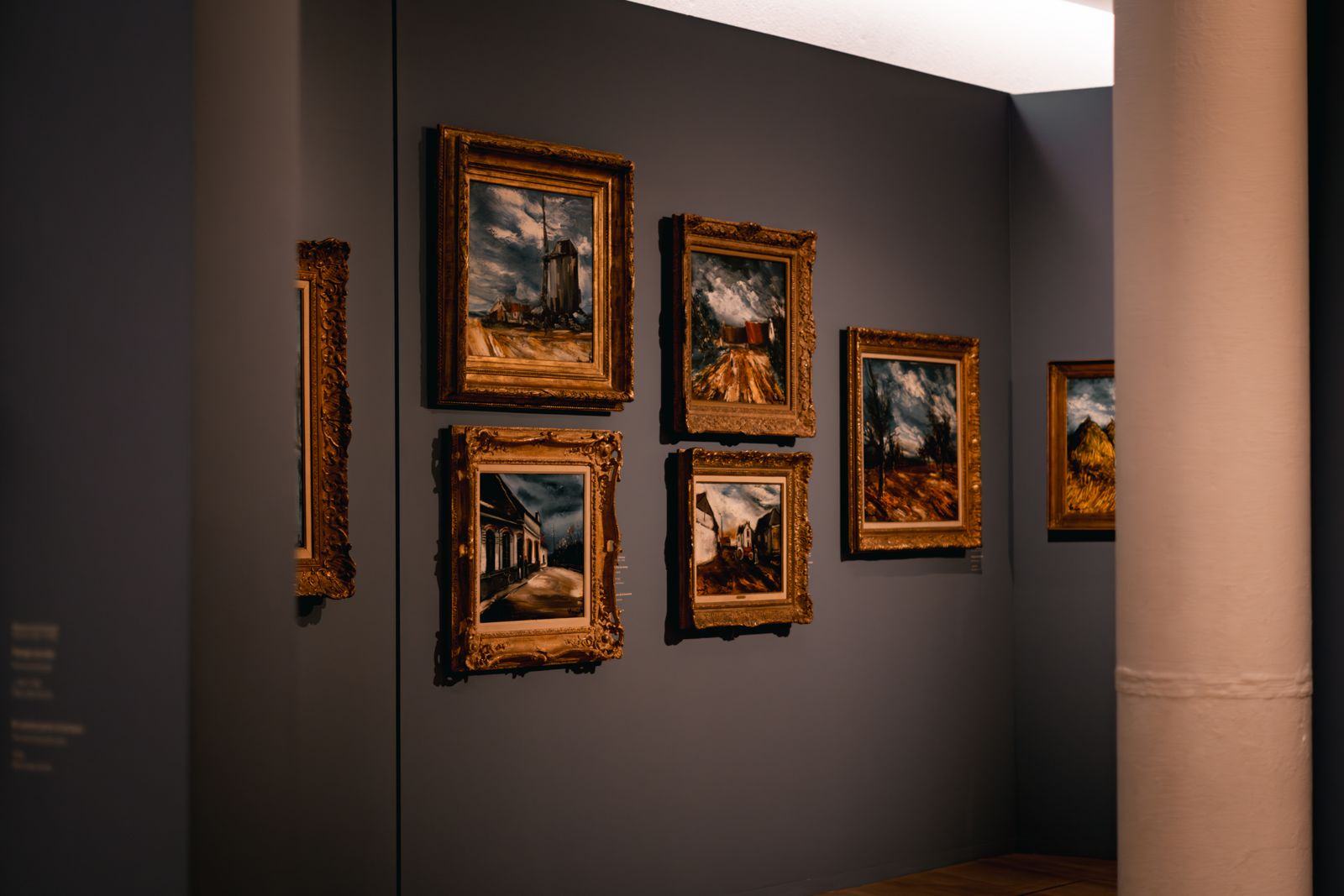
When visitors walk into the main gallery, the paintings look as if they have always been there. Getting them onto the walls took two days, eleven volunteers and a surprising amount of math. This is how we installed Tidewater Light, Rosa Albán’s show of paintings of the harbor.
Planning on paper first
A month before the opening, our gallery coordinator and the artist laid out paper rectangles the size of every painting on the floor of the empty gallery. They moved them for an afternoon until the order told a story, from early morning light at the harbor to evening.
Then they measured every wall and drew the plan to scale, including the label positions and the space in front of the windows where the light is too strong for paintings.
The magic height
Most galleries hang paintings so the center of each one sits at about 57 inches from the floor, roughly eye level for an adult. It keeps a wall of different sizes looking calm. For our student shows we lower it a few inches so younger artists can see their own work properly.
Two days with a level
Day one is patching, painting the walls and measuring. Volunteers fill the holes from the last show, roll on fresh white paint and mark every hook position with tape. Day two is hanging: two people lift, one checks the level and one stands back and says left, right, stop.
Light and labels
Last come the lights and the wall labels. Each spotlight is aimed so that it does not throw glare on the glass or a shadow from the frame. Labels go to the right of each work, at the same height across the room. Then the floor is swept, the doors open, and nobody sees the patching paste.