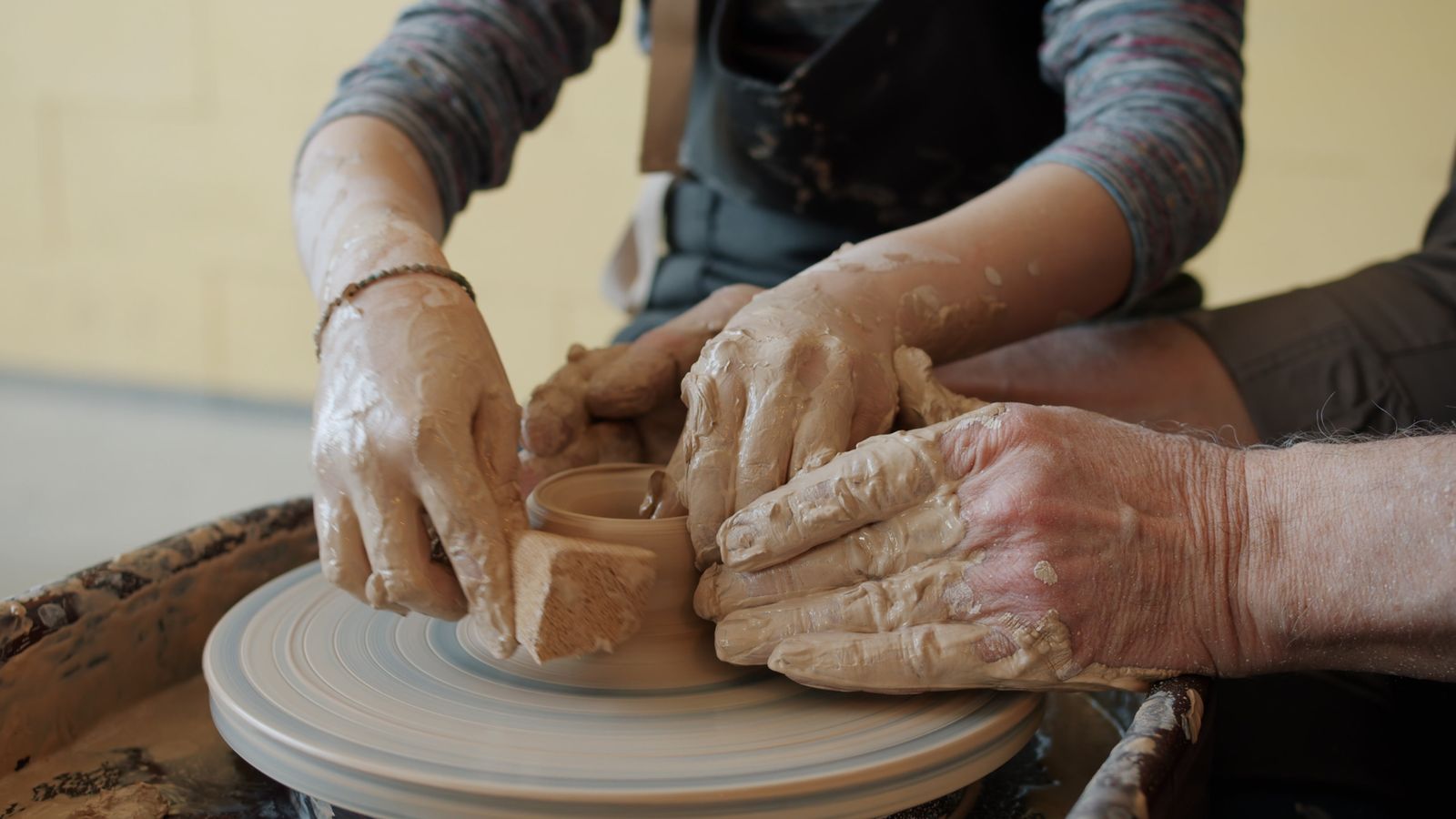
Every term about forty people sit down at one of our twelve pottery wheels for the first time. Most arrive nervous, convinced the clay will fly across the room. By the end of week one almost all of them have made a small, wobbly, very real cylinder, and they are hooked.
What to wear and bring
Wear clothes you do not mind getting muddy and shoes with closed toes. Clay dust washes out of cotton easily; it is harder to remove from wool and suede. Tie back long hair and take off rings and bracelets before you start.
Keep your nails short if you can. Long nails dig grooves into the spinning clay, and it is the most common reason a first pot collapses. Everything else, from aprons and sponges to tools and clay, is waiting at your wheel.
Centering comes first
The first half hour is about one skill: centering. You press a lump of clay into the middle of the spinning wheel head until it runs smooth and true under your hands. It feels impossible, then suddenly it works.
Your teaching artist moves from wheel to wheel and puts their hands over yours. Do not worry if your clay keeps drifting. Nobody in week one is expected to get it every time.
Your first pots
Once the clay is centered you open it with your thumbs and pull up the walls. Most first pieces are short cups or small bowls, and many get squashed and started again. That is part of learning, and reclaimed clay goes back into the bin.
Pieces you want to keep dry on a shelf with your name on it. In week three you trim them, in week five you glaze them, and two firings later you take home something you made from mud.
After the class
Students of Wheel throwing I get two free open studio visits during the term to practise between classes. Many go on to Wheel throwing II or a ceramics studio membership, with a shelf, kiln firings and twenty hours a week of wheel time.