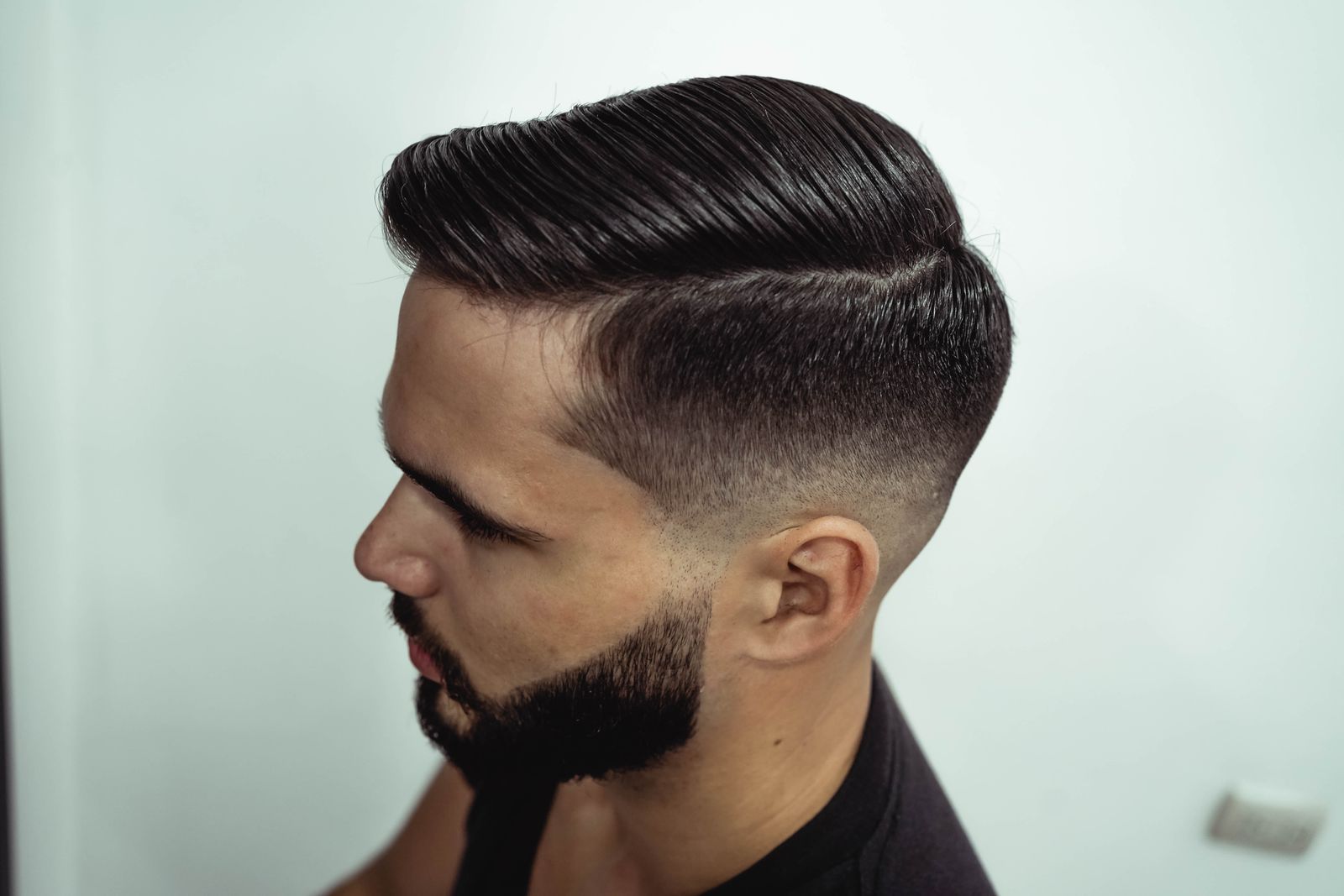
Most mix-ups in a barber chair start with words. One person’s low fade is another person’s taper, and “short on the sides” can mean anything from a number four to bare skin. A little vocabulary and a photo go a long way.
Where the fade starts
A fade is a gradual change from short to longer hair. Its height is where the shortest part stops. A low fade stays just above the ear and follows the neckline. A mid fade reaches the temple. A high fade climbs to the top of the head, where the sides meet the top, and gives the most contrast.
How short it goes
The bottom of the fade can start at skin, which we take down with a foil shaver, or at a guard number. A zero fade is very short stubble, and a number one leaves about three millimetres. If you are not sure, start a guard higher: it is easy to go shorter next time and impossible to put hair back.
Fade or taper?
A taper changes length only at the sideburns and the neckline. The rest of the sides stay at one length, usually cut with scissors or a longer guard. It suits strict office dress codes, curly hair you want to keep, and anyone growing a cut out.
What to bring
A photo of the back and the side of a cut you like is worth more than any description. Bring two if you can, and tell your barber what you did not like about your last haircut. Mention cowlicks, a scar or a spot where the hair grows thinner, so the blend can work around it.
At our shop every cut starts with a short consultation in the mirror. We repeat back what we heard, show you the guard we plan to use and only then pick up the clippers.