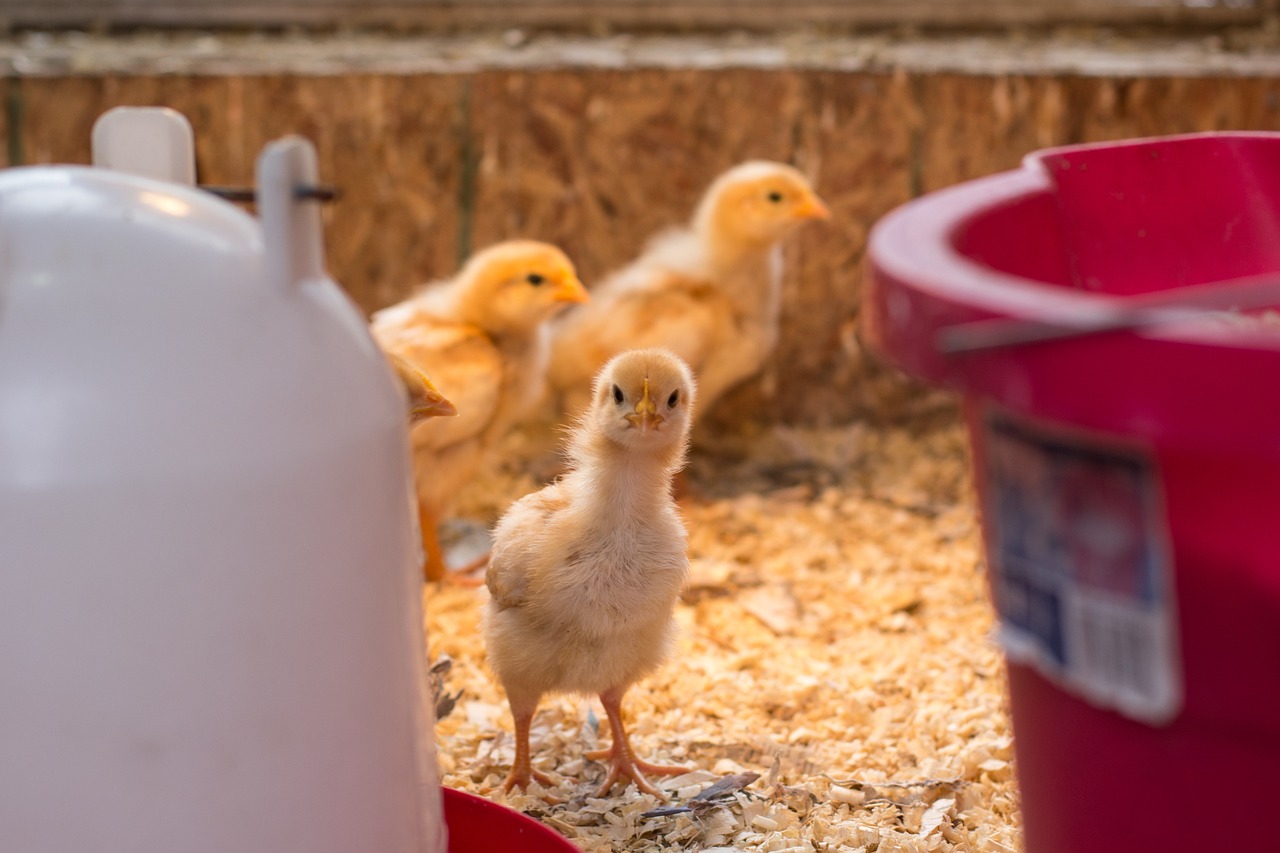
Every spring we send around three thousand chicks home in ventilated boxes, and the first question at the counter is always the same: what do I need before I get them home? The answer is a brooder that is warm, dry and set up a day early, so the temperature is steady when the chicks arrive.
Space and the box
A large plastic tote, a stock tank or a cardboard box with tall sides all work for the first two weeks. Plan on about half a square foot per chick to start, and a full square foot by week four. Keep the brooder in a garage or a shed with no draughts, away from dogs and cats.
Put a wire or mesh lid on top. By the second week, chicks start testing their wings, and a curious cat is a real risk.
Heat
Chicks need about 95°F under the heat source in the first week, dropping by about five degrees a week. A heat plate is the safer choice because it cannot fall into the bedding; a heat lamp must be clamped and chained at two points.
Watch the chicks rather than the thermometer. Huddled under the heat means too cold; pressed against the far walls means too hot; spread out and busy means about right.
Bedding, feed and water
Use large-flake pine shavings, never cedar, and cover them with paper towels for the first three days so the chicks learn what food is. Fill a chick feeder with starter-grower crumbles and a quart waterer with room-temperature water.
Dip each chick’s beak in the water as you put it in. That one dip is often all it takes.
Our brooder kit
Our brooder kit has a heat plate, feeder, waterer, a bale of shavings and a 25 lb bag of starter for $89. Check on the chicks every few hours on day one. If a chick seems weak or has a pasted vent, call us or a poultry vet. Ask your vet about your pet’s health.