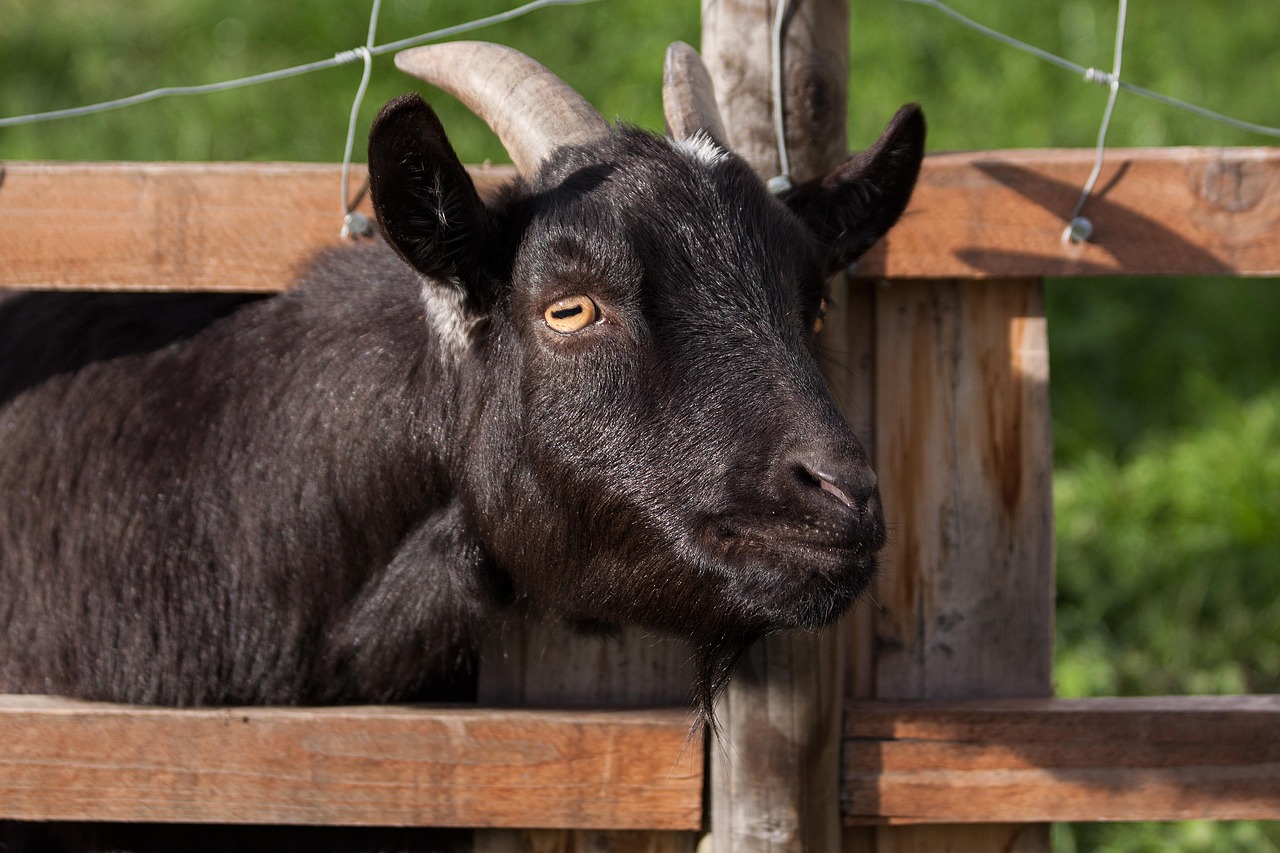
Goats are curious, good climbers and very patient, which is why they are the animal customers most often ask us about fencing for. A fence that holds cattle will rarely hold a goat for long.
Woven wire, 4 feet high
For a permanent goat pasture, we suggest 4-foot woven wire with 4-by-4-inch openings, small enough that a goat cannot put its head through and get stuck. Stretch it tight on wooden corner and gate posts, with T-posts every 8 to 10 feet in between.
Add a strand of electric wire at nose height on the inside if your goats like to lean or climb. It teaches them to leave the fence alone.
Cattle panels for small pens
For a kidding pen or a small yard, 16-foot cattle panels on T-posts are quick to put up and very strong. The openings are larger at the top, so choose goat panels with smaller openings at the bottom if you have kids.
Electric netting for rotation
Electric netting moves easily and works well for rotating goats across a field, as long as it stays powered and the grass under it is kept short. A dead fence is just a net, and goats learn quickly when it is off.
Gates, corners and the gaps
Most escapes happen at gates and corners. Hang gates with no more than 3 inches underneath, and check the fence line after every storm and snowmelt.
Bring your field measurements to the counter and we will put together a list of rolls, posts, clips and a gate, priced before you load. If a goat gets caught or cut on a fence, call your vet the same day. Ask your vet about your pet’s health.