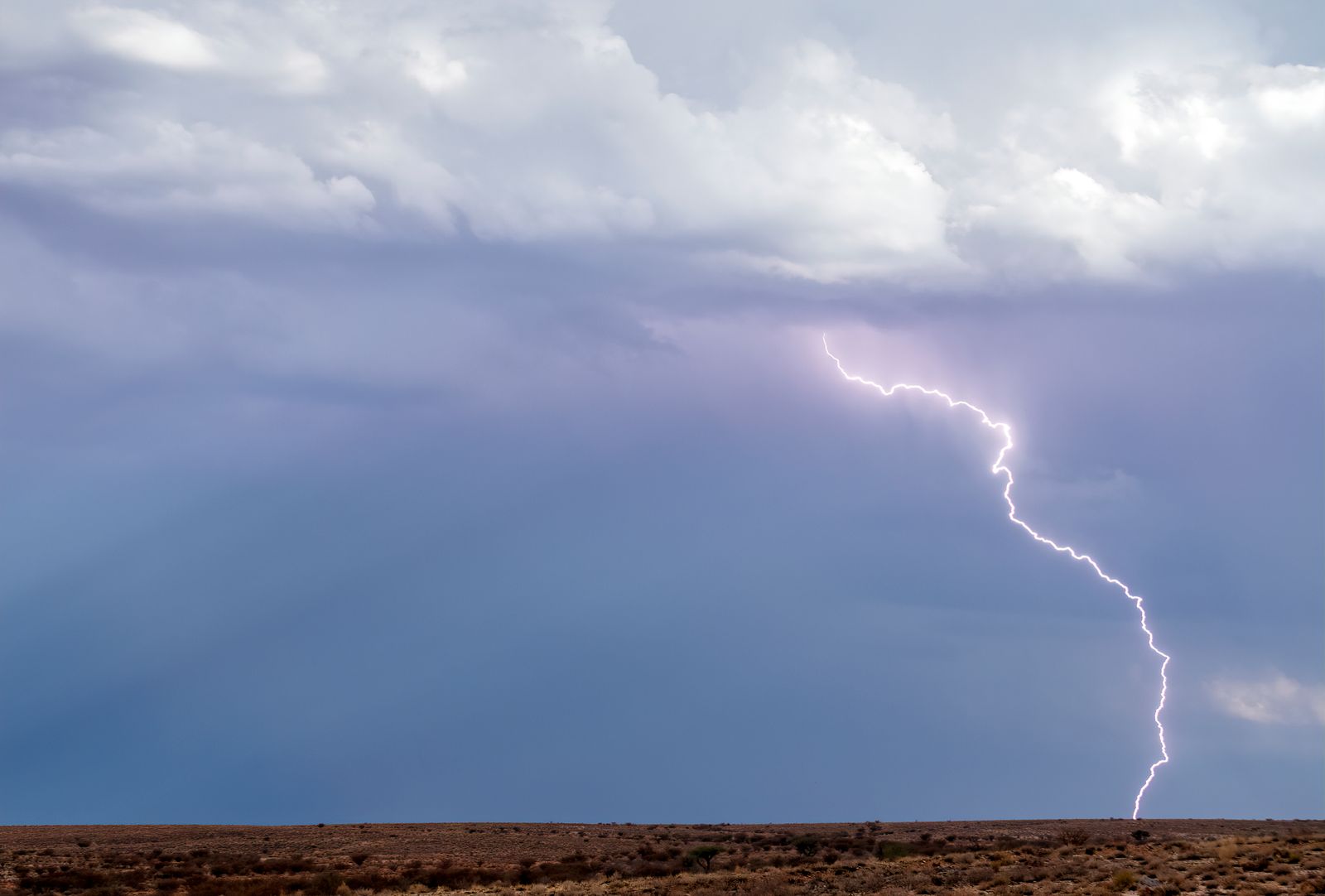
From early July to the middle of September, moisture moves north into Arizona and the afternoons change character. Mornings are often clear and calm; by early afternoon, towering clouds build over the mountains and storms can arrive quickly.
What the storms bring
Thunderstorms bring heavy rain, hail, lightning and sudden gusts. The most important hazard for small aircraft is often the outflow: a wall of wind that can run many miles ahead of a storm and change the wind on the runway in a minute.
Dust is another one. Outflow winds can lift dust and reduce visibility across the valley long before any rain falls.
How we adjust the schedule
In monsoon season we move most lessons to the morning. Afternoon slots are used for ground lessons, the simulator and pattern work only when the sky allows it, with a firm rule that we are back on the ground before storms build nearby.
Cross-country flights are planned with an early departure and a turnaround time agreed before takeoff.
Reading the sky
Students learn to read the sky as well as the forecast. A small cumulus cloud at nine in the morning that has doubled in size by ten is telling you something. We teach students to look out of the window often and to treat a building cloud as a reason to head home, not a challenge.
A season that teaches judgement
Monsoon season is when students learn that the best decision is sometimes to stay on the ground. That judgement is part of becoming a pilot, and we teach it as deliberately as landings.
If a lesson is cancelled for weather, we use the slot for a ground lesson on that day’s forecast when you would like one. Looking at a real storm on the radar with your instructor teaches more than any textbook diagram, and the fee is only the instructor time.