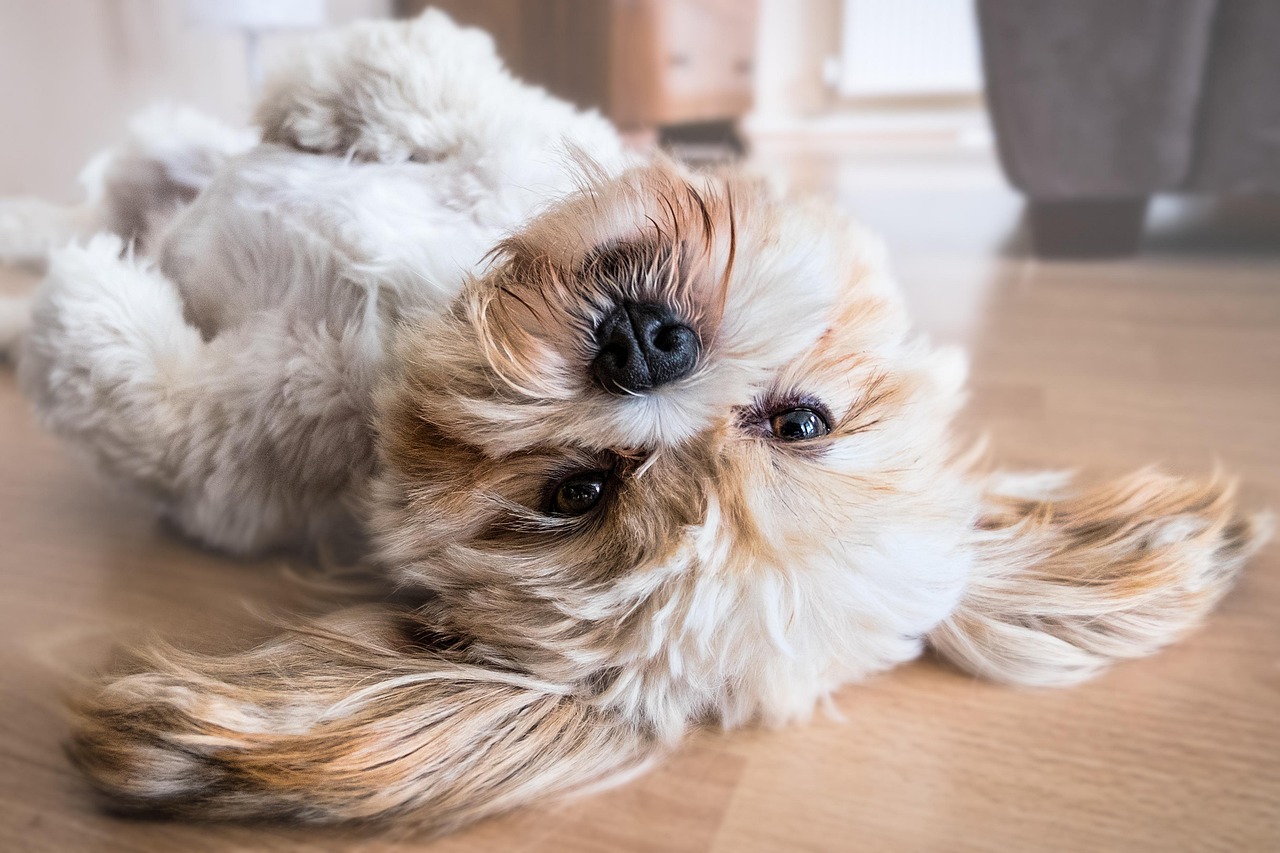
About a third of the homes we measure have a dog, and big dogs change the advice we give. Claws scratch, water bowls drip, and running starts on a slick floor are hard on hips as well as finishes.
The toughest choices
Porcelain tile is the hardest floor most homes will ever have. It does not scratch and accidents wipe up. The downsides are that it is cold and hard underfoot, so many owners add a washable rug where the dog sleeps.
Luxury vinyl plank with a thick wear layer, 20 mil or more, is the most common choice for dog homes. It resists scratches, it is waterproof at the seams when installed well, and textured surfaces give paws more grip than glossy wood.
If you want real wood
Choose a harder species such as hickory or white oak, a wire-brushed or hand-scraped texture that hides marks, and a matte finish rather than gloss. Lighter, busier grain shows scratches less than a dark, smooth floor. Plan on a screen and recoat every few years to refresh the top coat.
Habits that help any floor
Keep nails trimmed, put a tray under the water bowl and a mat at the back door. Clean accidents quickly with a damp cloth and a floor cleaner made for the surface, never a steam mop on wood or vinyl.
Rugs with a breathable, non-staining backing are best in the spots where a dog lies all day. Rubber-backed mats can trap moisture and leave marks on vinyl plank and on a fresh wood finish, so we suggest felt or natural latex pads instead.
At the measure visit, tell us about the dog. We bring samples you can test with a key in the corner and include the right rugs and mats in the plan.