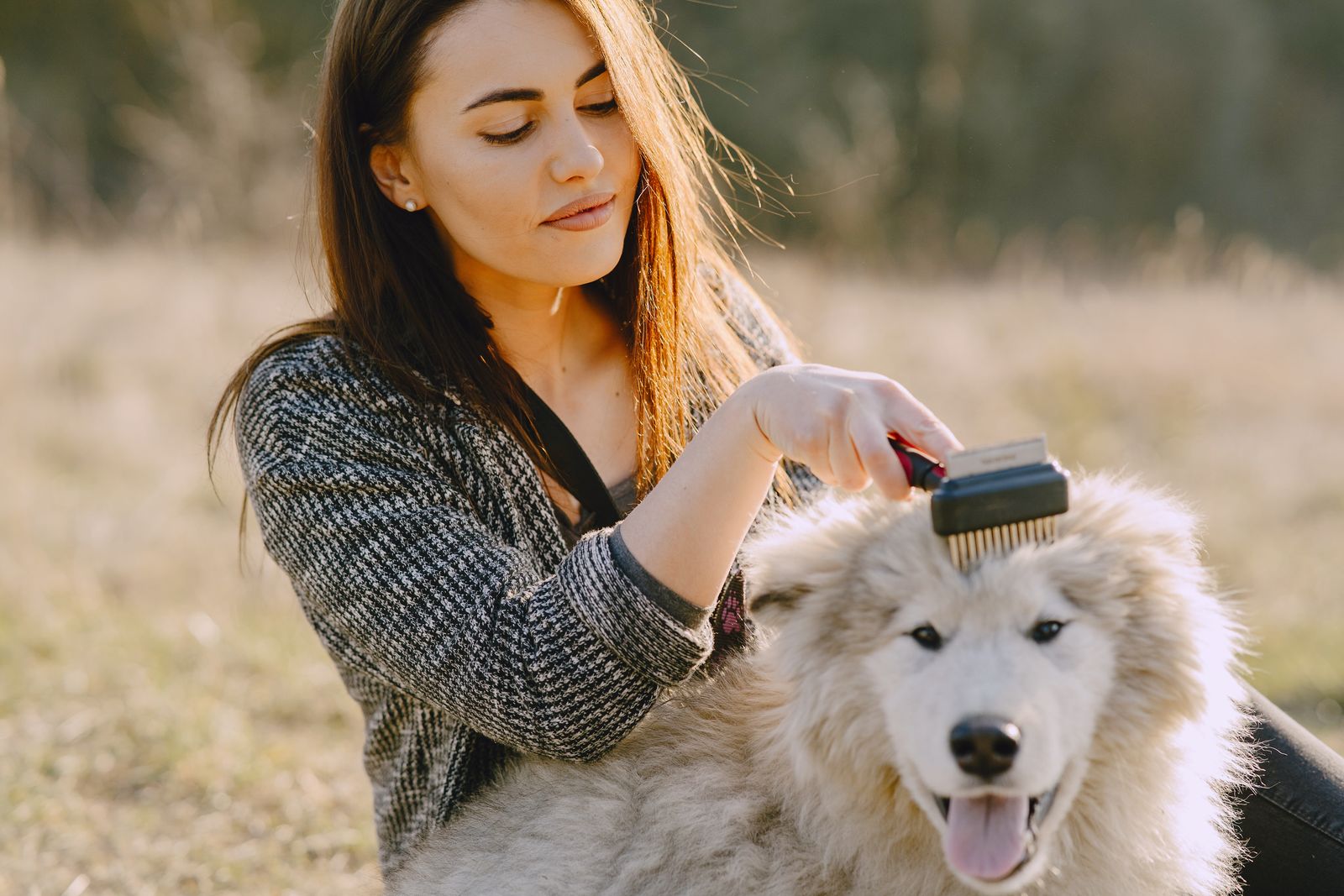
A good brush routine at home keeps your dog comfortable and makes every salon visit shorter and cheaper. The trick is choosing a tool that reaches the skin without scratching it. These are the four tools we recommend most often.
Slicker brush and metal comb
For curly and silky coats such as poodles, doodles, Maltese and Yorkies, use a slicker brush with a light hand, working in small sections from the skin outwards. Follow with a metal comb: if it glides through to the skin, that section is done. If it catches, go back with the brush.
Undercoat rake
Double-coated dogs such as golden retrievers, shepherds and huskies shed a dense undercoat. An undercoat rake pulls out loose fluff without cutting the top coat. Brush in the direction the hair grows, once or twice a week, and daily during heavy shedding.
Rubber curry and bristle brush
Short, smooth coats need very little. A rubber curry brush used in circles lifts dead hair and dirt, and a soft bristle brush finishes the coat with a little shine. Five minutes once a week is plenty.
A five-minute routine
Choose a calm time, ideally after a walk. Start with the easy areas, then move to legs, belly and tail. Keep sessions short and end on a good note with a treat. If you find a tangle you cannot comb through, leave it for us rather than cutting it with scissors: mats often sit right against the skin.
Bring your brush to your next groom and we will show you how to use it on your dog’s coat. Our groomers are happy to spend five minutes at pick-up showing you the sections that tangle first, and which brush angle works best for that coat.