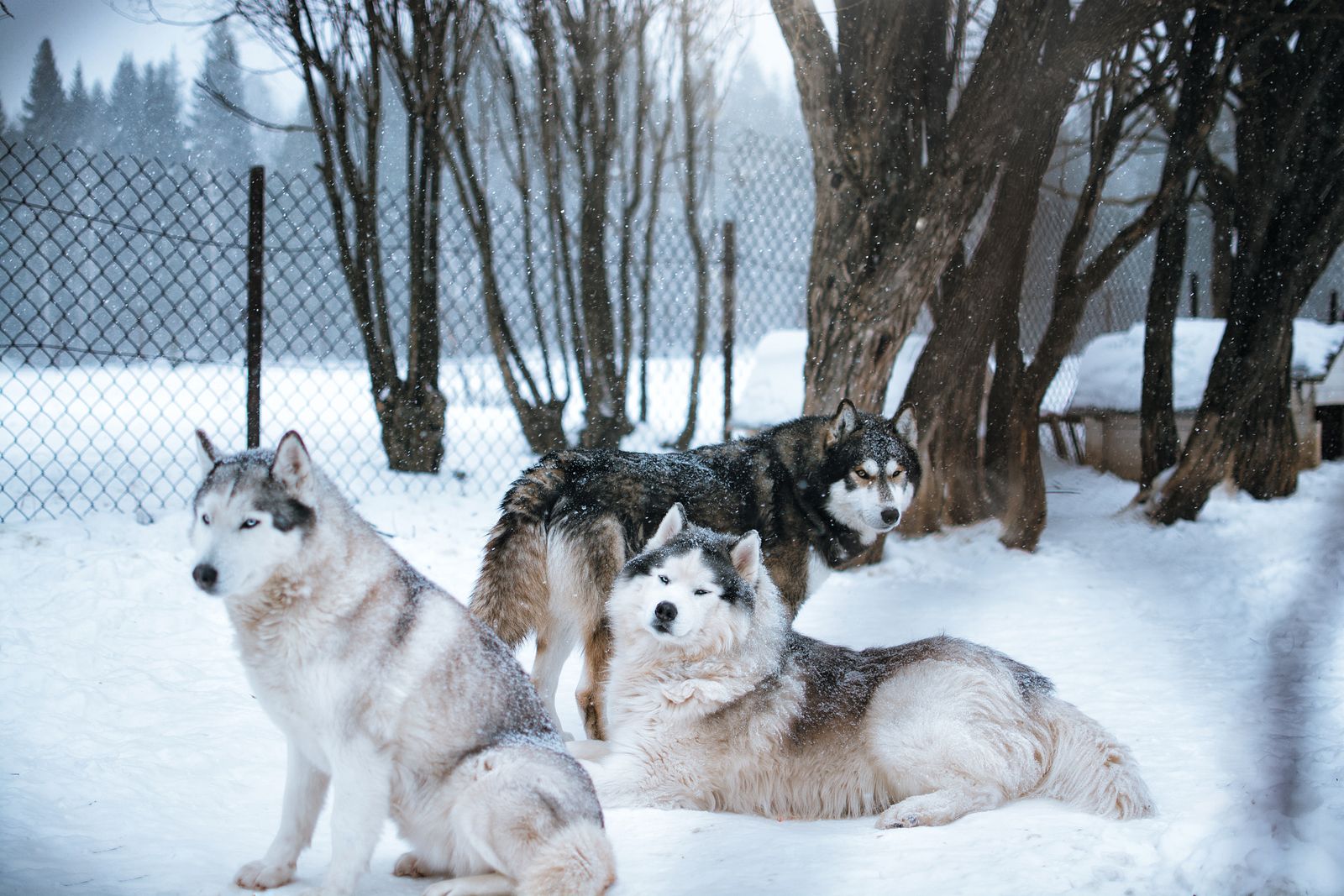
Twice a year, usually in spring and again in fall, double-coated dogs drop much of their undercoat in a few weeks. Owners call it the coat blow. Your vacuum cleaner calls it something less polite. A de-shedding treatment helps the old coat come out faster and more evenly.
Why we do not shave double coats
A double coat has a soft undercoat and longer guard hairs on top. Together they protect the skin from sun and help with temperature. Shaving can make the coat grow back patchy and uneven, so for golden retrievers, huskies, shepherds, corgis and similar breeds we brush the undercoat out instead.
What a de-shedding treatment includes
We start with a bath using a conditioner that loosens the undercoat, then use a high-velocity dryer to blow out loose hair while the coat dries. After that comes a thorough brush-out with an undercoat rake and a final comb. Prices start at $60 for small dogs and $95 for large dogs, and the visit takes two to three hours.
Between treatments
During the coat blow, brush with an undercoat rake every day for ten minutes, outdoors if you can. A second de-shedding treatment four weeks after the first catches the last of the old coat. Between brushing sessions, a damp rubber glove run over the coat picks up surprising amounts of loose fluff, and dogs tend to enjoy it.
Booking tip
Spring is our busiest season. Book your de-shedding visit as soon as you see tufts of fluff coming out, or join the Fluff Club and keep a regular table every eight weeks all year round.
If shedding seems unusual for your dog, with bald patches or sore skin, talk to your vet before the next groom.
Ask your vet about your pet’s health.