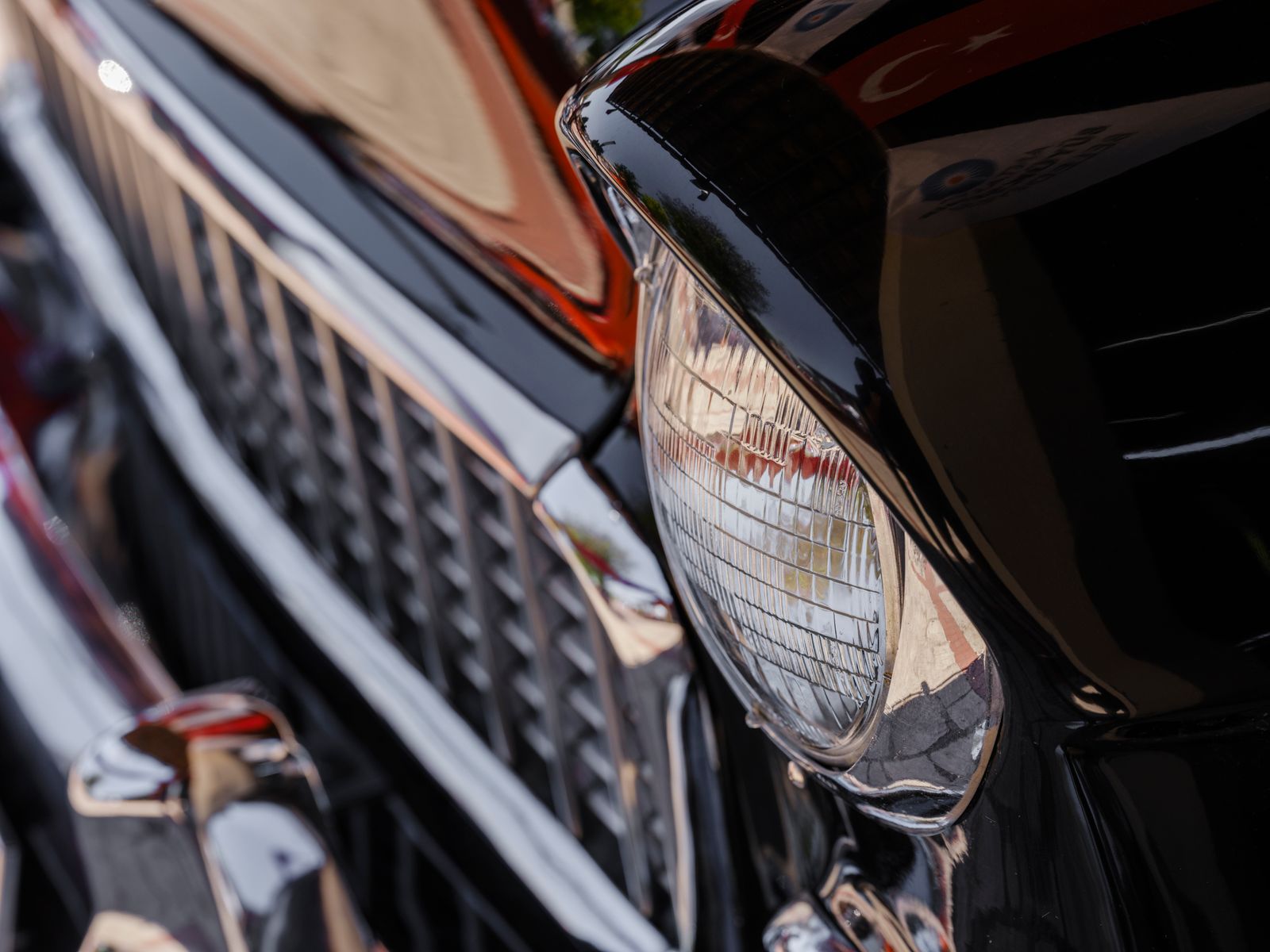
Park a dark car in direct sun and look closely at the hood. If you see a web of fine circular scratches around the reflection of the sun, those are swirl marks. Almost every car has them, and almost all of them come from washing.
Where swirls come from
Swirls are tiny scratches in the clear coat, made when grit is dragged across the paint. Dirty sponges, a single bucket, old brush-style tunnel washes and drying with a bath towel are the usual causes. Each wash adds a few more, until the paint looks dull and grey instead of deep and glossy.
How paint correction works
Paint correction is machine polishing. We wash and decontaminate the paint, measure the clear coat thickness with a gauge, then use a polisher and abrasive compound to level the surface until the scratches disappear.
A one-step correction removes most light swirls and brings back gloss in a day. A two-step correction uses a heavier cut first and a fine polish after, and removes deeper marks. We never remove more clear coat than we need to.
What it cannot fix
Scratches that catch your fingernail have gone through the clear coat. Polishing can make them less visible, but only touch-up paint or a body shop can fully fix them. We point these out during the walk-round so there are no surprises.
Keeping the paint perfect
After correction, protect the result with a sealant or ceramic coating and wash with the two-bucket method and clean microfiber. Our express tunnel uses soft foam, not brushes, but freshly corrected paint is best kept to hand washes for the first month.
If you wash at home, use two buckets with grit guards, a fresh microfiber mitt, and a soft drying towel blotted rather than dragged. It takes ten extra minutes and keeps new swirls from creeping back in.