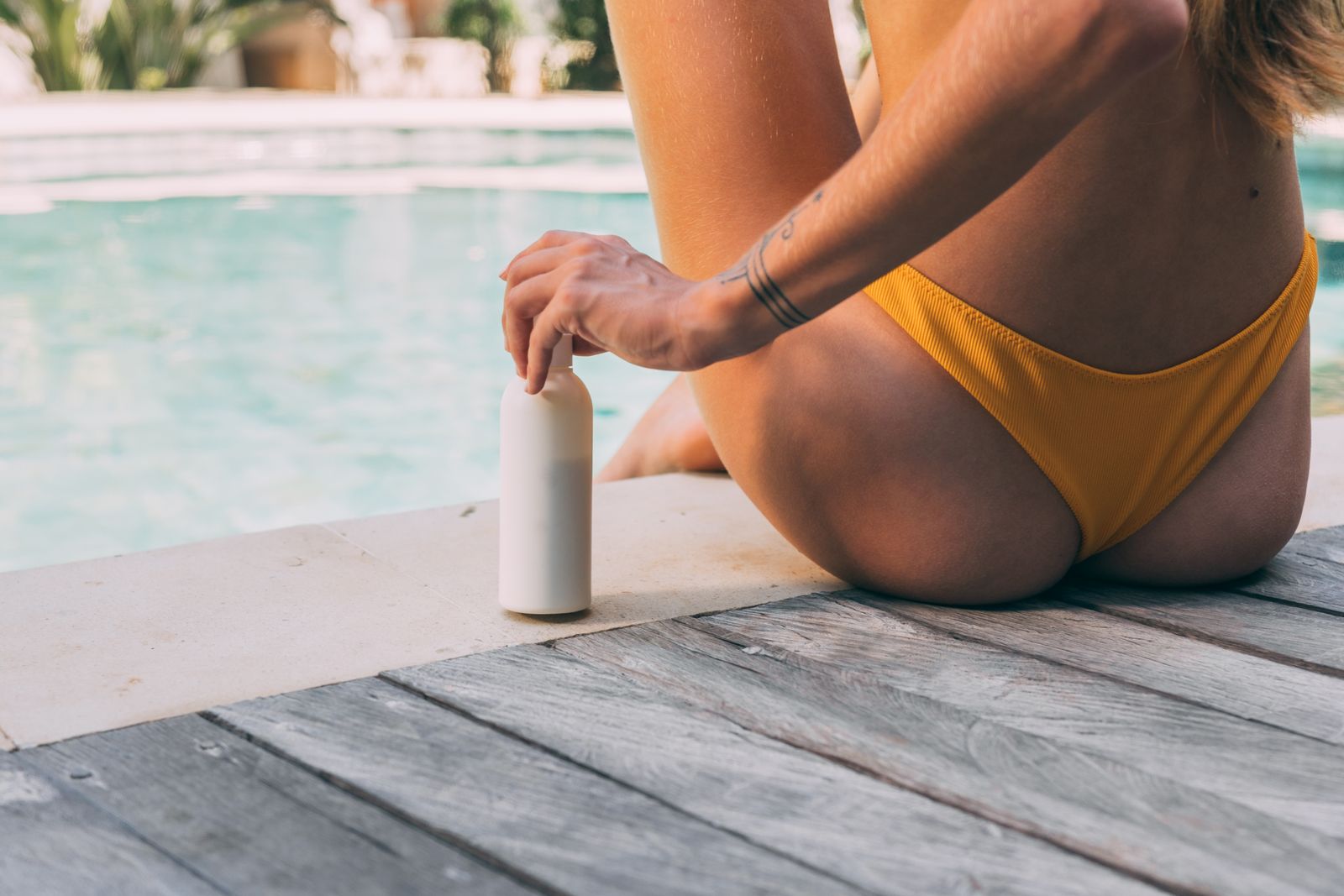
Every client leaves our studio with SPF on their face, including in January when Carmel has not seen the sun for a week. It is the one step we mention on almost every home-care card, so it deserves an explanation.
Clouds are not a filter
Ultraviolet light reaches the ground on cloudy days too. A large part of the ultraviolet A in daylight passes through thin cloud and through ordinary window glass, which is why people who sit near a window at work often notice more sun marks on one side of the face.
Snow reflects light as well. A bright morning after a snowfall can expose your face to more ultraviolet than a mild autumn afternoon.
Why it matters after a treatment
Exfoliation, peels and dermaplaning remove the outermost layer of dead skin. For a week or so afterwards, your skin is more likely to burn and to keep dark marks. That is why we will not book a peel for someone who is flying to the beach the next day, and why the SPF on your home-care card is not optional.
Finding one you will wear
The best sunscreen is the one you put on every morning. Broad spectrum, SPF 30 or higher, in a texture you enjoy: that is the whole brief. If you dislike heavy creams, try a fluid or gel. If white residue bothers you, a tinted mineral formula often blends better on deeper skin tones.
Apply it as the last step of your morning routine, about two finger-lengths for face and neck. Reapply if you are outdoors for long stretches.
A habit, not a chore
Keep the bottle next to your toothbrush, not in a drawer. Most of our clients say that after a month they feel odd leaving the house without it, and that is exactly the goal.