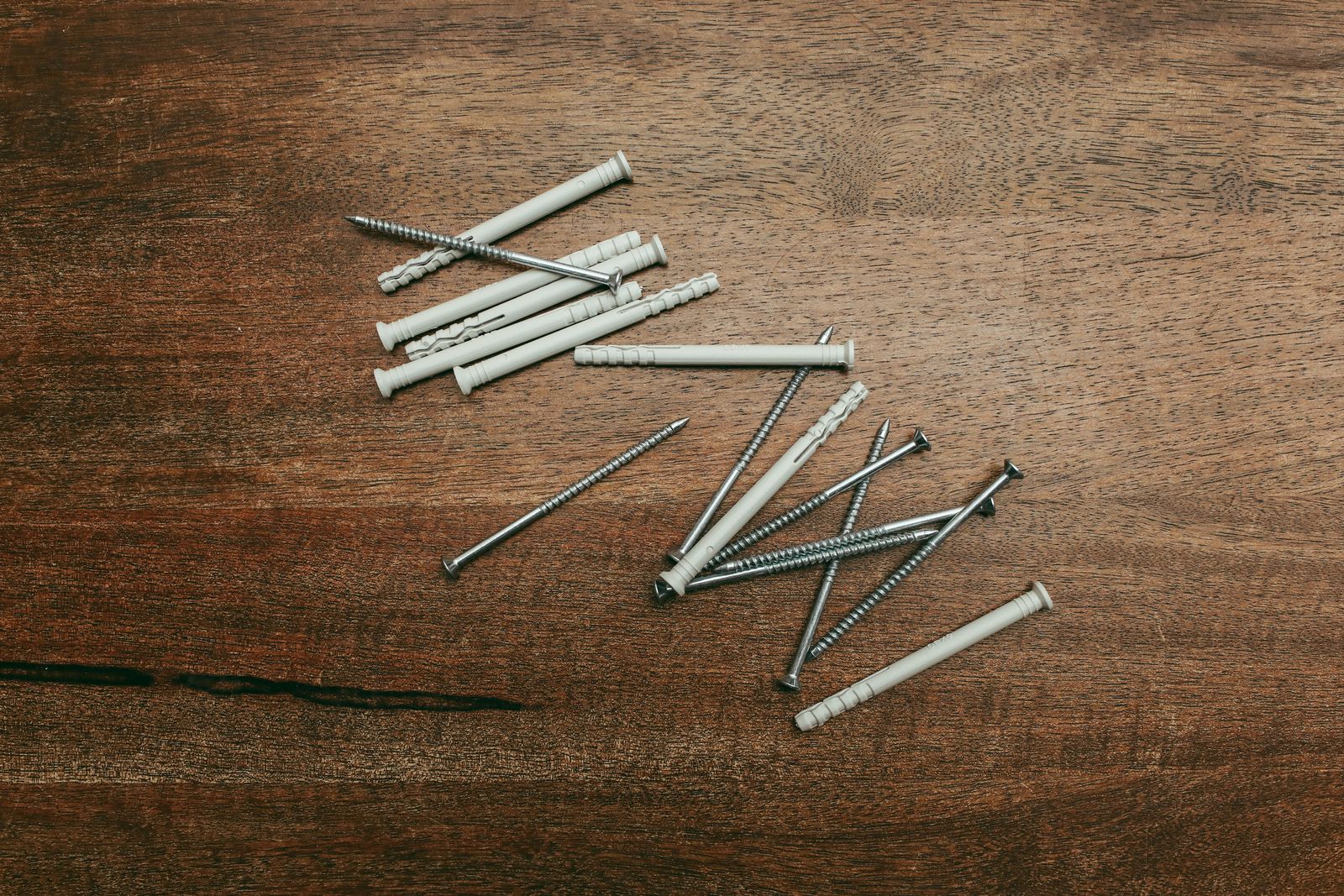
Our fastener wall has more than forty kinds of anchors, and the right one depends on two things: what the wall is made of and how much the thing you hang weighs. Bring a photo of the wall and what you are hanging, and we pick them with you.
Light loads in drywall
For pictures, mirrors under ten pounds and light shelves, ribbed plastic anchors or self-drilling threaded anchors are quick and tidy. Self-drilling anchors screw straight into drywall with a screwdriver and hold noticeably more than plastic ones.
Heavy loads in drywall
Shelves, curtain rods and TV mounts need toggle bolts or metal hollow-wall anchors that open behind the board. Better still, find a stud with a stud finder and screw into the wood; a single screw into a stud holds more than several anchors.
Plaster and lath
Older Duluth houses often have plaster on wooden lath. Drill slowly with a sharp masonry bit to avoid cracking the plaster, and use toggle bolts or long screws that reach the lath or a stud behind it. Painter’s tape over the spot keeps the edges of the hole clean.
Brick and concrete
Basement walls and chimneys need masonry anchors or concrete screws, drilled with a hammer drill. Our rental counter lends a hammer drill for the afternoon when you buy the anchors.
Whatever the wall, check the rating, then halve it. Every anchor package lists a holding weight, measured in ideal conditions. Real walls are rarely ideal, so we suggest planning for half the printed figure and using at least two anchors for anything that hangs away from the wall, such as a shelf bracket. Remember that a shelf has to hold its load as well as its own weight, and books are heavier than they look.