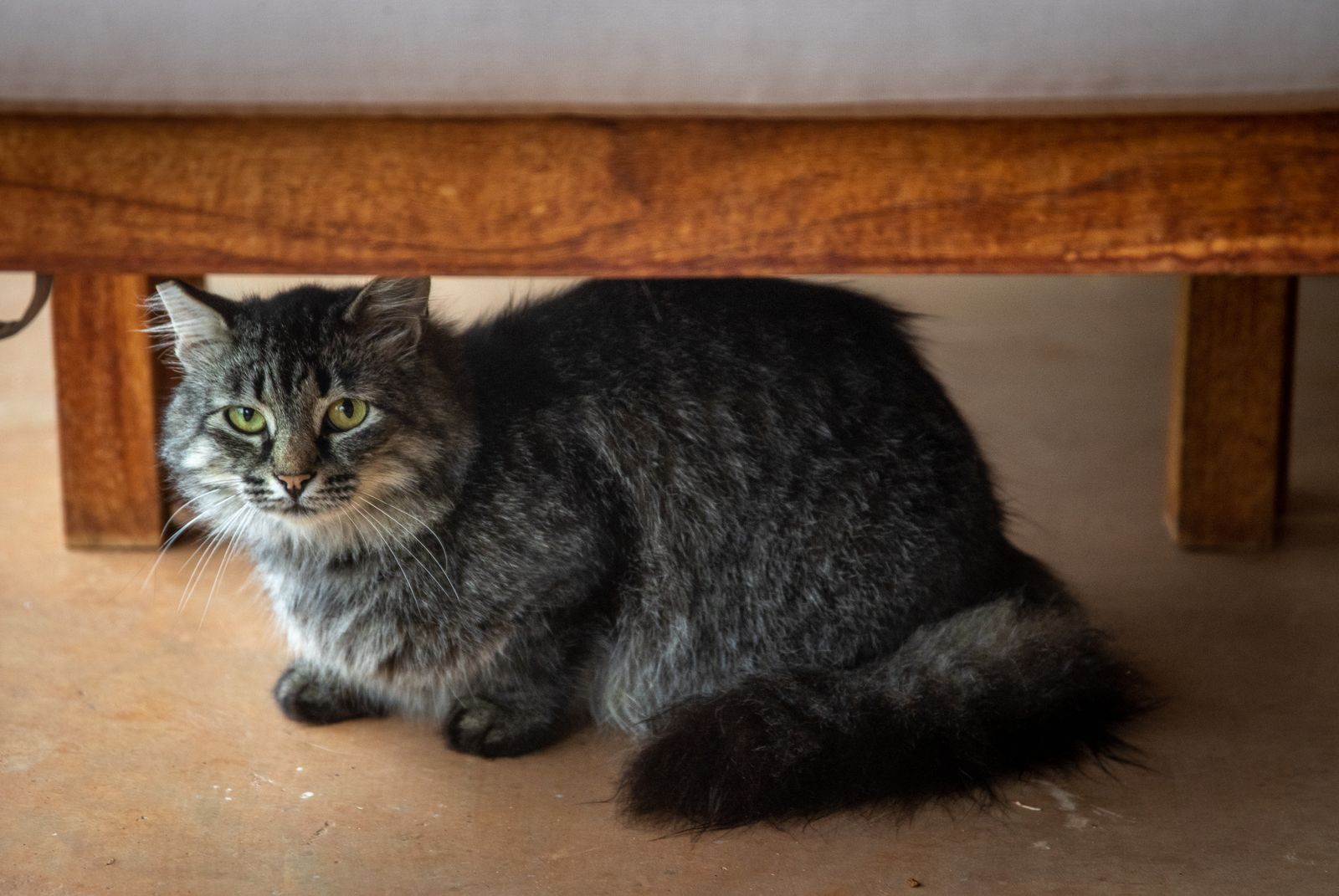
Plenty of cats treat every visitor as a reason to move under the bed for the afternoon. That is normal cat behaviour, not a sign that something is wrong, and it is one reason many families choose house calls in the first place.
Start with the hiding places
Before a visit, block the spaces under beds and sofas in the room where your cat will wait, or choose a room that has none. A cardboard box with a towel inside gives your cat somewhere to feel tucked away that we can still reach gently.
Avoid chasing a cat out of a hiding spot just before the visit. It tends to make the next ten minutes harder for everyone.
Make the carrier an ordinary object
Even with house calls, a carrier is useful for the times your cat does need to travel. Leave it out all week with the door open and a soft blanket inside, and drop a treat into it now and then. Many cats start using it as a bed.
During the visit
We usually sit on the floor, let your cat come and sniff, and examine them wherever they settle: on a lap, a windowsill or inside their box. A towel wrapped loosely around the body helps some cats feel held rather than restrained.
If your cat is too unsettled to examine, we stop and talk about a second short visit rather than rushing. Some cats do better on the second meeting, once our smell is familiar.
Afterwards
Give your cat a quiet room and their favourite food after we leave. Most cats are back to their usual routine within an hour or two. If yours seems unwell or stays hidden for much longer, call us.
Ask your vet about your pet’s health.