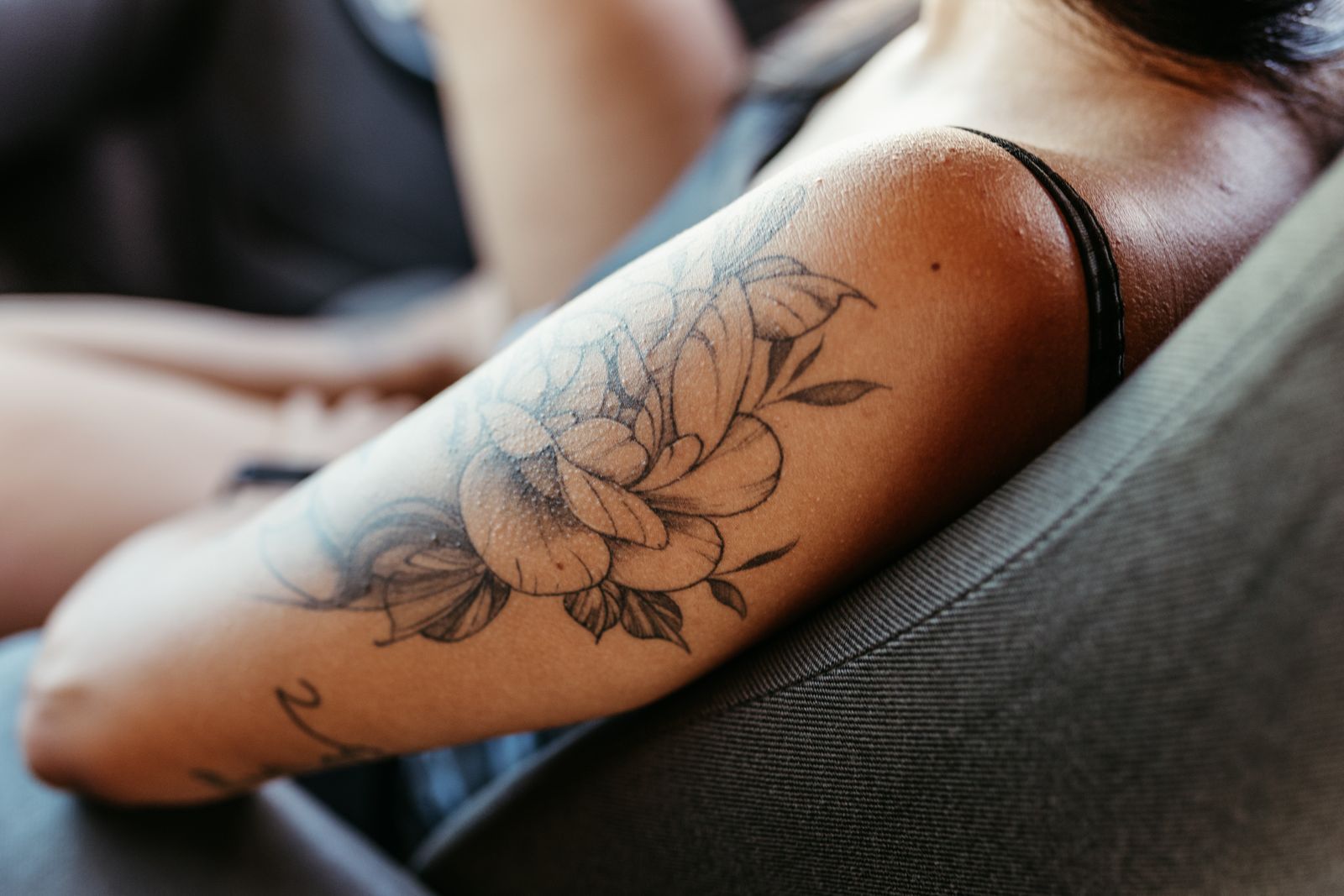
Two of the styles we tattoo most often sit at opposite ends of the scale. Fine-line work is light and delicate; traditional work is bold and graphic. Both look great when they are drawn for the right spot at the right size.
Fine line
Fine-line tattoos use a single needle or a very small grouping, with thin lines and soft grey shading. They suit small flowers, script, symbols and minimal designs, and they look elegant on wrists, collarbones and ankles.
Every tattoo softens a little as skin changes over the years, and thin lines have less ink to start with. Theo draws fine-line pieces with a little more space between lines than you might expect, so the design keeps its shape as it settles.
Traditional
Traditional tattoos use heavy black outlines, solid colour and strong shapes: roses, swallows, daggers, ships and panthers. The style grew up on sailors and it was built to be read from across a room.
Bold lines hold their shape well, so traditional pieces stay clear for a long time and work at almost any size, from a two-inch heart to a full chest piece.
Size and placement
A rule of thumb: the more detail a design has, the larger it needs to be. If you love a detailed fine-line idea but want it small, ask your artist to simplify it rather than shrink it.
Hands, fingers and feet see a lot of friction and sun, so we suggest bolder designs there whatever style you choose.
Still not sure?
Book a free consult with both artists. Rosa and Theo are happy to sketch the same idea in their own styles so you can compare them side by side.