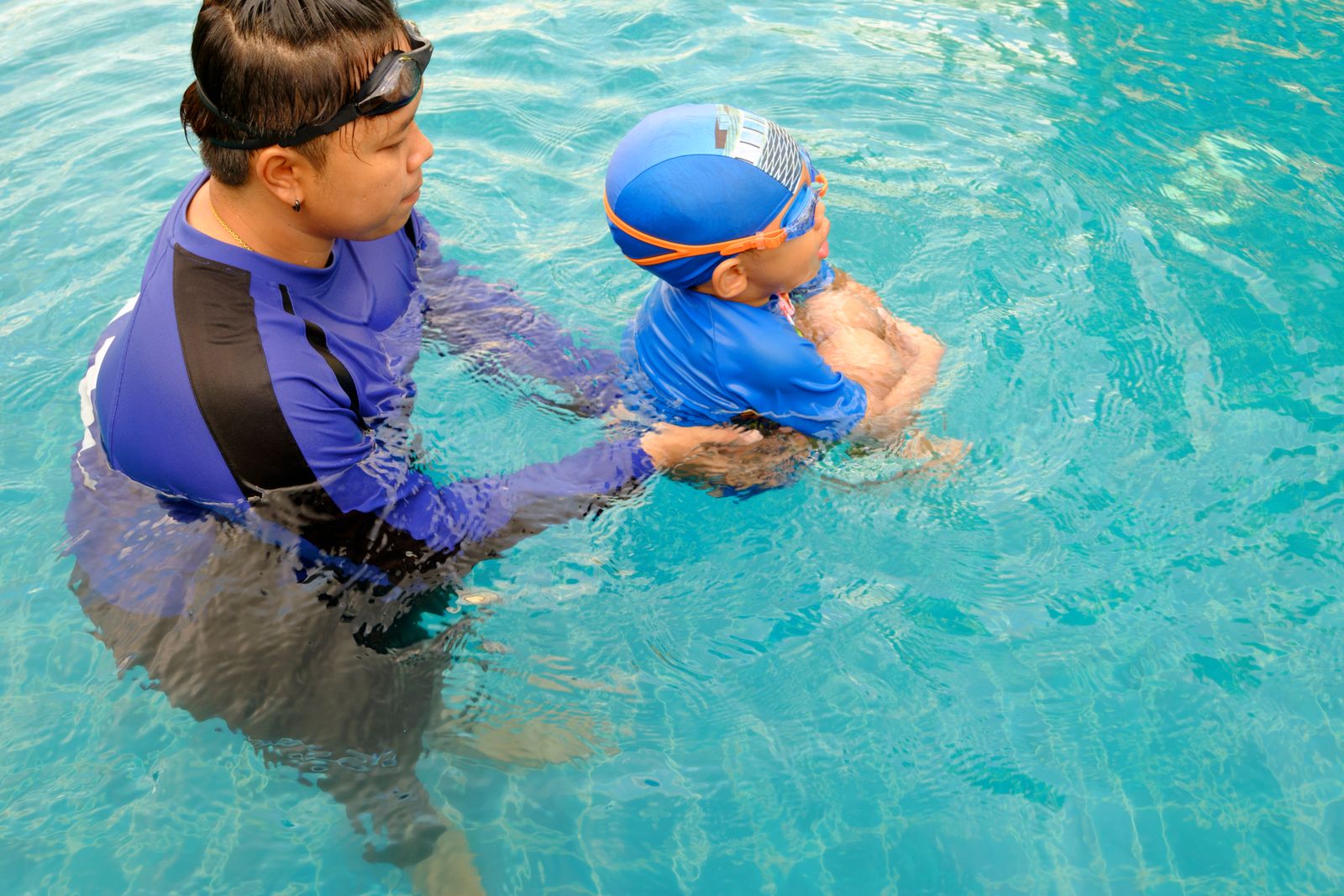
Most children are a little unsure at their first swim lesson, and many are very unsure. That is completely normal. The water is new, the room echoes and there is a grown-up they have never met. A good first lesson is built around that feeling rather than against it.
Before you get in
Arrive fifteen minutes early so nobody has to hurry. Sign the waiver at the front desk, use the toilet, then shower together; the warm water is a gentle first step. Children under 8 need an adult on deck for the whole lesson, so plan to stay on the parents’ bench where your child can see you.
Tell the instructor anything useful: a scary splash last summer, a favourite toy, or that your child likes to watch before joining in. Small details help a lot.
The first thirty minutes
The lesson starts sitting on the edge with feet in the water. The instructor plays simple games: kicking to make rain, pouring water on hands, then on shoulders. Nobody is pushed under or carried into the deep end.
Next comes holding the wall, moving along it like a monkey and blowing bubbles. If your child is ready, they try a supported float. If not, they watch and splash, and that still counts as a good lesson.
How you can help
Stay calm and cheerful on the bench, even if there are tears. Wave, smile and save the questions for later. Children read our faces quickly.
At home, practise bubbles in the bath and talk about what was fun. Avoid promising that they will “swim by the end of the month”; every child moves at their own pace.
After the trial
At the end of a trial the instructor suggests a level and a time slot. Most children start in Level 1 or Level 2. Remember that lessons build skills and confidence, but they never replace an adult watching whenever children are near water.