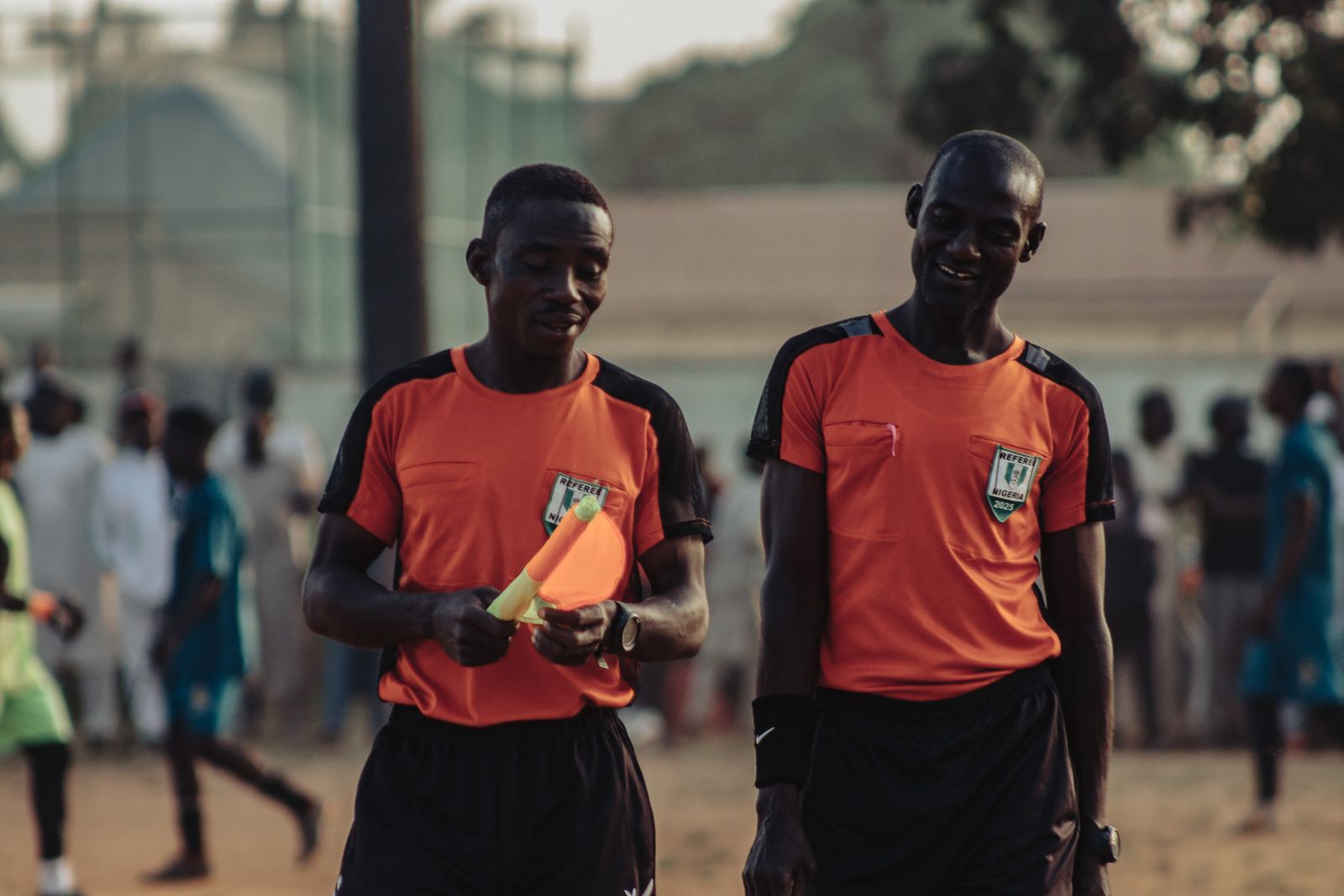
Every Saturday about thirty teenagers referee games at Kestrel Fields. Most started at fourteen, many are still in high school, and all of them are paid per game. If your teenager is thinking about it, here is what the first season looks like.
Training before the first whistle
New referees attend a training day at the league office in February. The morning covers the laws of the game for small-sided formats; the afternoon is spent on a field with whistles, flags and practice situations. Every new referee also completes the national entry-level referee course online before the season starts.
Uniforms, a whistle and a flag set are provided by the league. Referees bring their own black shoes.
A mentor at every first game
For the first four games, each new referee is paired with an experienced mentor who stands on the touchline, gives quick feedback at half-time and talks through the game afterwards. After that, mentors still walk the fields every Saturday and step in when a referee needs support.
Pay and schedule
Referees are paid per game: $20 for U8 and U10 games and $28 for U12. Most teenagers referee two or three games each Saturday they are available. They choose their own Saturdays on a sign-up sheet a month ahead.
Pay goes out every two weeks by direct deposit to the referee or a parent’s account. Many of our referees say it is the first job where they set their own hours, and several have gone on to referee high school games.
Respect on the sideline
Our league has one firm rule: nobody shouts at a referee. Coaches and parents who do are asked to leave the field for the rest of the day. Young referees make mistakes, as do players and coaches, and they improve fastest when the adults around them stay calm.