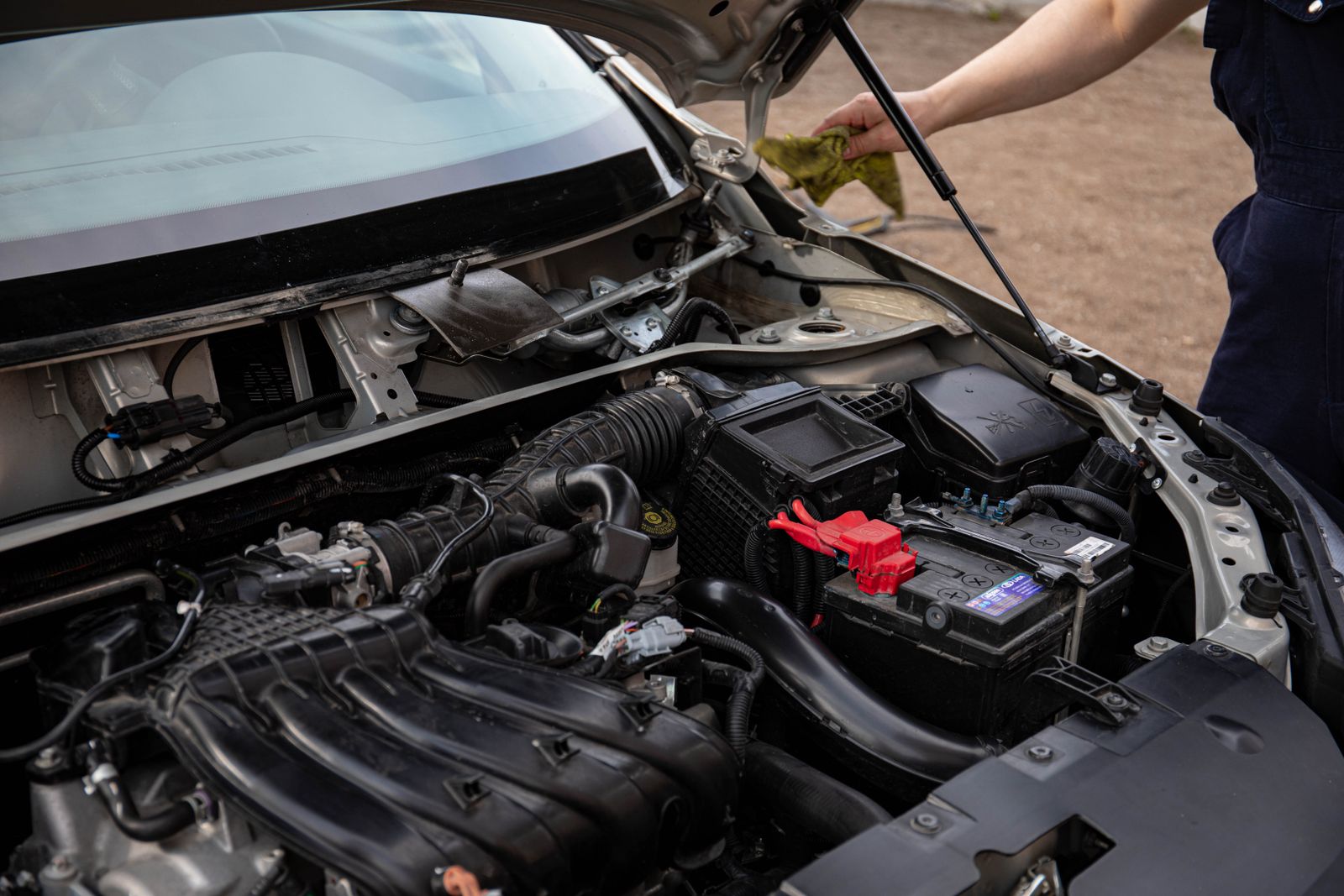
Most dead batteries we see in December were damaged in July. Heat speeds up the chemistry inside a battery and wears the plates, but the battery keeps working until the first cold morning asks for more power than it can give.
Heat does the damage, cold shows it
At 32 degrees, a battery has about a third less starting power than it does on a mild day, and a cold engine needs more power to turn over. A battery that coped fine through August can suddenly click instead of crank in November.
That is why the age of a battery matters more than how it seems today. In Kansas, three to five years is a typical life.
What a load test shows
A voltmeter only tells you whether the battery is charged. A load test draws current the way a starter motor does and measures how well the battery holds up. Our tester prints the result: good, good but recharge, or replace.
We also check the terminals for corrosion and the alternator output, because a weak alternator can make a good battery look bad.
Signs you should not ignore
A slow, laboured crank on cold mornings. Headlights that dim at idle. A battery warning light. A swollen case or a rotten egg smell near the battery. Any of these means it is time for a test the same week.
Free with any visit
The battery load test is free with any oil change and takes two minutes in the bay. If you do need a new battery, we tell you the price and the warranty before fitting it, and you are free to buy it elsewhere.
Keep the printed result in your glove box. If the next test shows a sharp drop, it is time to replace the battery before it leaves you stranded in a parking lot on the coldest morning of the year.