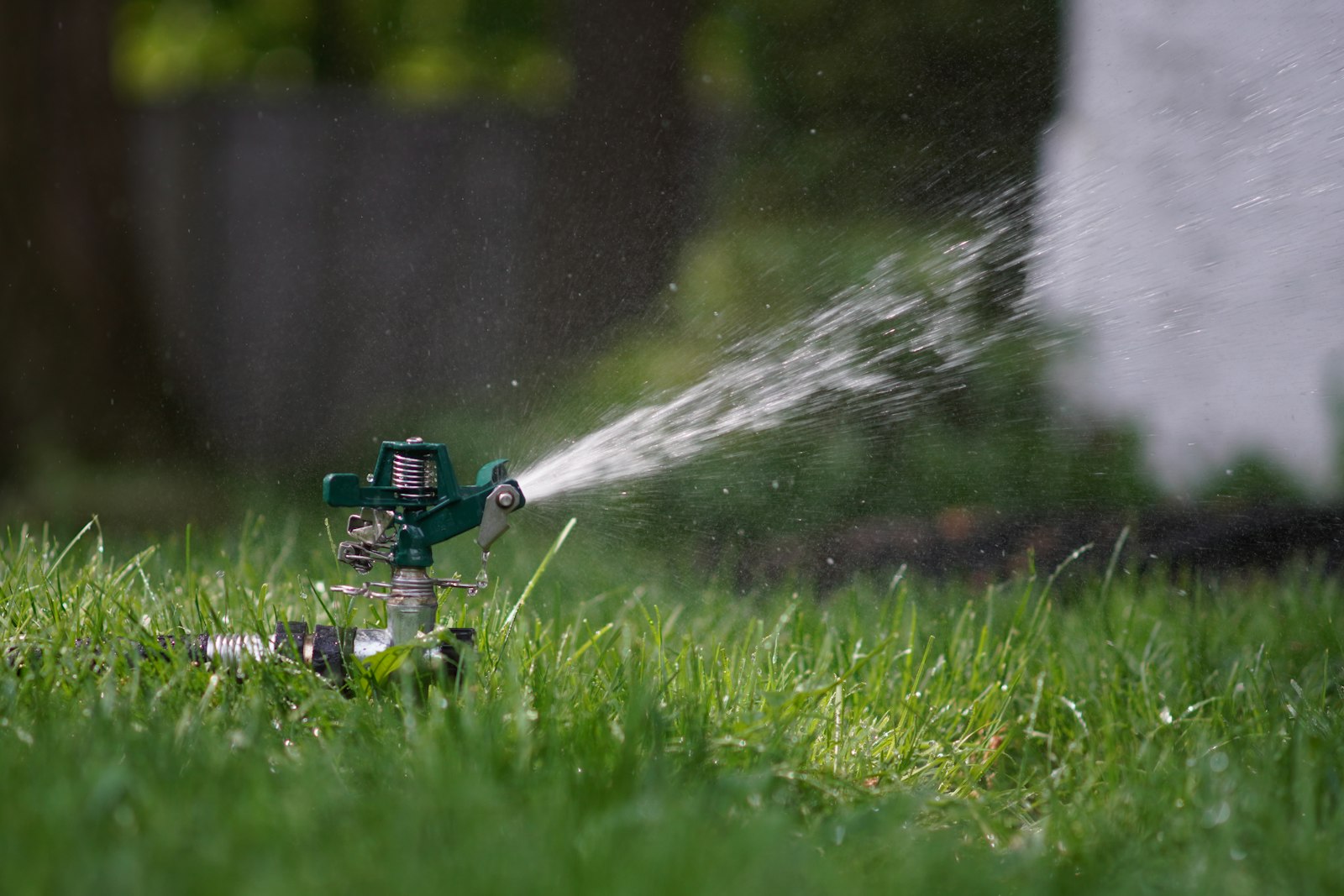
A Greensboro summer brings humid heat, long dry spells and sudden storms. Lawns on our red clay need water in a different way from lawns on sandy soil, and most irrigation systems we check are set to run too often for too short a time.
How much water
An established fescue lawn needs about one inch of water a week in summer, rain included. Put a few empty tuna cans on the lawn, run one zone for fifteen minutes and measure how deep the water is. That tells you how long each zone needs.
Deep, less frequent watering trains roots to grow down. Daily ten-minute cycles keep the roots shallow and invite brown patch, a summer fungus that loves wet grass blades at night.
Cycle and soak
Clay absorbs water slowly. If you run a zone for forty minutes in one go, much of it runs off into the street. Split it instead: three cycles of twelve to fifteen minutes with half an hour between them, so each cycle has time to soak in.
Most modern controllers have a cycle-and-soak setting; we set it up during our irrigation check.
When to water
Water between four and eight in the morning. The grass dries as the sun comes up, less water evaporates and there is less disease than with evening watering.
Two or three watering days a week is usually enough. Skip a day after a good storm, or fit a rain sensor that does it for you.
When to let it rest
If a drought drags on, fescue can go dormant and turn straw-coloured. It is not dead. Give it half an inch every two weeks to keep the crowns alive, keep foot traffic off it, and it greens up again when the nights cool down in September.