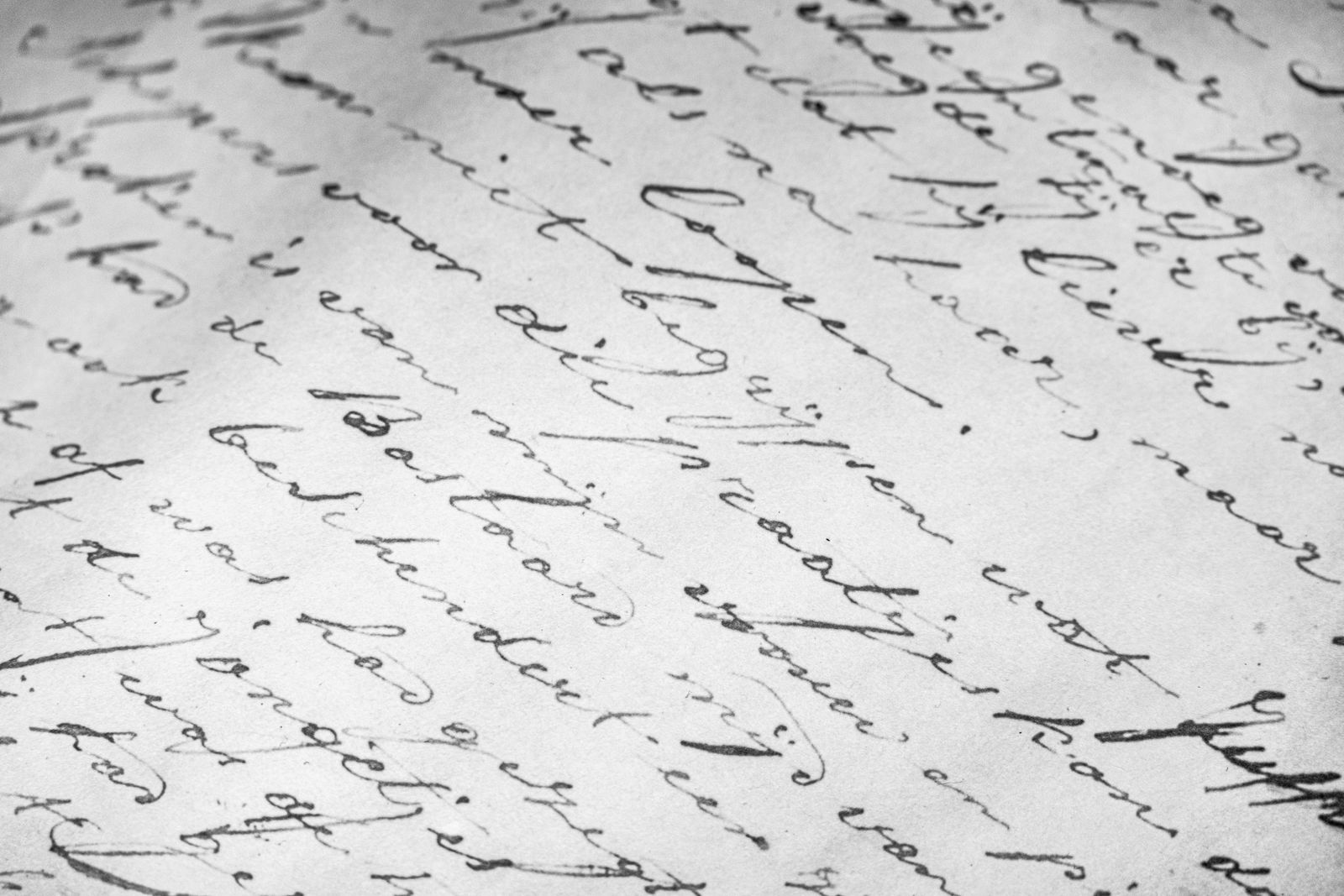
The hurricane that struck Galveston on 8 September 1900 remains the deadliest natural disaster in the history of the United States. Much of what we know about that night comes from letters written in the days that followed, by survivors writing to family on the mainland. Our museum holds more than three hundred of them, most given by the families who received them.
Why letters, not objects
The storm swept away houses, furniture and most of the things people owned. What survives in greatest number is paper: letters, telegrams, relief lists and newspapers. They are fragile, and many were written on whatever paper people could find.
How we store them
Each letter lives in its own acid-free folder, flat, in a cool room kept below 40 percent humidity. Salt air is the enemy of paper on an island, so the storage room has its own air filtration and we check it every week.
Letters on display rotate every four months. Light fades ink, and three months in the gallery is roughly a year of normal wear.
Reading them with care
Visitors can read every letter in the collection as a high-resolution copy in the reading room. The originals come out only for conservation work and for researchers who need to see the paper itself.
Many letters name people who died. We transcribe them with the families’ permission and read them aloud each September at a small evening of remembrance.
If you have a letter at home
If your family kept a letter, photograph or diary from 1900, we would be glad to see it, even if you want to keep it. We can scan it, advise you on storing it at home and, with your permission, add a copy to the collection.