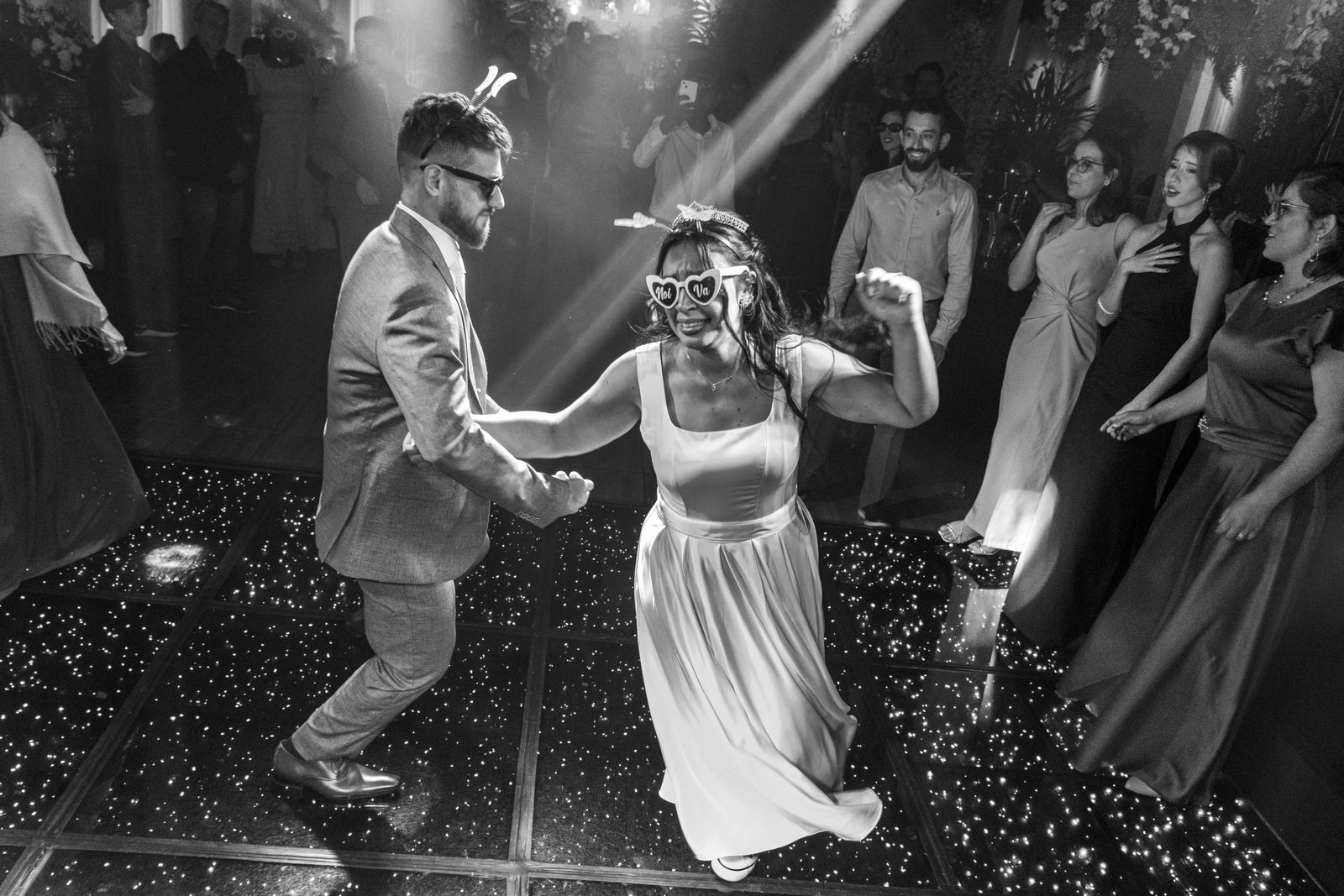
Most couples start by asking for a price, and we answer with a question: how long do you want people dancing? The number of hours is the biggest thing that changes a quote, so it pays to count them carefully before you send an inquiry.
Start with the timeline
Write down the times your venue gives you, then mark the moments that need music: guests arriving for the ceremony, the ceremony itself, cocktail hour, the grand entrance, dinner, the first dance, toasts, cake and the exit.
A typical Saturday wedding in New Orleans runs from about 17:00 to 23:00. That is six hours, but not all of them need a full band. Dinner and toasts need quiet music or none at all, and cocktail hour is happy with a trio or a playlist.
Where the band earns its fee
The band is worth the most when people are on their feet. For most receptions that means three or four hours from the first dance onwards, played as two or three sets of about fifty minutes.
Between the sets our DJ keeps the floor going, so the musicians can rest without the room going quiet. Guests barely notice the change, and you are not paying eight people to stand still while dinner is served.
Ceremony and cocktail hour
If the ceremony is at the same venue, a violin and guitar duo can play for guests arriving, the processional and the recessional, then move to the patio for cocktail hour. One hour of ceremony music is often enough, and it is much cheaper than starting the full band early.
Our rule of thumb
For a reception of 120 to 200 guests, four hours of band plus DJ covers almost every timeline. If your venue lets you go late, an extra hour of DJ costs far less than an extra hour of band, and it is usually the hour people remember.
Send us your timeline with your inquiry and we will tell you honestly where you can save an hour.