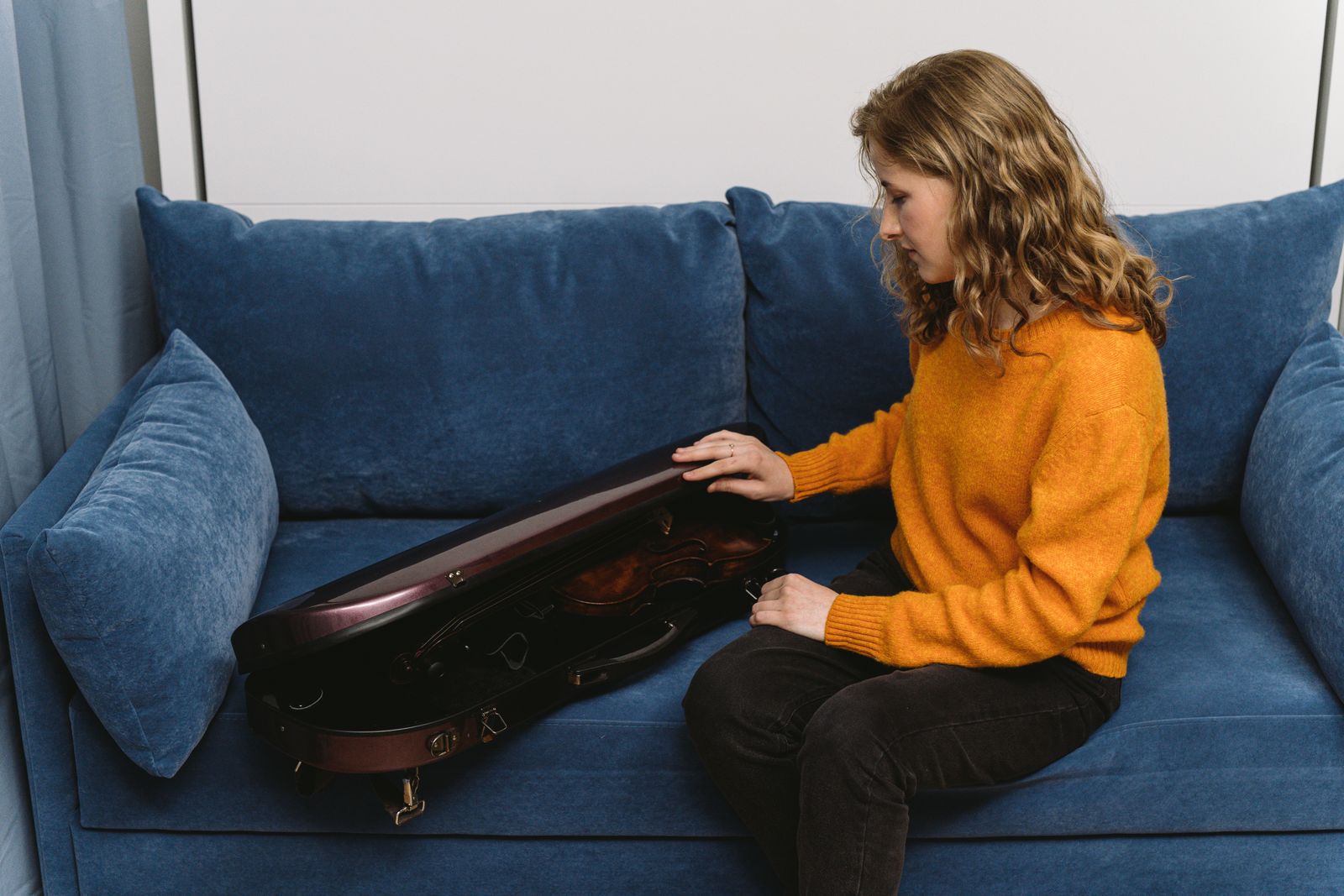
Violins come in sizes from tiny to full, and children usually move up a size every year or two until about age eleven. That is the main reason we suggest renting at first.
Getting the right size
A violin that is too big makes good posture impossible and slows progress. Your teacher measures your child’s arm at the trial lesson and recommends a size. We check again at every progress check, because growth spurts do not wait for the end of term.
Set-up matters more than the brand
A beginner violin needs a properly cut bridge, strings at a comfortable height, pegs that turn smoothly and hold, and a bow with enough hair and rosin. A badly set-up instrument is hard to play in tune, whatever it cost.
If you already own a violin, from a relative or a second-hand sale, bring it to the trial lesson. Your teacher checks the size, the bridge and the strings, and tells you honestly whether it is ready to play or needs a visit to a repair shop first.
Be careful with very cheap online violins. Many arrive with the bridge in the case, the strings too high and pegs that slip. Having them adjusted can cost more than the violin.
How our rental works
Our rental violins and violas cost $18 a month in all sizes, with a case, a bow and rosin. When your child needs a bigger size, we swap the instrument at no charge. Half of what you pay in rent over the first year can go towards buying a full-size instrument later.
Caring for it at home
Keep the violin in its case away from radiators and car boots in summer. Loosen the bow after playing, wipe off rosin dust with a soft cloth, and ask your teacher before trying to tune it with the pegs. A string will break sooner or later; spares are at the front desk.