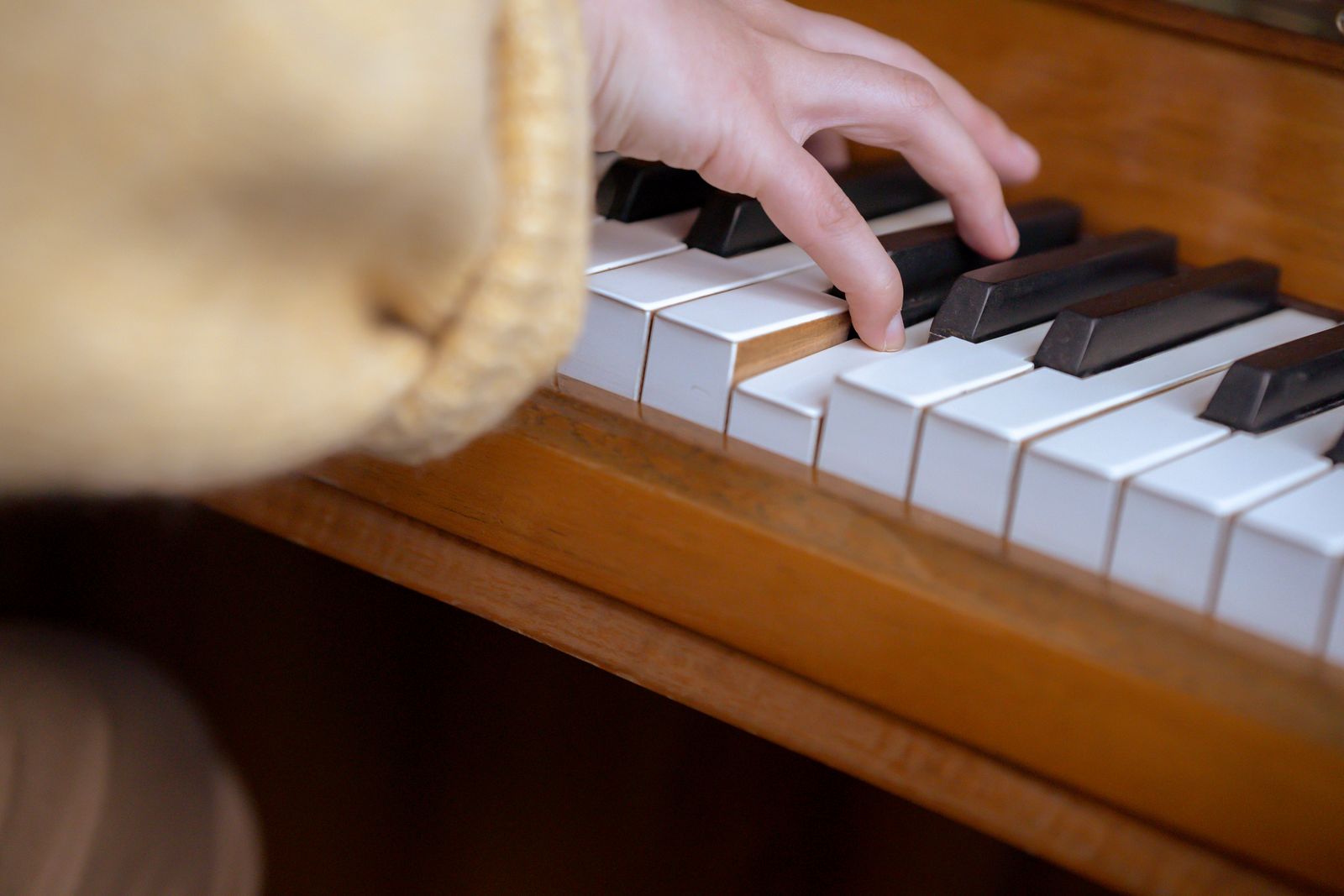
It is the question parents ask most at a trial lesson, and the honest answer is: less than you think, more often than you think. A young beginner gets more from ten focused minutes every day than from an hour on Sunday night before the lesson.
A rough guide by age
For children aged five to seven, ten to fifteen minutes a day is plenty. Their attention runs out long before their fingers do, and a session that ends while they still want to play is a session they will want to repeat tomorrow.
Between eight and eleven, most students can manage fifteen to twenty-five minutes. Teenagers preparing a recital piece may practise thirty to forty-five minutes, split into two short sessions if homework allows.
These are starting points, not rules. Your teacher writes a suggested practice time in the notebook after every lesson, and it changes as the student grows.
Same time, same place
Habits beat willpower. Pick a moment that already happens every day, such as straight after breakfast or before screen time, and attach practice to it. Keep the instrument out of its case and the music on the stand, so starting takes five seconds rather than five minutes.
What good practice looks like
Good practice is not playing a piece from start to finish over and over. Ask your child to play the hardest two bars slowly three times, then the whole line once. Five minutes of that is worth twenty minutes of running through the parts they already know.
Our practice notes list exactly what to work on that week, usually three small tasks. Ticking them off gives children a clear finish line.
How parents can help
You do not need to read music to help. Sit nearby for the first few minutes, ask them to teach you what they learned, and praise the effort rather than the result. A short weekly concert for the family, even for one song, gives practice a purpose.
If practice turns into a daily argument, tell the teacher. Sometimes the piece is too hard, sometimes the time of day is wrong, and a small change usually fixes it.