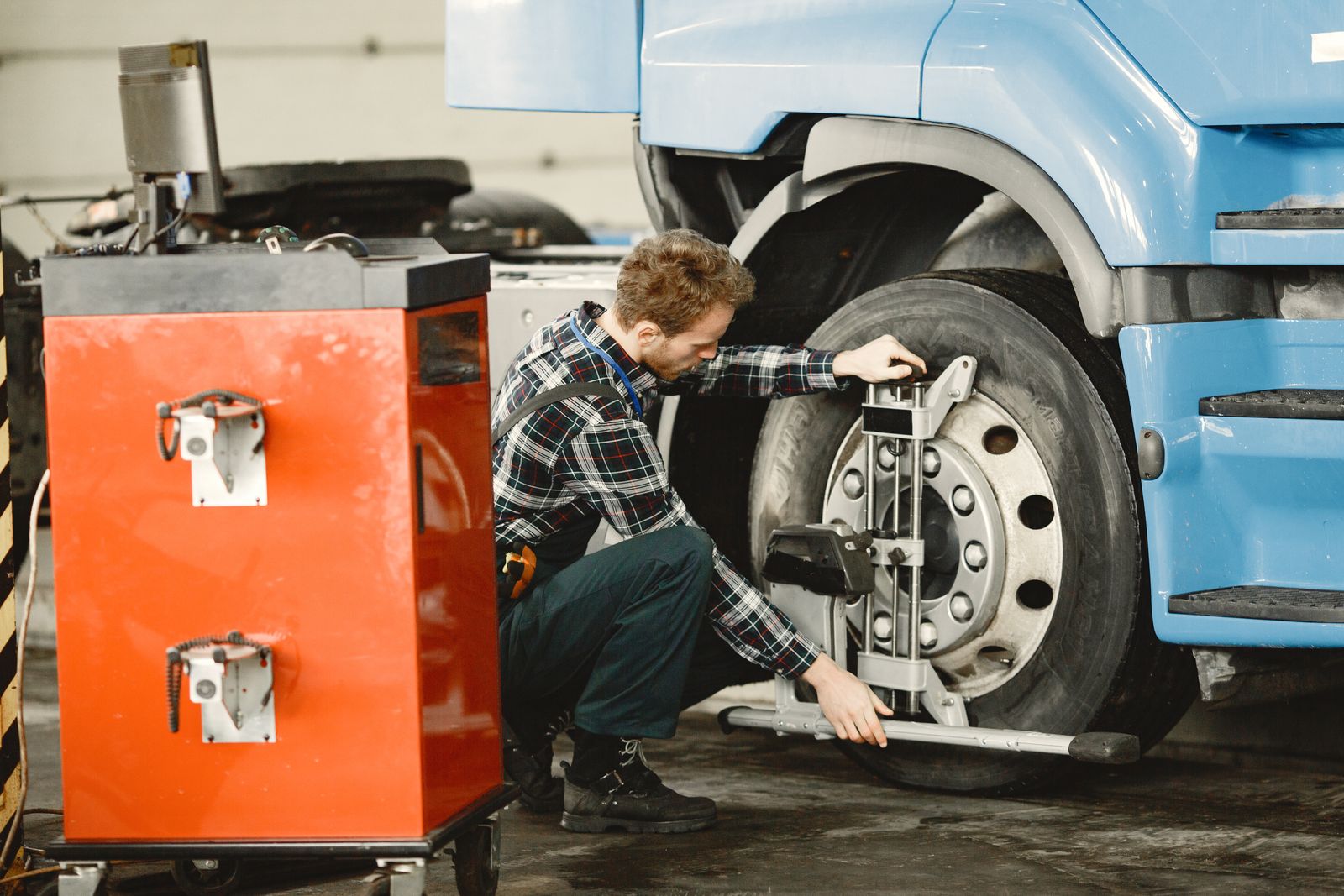
A lift kit moves the suspension away from the positions it was designed around. Even a small leveling kit changes the angles of the front wheels, and that is why we never let a lifted truck leave the shop without an alignment.
What changes when you lift
Raising the front of a truck changes camber, the tilt of the wheel in and out, and caster, the angle of the steering axis. Toe, whether the wheels point slightly in or out, changes too. Small errors in toe wear tires very quickly: a truck that is out by a fraction of a degree can scrub the edge off a new set of 35s in a few thousand miles.
Signs your alignment is off
The steering wheel is not straight when you drive straight, the truck pulls to one side, the steering feels light or wanders at highway speed, or the inside or outside edge of the tires wears faster than the middle. If you notice any of these after a lift, come back before the tires pay for it.
Why we re-torque at 500 miles
New suspension parts settle in. Bushings seat, springs relax a little and bolts that were tight on day one can loosen slightly. At around 500 miles we put the truck back on the rack, re-torque every suspension bolt to the specification and check the alignment again.
This visit is included with every lift we install, and it is part of our lifetime install warranty.
After a hard trail
A big hit on a rock or a ledge can bend a tie rod or move the alignment. If the steering wheel is crooked after a trip, book a quick check. It takes about an hour and it is far cheaper than new tires.