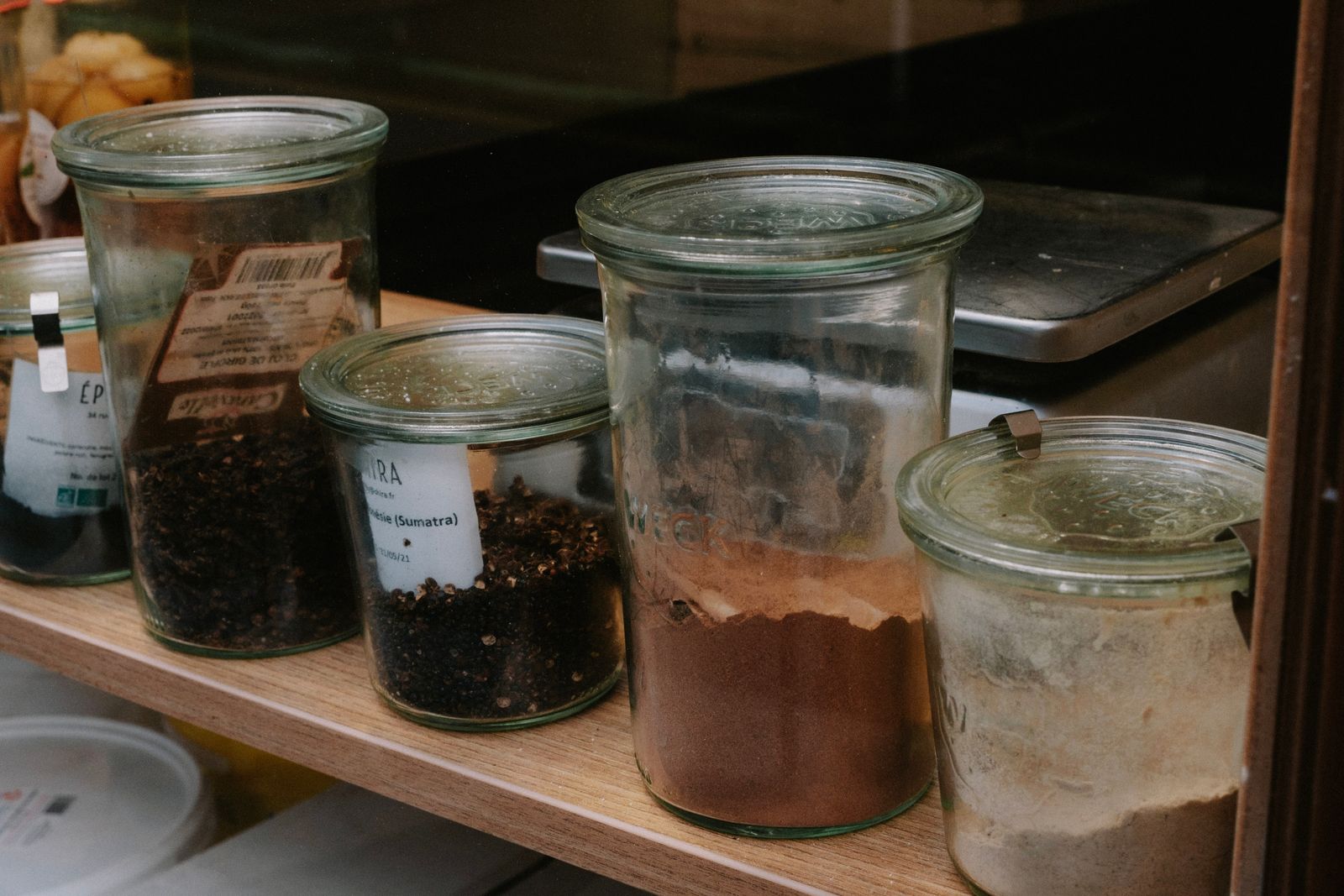
About a third of our customers now bring their own containers to the bulk bins. It cuts packaging, and it lets you buy exactly the amount you need, whether that is a cup of poppy seeds or ten pounds of oats. The first visit can feel confusing, so here is how it works.
Weigh the jar first
Before you fill anything, take your empty jar or bag to the till. We weigh it and write the weight, called the tare, on a sticker. At checkout we take that weight off, so you only pay for what is inside.
Most people keep the sticker on the lid and reuse it every visit. If you forget, our paper bags and glass jars are on the shelf beside the bins, and the jars can come back next time.
Match the container to the bin
Gravity bins for oats, rice, beans and grains fill easily into wide-mouth jars or cloth bags. Scoop bins for nuts, dried fruit and flour work with any container. Oils, vinegar, honey and maple syrup need a bottle with a lid that closes tight.
Write the bin number on the jar or the sticker. It tells the till which product and price to use, and it saves you guessing whether that pale flour was all-purpose or pastry.
Keep it fresh at home
Store grains and beans in closed jars in a cool cupboard. Whole wheat flour, nuts and seeds contain oils that go stale faster, so keep them in the fridge or the freezer if you use them slowly.
Buy little and often. The bins are refilled several times a week, and smaller amounts mean what is in your pantry is always fresh.
A note on allergies
Bulk bins are shared, and scoops can move between products. If someone at home has a food allergy, ask us before you fill, and choose the packaged version on the shelf. Our kitchen and our bins handle nuts, gluten, dairy and eggs.