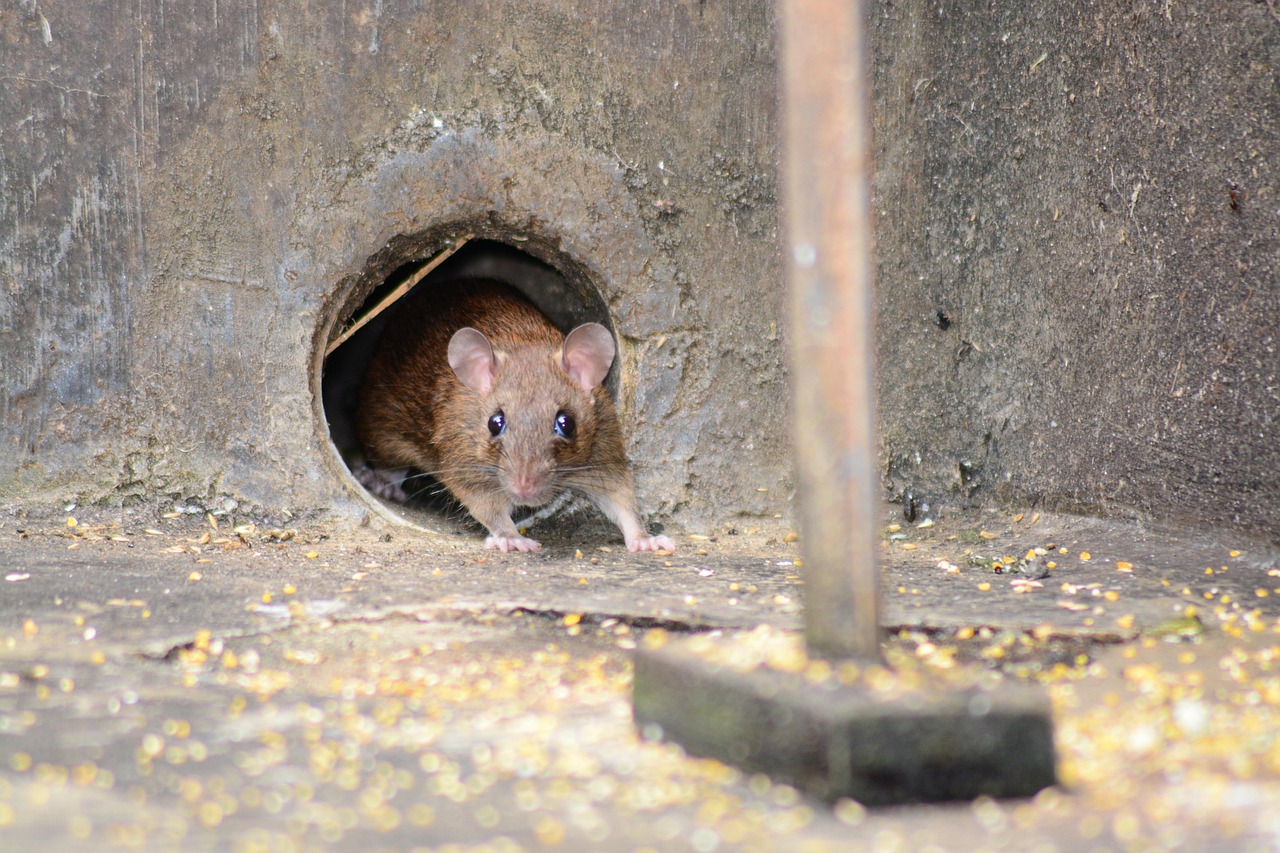
When the first real cold front reaches south Louisiana in October or November, mice and rats start looking for warm places to nest. Attics, garages and the space under kitchen cabinets are favourites. Traps catch the ones already inside, but sealing the way in is what stops the next ones.
How small is small?
A house mouse can squeeze through a gap about a quarter of an inch wide, roughly the size of a dime. A young rat needs a gap about the size of a quarter. If you can push a pencil into a hole, assume a mouse can use it.
The eight places we check first
Gaps where pipes and cables enter the house, especially at the AC line set and the water heater. The corners of garage doors, where the seal has worn away. Crawl-space vents with rusted or missing screens. Gaps under exterior doors. Openings where the roofline meets the soffit. Dryer vents without a flap. Weep holes in brick that are wider than usual. And gaps around the gas meter.
What to seal them with
Rodents chew through foam, plastic and wood. We fill gaps with copper or steel mesh first, then seal over it with foam or caulk. Vents get steel hardware cloth, and garage doors get a rodent-proof seal. Copper mesh does not rust in our humidity, which matters on the outside of the house.
Traps, not poison, inside the house
Inside, we use snap traps and enclosed traps placed where pets and children cannot reach, and we check them twice in the first two weeks. We avoid poison baits inside living spaces, because a poisoned mouse can die inside a wall and pets can find the bait. Our rodent exclusion starts at $395 for a typical home and includes the follow-up checks.