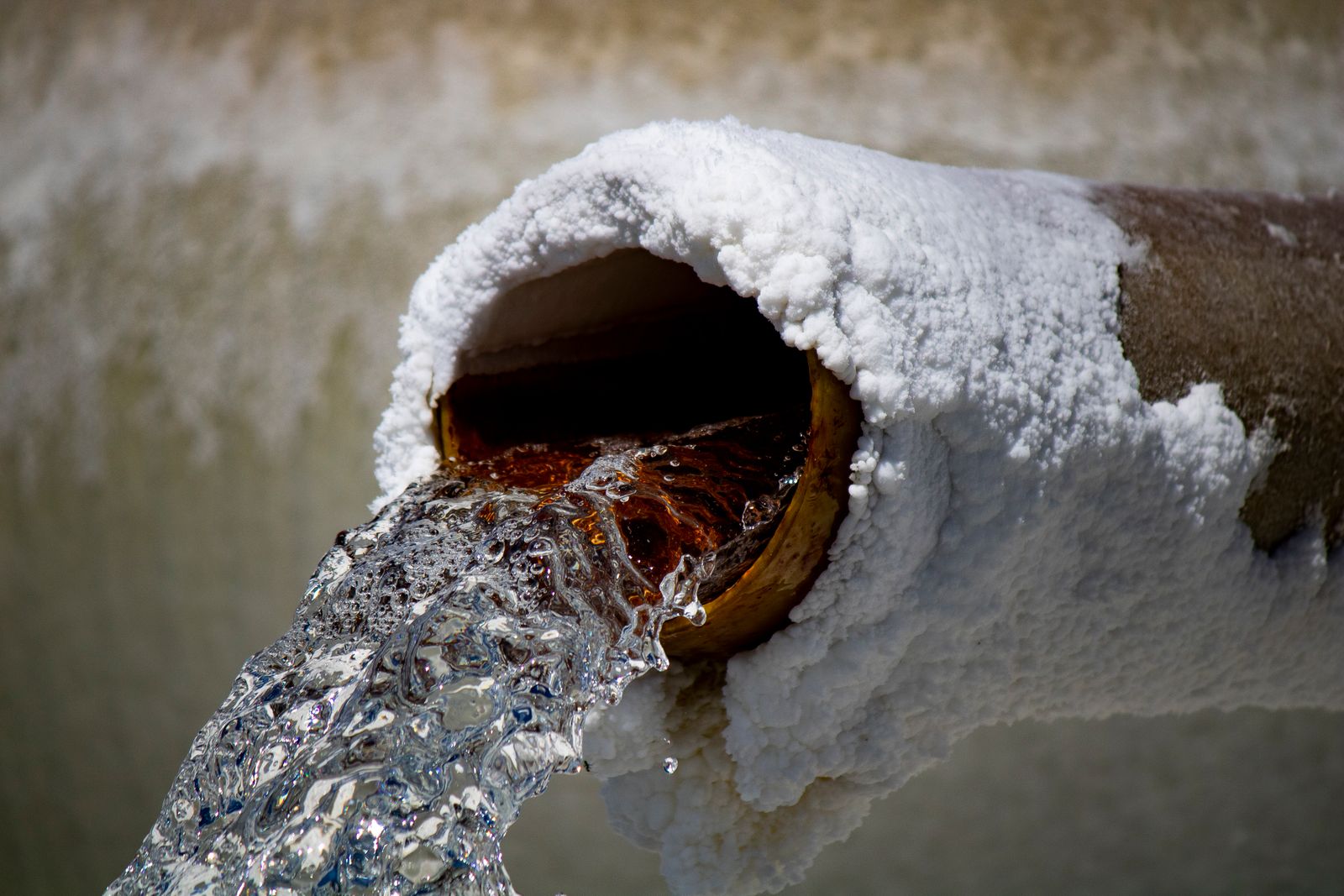
Water across the East Valley is very hard. It carries a lot of dissolved calcium and magnesium, and when that water is heated, the minerals settle out as scale. In a tank water heater, most of that scale ends up as a layer of sediment on the bottom.
The signs of sediment
The first sign is usually noise. Water trapped under the sediment boils in small bursts, and you hear popping or rumbling when the burner runs. Next comes less hot water than you used to get, because the sediment takes up space and insulates the water from the flame.
Left alone, the burner overheats the bottom of the tank. That stresses the steel and the glass lining, and in time it leads to rust at the base and a slow leak. Many of the tanks we replace in Mesa are only eight to ten years old.
Flush the tank once a year
A yearly flush removes the loose sediment before it hardens. We connect a hose to the drain valve, run the tank out with the cold supply open and keep going until the water runs clear. On a tank that has never been flushed, it can take a while.
We also check the anode rod, a metal rod inside the tank that corrodes so the tank does not. In hard water it can be worn away in four or five years. A new rod costs far less than a new heater.
Softeners and tankless heaters
A water softener protects the heater, the fixtures and the dishwasher. If you have one, keep the salt topped up. Tankless heaters are just as sensitive to scale and should be descaled with a vinegar or descaling solution every year.
Our water heater flush costs $119 and includes the anode check. Care Plan members get it once a year as part of their visit.