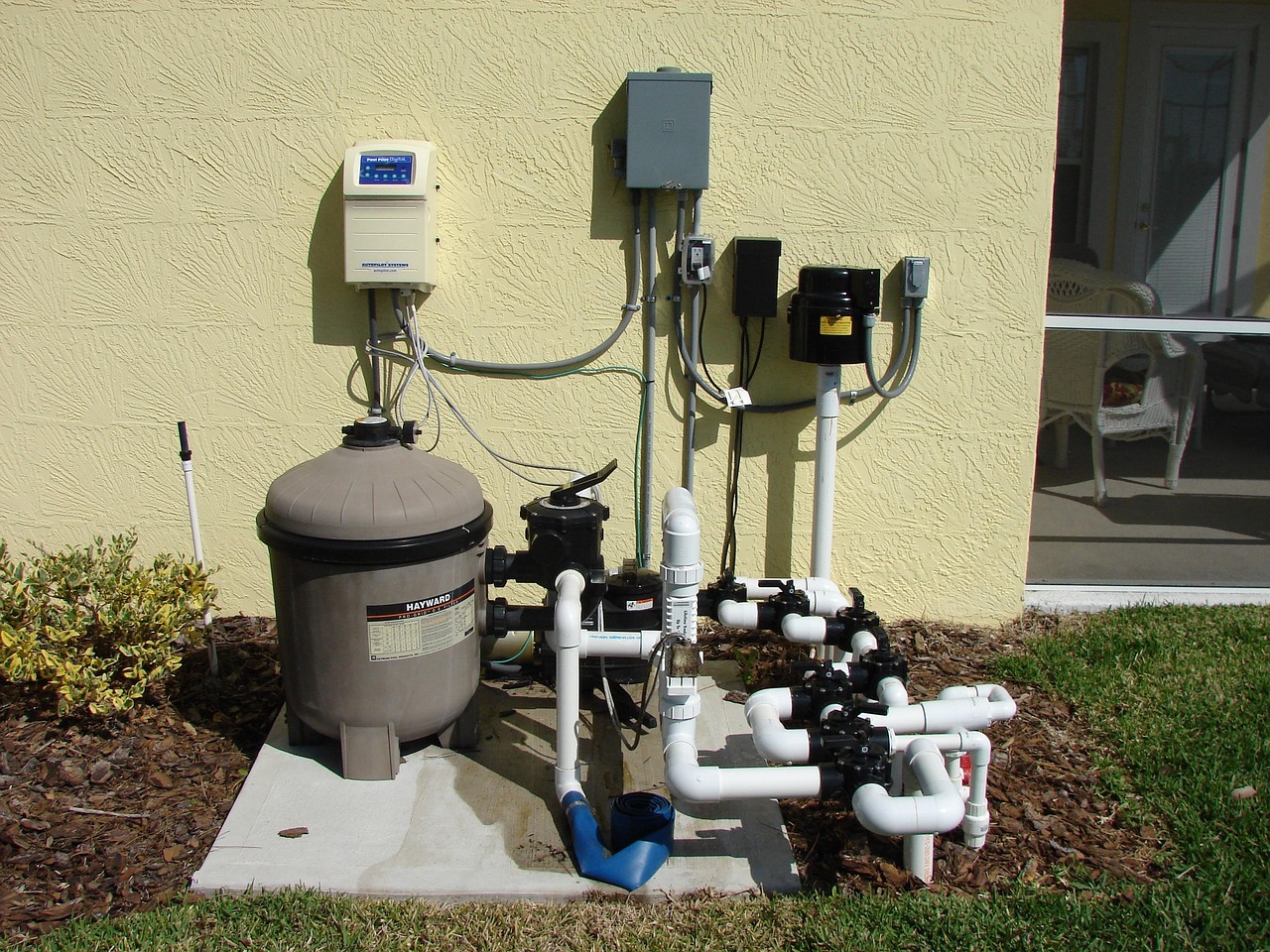
Filter manuals often say to clean the cartridges twice a year. In Henderson that is rarely enough. Desert dust, monsoon storms, palm pollen and a summer of sunscreen all end up in the filter, and a clogged filter means weak circulation, cloudy water and a pump that works harder than it should.
Read the pressure gauge
The gauge on top of the filter is the most useful tool you own. Write down the reading the day after a clean, with the pump on its usual speed. That is your clean pressure.
When the needle sits 8 to 10 psi above that number, the filter is full and it is time to clean it, whatever the calendar says. In our experience that happens every three to four months for a cartridge filter in a family pool, and sooner after a dust storm.
Cartridge, DE or sand
Cartridge filters are the most common here. They are hosed down from the top, pleat by pleat, and soaked in a filter cleaner once a year to remove oils that water alone leaves behind.
DE filters are taken apart, the grids are hosed and checked for tears, and fresh DE powder is added through the skimmer. Sand filters are backwashed when the pressure rises, and the sand itself is replaced every five to seven years.
Signs the filter is the problem
Water that stays cloudy even with good chlorine readings, a weak return flow at the jets and a pool cleaner that crawls instead of moving are all signs of a full filter. So is a pump that sounds louder than usual.
Torn pleats, cracked end caps or a cartridge that has gone stiff and brown mean it is time for new cartridges. Most last two to four years with regular cleaning.
What we do
On weekly service we read the gauge on every visit and note it in your report. A full filter clean starts at $125 and takes one to two hours. Many customers book one in May, before the heat, and one in September, after the monsoon season.