Every croissant on our counter on a Saturday morning was started on Thursday afternoon. People are often surprised by that, so here is what happens in those three days.
Day one: the dough
We mix a soft dough of flour, milk, sugar, salt and yeast, with a spoonful of our sourdough starter for flavour. It rests overnight in the fridge, which gives the flavour time to develop and makes the dough easier to roll the next day.
Day two: the lamination
A slab of cold butter is locked inside the dough and the two are rolled and folded together three times. Each fold multiplies the layers: by the last one there are 27 layers of butter, which become hundreds of thin sheets of pastry in the oven.
Dough and butter must stay at the same firmness, so we laminate in the cool of the morning and rest the dough in the fridge between folds.
Day three: shaping, proofing, baking
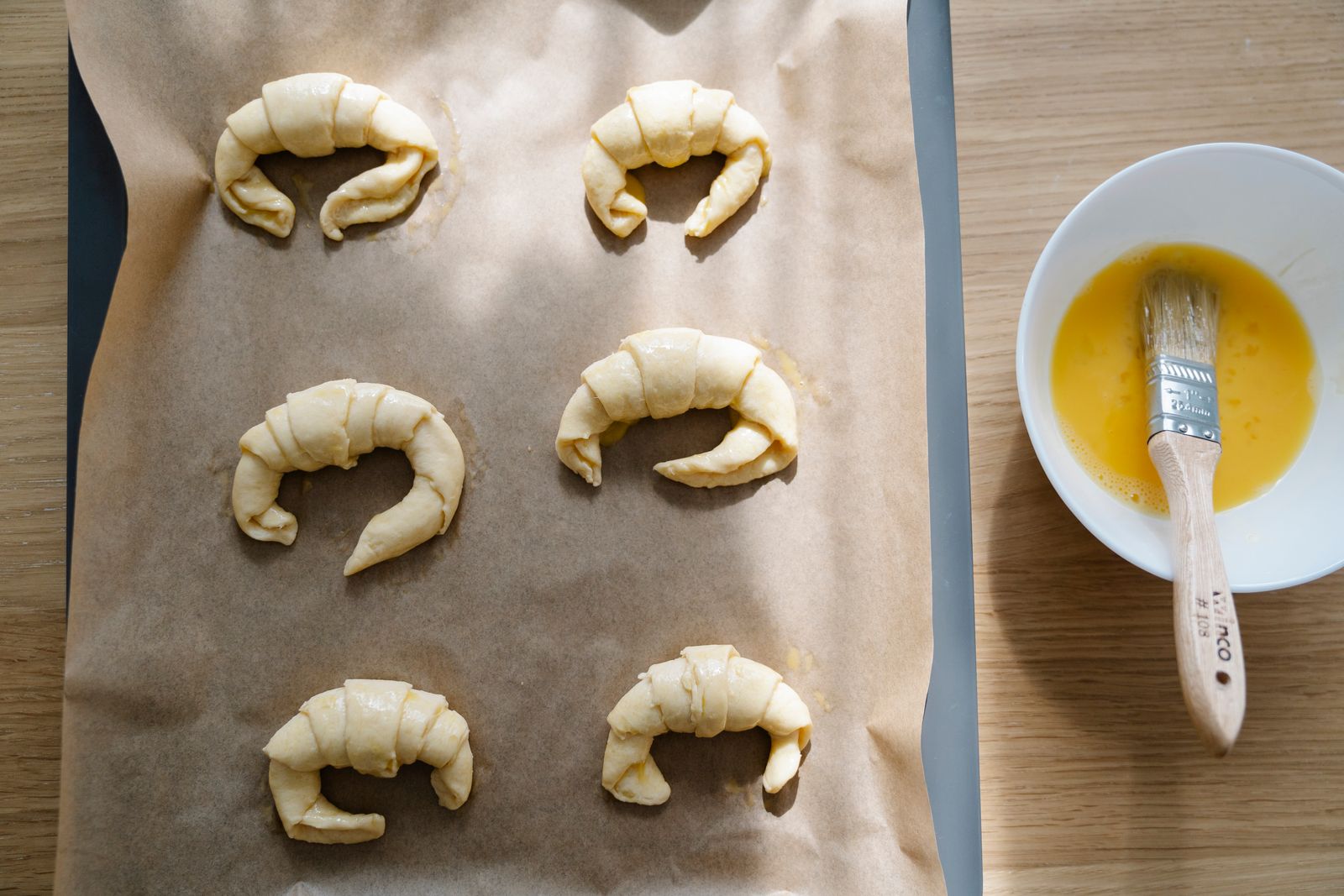
At 4:00 the dough is rolled thin, cut into long triangles and rolled up by hand. The croissants proof for about two and a half hours in a warm, humid cabinet, until they wobble when the tray is shaken. Then an egg wash and eighteen minutes in a hot deck oven.
The first tray comes out at 7:30. The smell is the best alarm clock in Fox Point.
Why not faster?
Quicker methods exist, and they make a perfectly nice pastry. The long rest gives a deeper, slightly tangy flavour and a more open honeycomb inside. It also means we bake a fixed number each day, so on busy weekends we can sell out by noon. Pre-orders by the dozen are always set aside, so if you are planning a brunch, order the day before and we keep a box with your name on it.