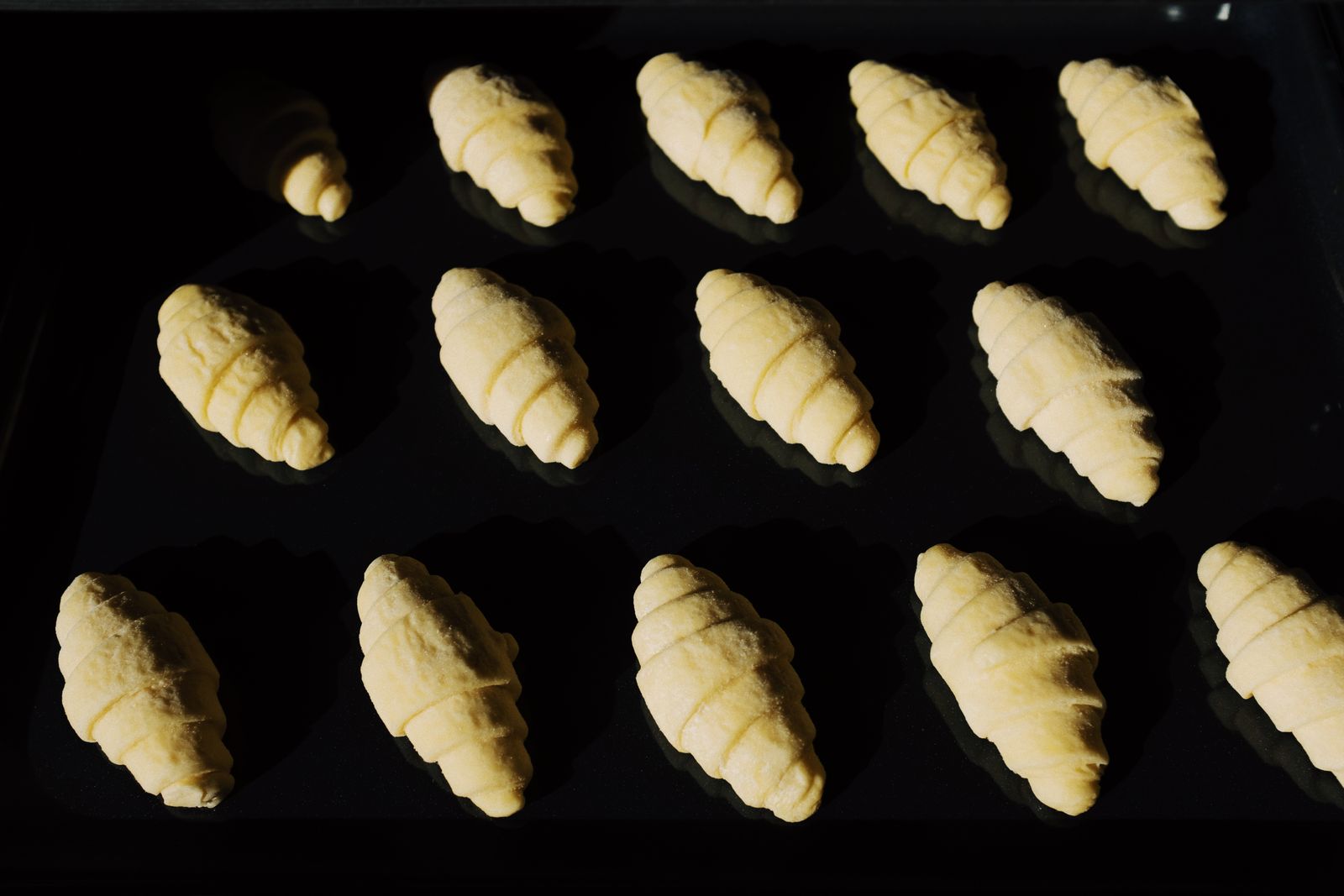
A croissant is at its best within a few hours of leaving the oven, when the layers shatter and the centre is still soft. By the next morning it is softer and a little chewy. Five minutes in the oven brings most of that back.
Why croissants go soft
A croissant is mostly butter and air. As it sits, moisture moves from the soft centre into the crisp outer layers, so the shell loses its crunch. The butter firms up too, which makes the pastry taste flat.
The oven method
Heat the oven to 180 °C (350 °F). Put the croissants straight on the rack or on a tray and bake for four to five minutes, until the outside crackles when you press it. Let them rest for two minutes: the layers set as they cool slightly.
Pain au chocolat needs the same time. Almond croissants need a minute or two less, because the flaked almonds and sugar on top brown quickly.
What not to do
The microwave turns a croissant soft and then rubbery as it cools. A toaster works for a croissant split in half, but watch it closely: the butter in the layers can scorch in seconds.
Keeping them for later
If you buy a box for tomorrow, keep the croissants in their paper bag at room temperature, not in the fridge. To keep them longer, freeze them on the day you buy them in a sealed bag, then bake from frozen at 180 °C for eight to ten minutes.
Our croissants come out at 7:30, and again at 10:00 on Saturdays and Sundays. If you want a dozen for a brunch, order the day before and we box them warm for you.