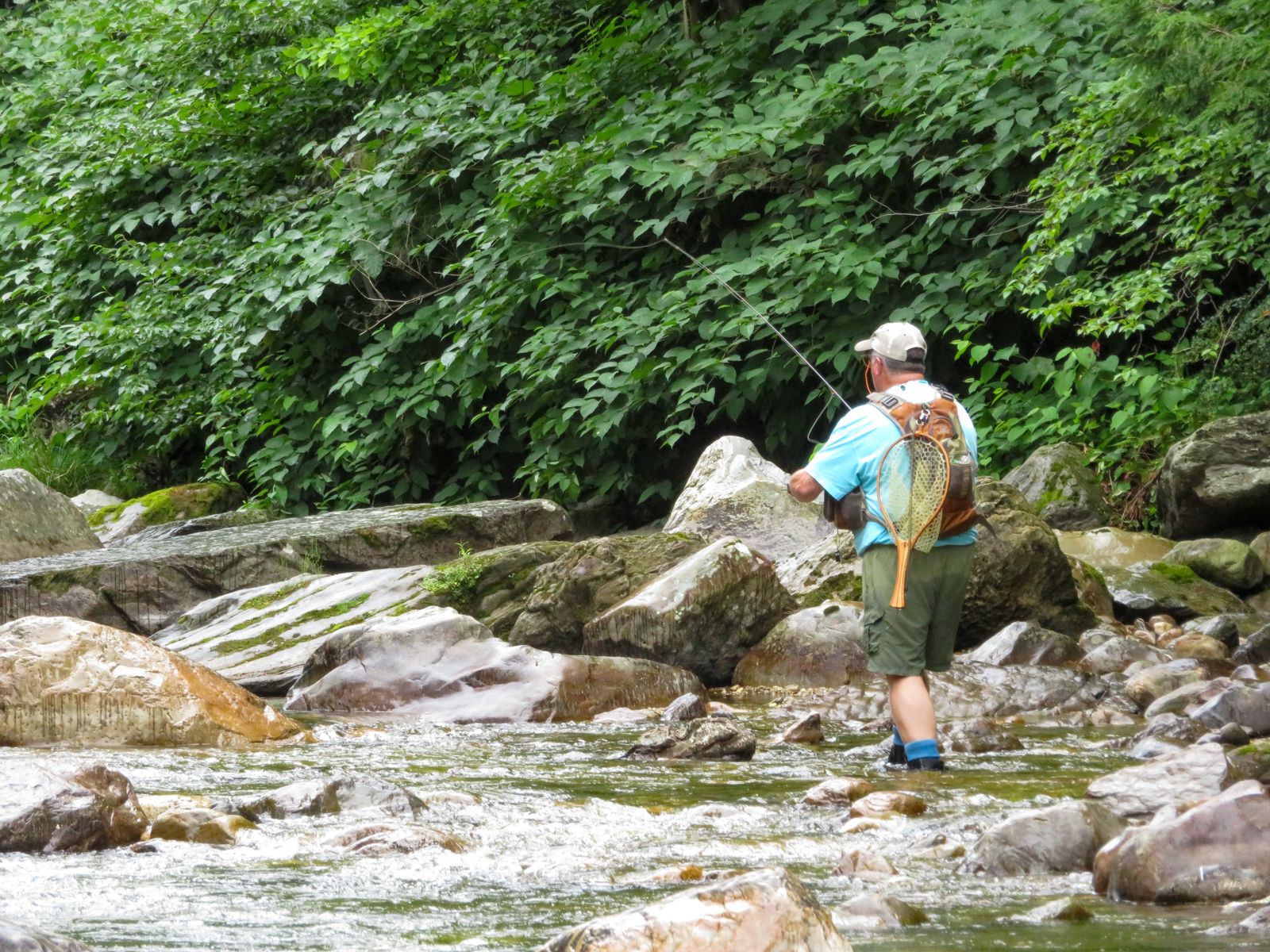
Lantern Creek runs for a mile and a half through the ranch before it joins the South Fork. It is small water, often no wider than a road, and it holds wild cutthroat and brown trout that rise to dry flies most summer evenings.
Where the fish are
Trout in a small creek sit where the current brings them food and a deeper spot or a cut bank gives them shelter. Look for the seam where fast water meets slow, the tail of each pool and the shade under the willows.
Walk slowly and stay low. On a creek this size the fish see you long before you see them, and one heavy footstep on the bank empties a pool for twenty minutes.
What to tie on
From late June to mid-July, a small elk hair caddis or a parachute dry fly in size 14 or 16 catches fish most evenings. In August, grasshopper patterns cast tight to the grassy banks are hard to beat.
If nothing rises, Danny ties a small beadhead nymph a foot and a half under the dry fly. The dry becomes your strike indicator.
Casting in tight places
Long casts are rarely needed. A roll cast or a short side-arm cast keeps the line low and out of the willows, and twenty feet of line is plenty.
Our guided evenings start with half an hour of casting on the lawn behind the tack room, so nobody learns on a rising fish.
Catch and release
We release every trout on the creek. Wet your hands before you touch a fish, keep it in the water while you remove the barbless hook and let it swim away on its own. Rods, waders and flies are free to borrow for every guest.