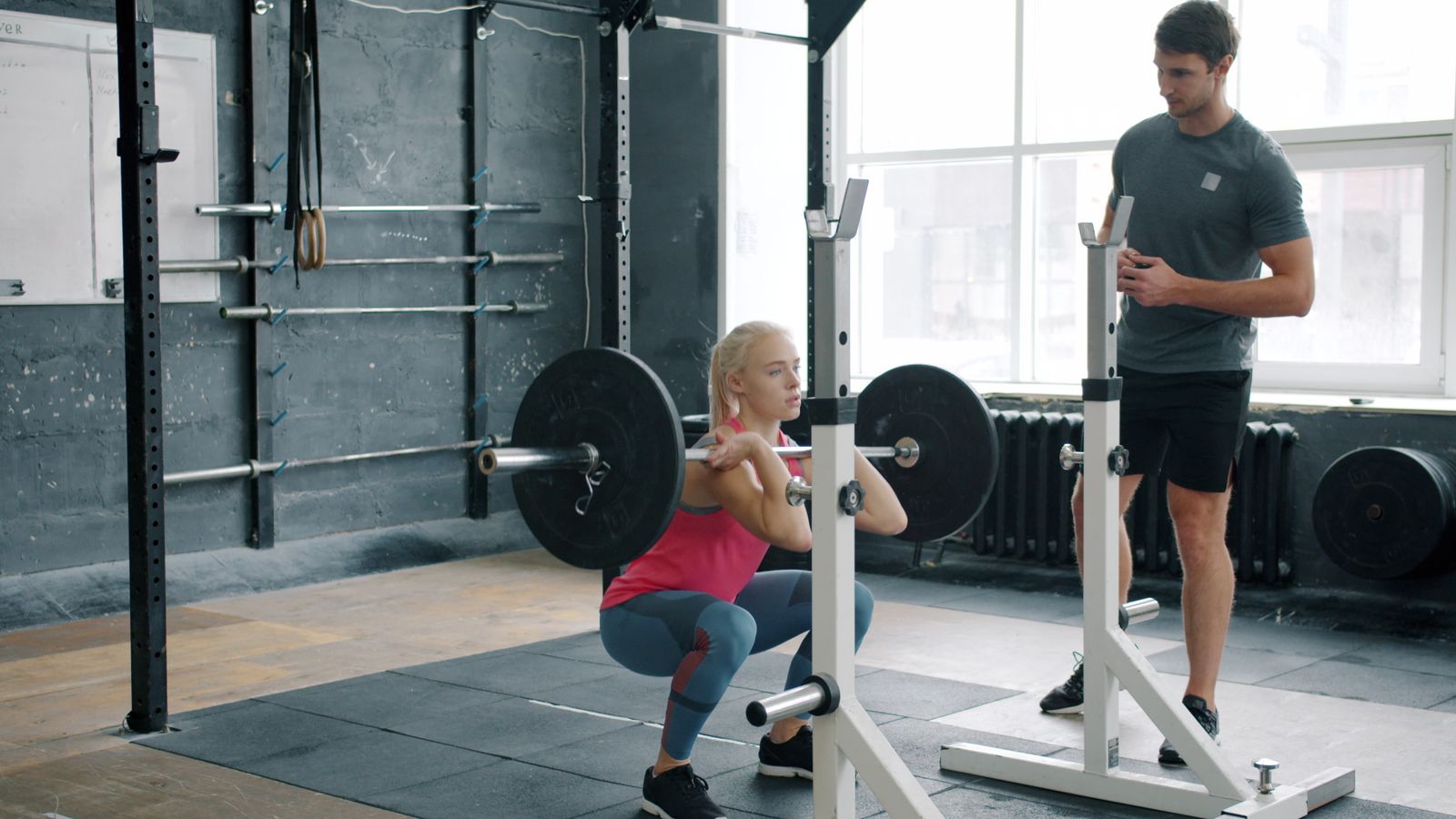
New lifters often ask what they should be lifting. The honest answer is: less than you think, for now. A good starting weight is one that lets you practise the movement well and leaves you wanting to come back.
Start with the empty bar
Our bars weigh 20 kilos, or 15 for the slimmer women’s bars, which many lifters of every gender prefer for their grip. For most beginners an empty bar is the right first squat and press. If even that feels too much, we use a lighter technique bar, a dumbbell or a box squat. There is no shame in any of them.
Leave reps in the tank
Our coaches use a simple scale: after a set, how many more reps could you have done with good form? For the first months, aim to finish every set with two or three left. That keeps the movement clean and the session repeatable.
If the bar slows down a lot, or your form changes on the last reps, the weight was too heavy for today. Take a little off and carry on.
Add a little, often
Small jumps work better than big ones. On squats and deadlifts we usually add 2.5 to 5 kilos a week while the reps stay clean; on presses, 1 to 2.5 kilos with our fractional plates. Write it down so you know where you are next time.
Ask the coach on the floor
A coach is on the floor at every peak hour. If you are unsure about a weight, ask before your set, not after. Watching one warm-up set is usually all it takes to suggest a sensible number.
Some days the weight that felt easy last week feels heavy. Sleep, work and stress all play a part. On those days, keep last week’s weight or take a little off, finish the session well and come back next time. That is part of training, not a step backwards.