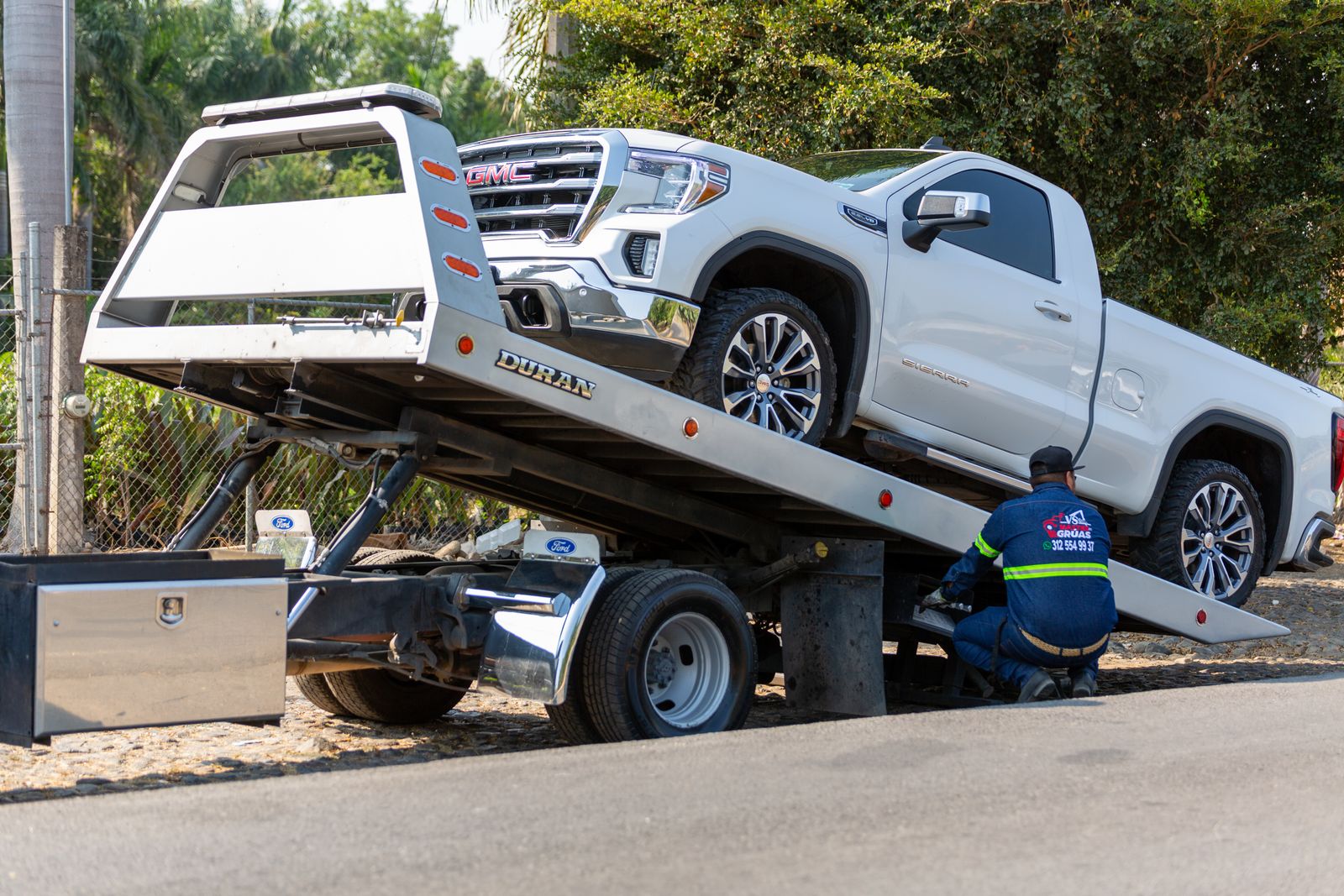
Tow trucks come in two main types. A wheel-lift truck lifts one end of the car and tows it on its other two wheels. A flatbed tilts its whole bed to the ground, winches the car on and carries it with all four wheels off the road. Both have their place, but some cars should only go on a flatbed.
All-wheel and four-wheel drive
Towing an all-wheel-drive car with two wheels turning can damage the centre differential or the transfer case. Most owner’s manuals say so plainly. Unless the driveline can be disconnected, these cars go on the bed.
Electric and hybrid cars
Many electric cars generate power when their wheels turn, and towing them on their wheels can harm the motor or the electronics. Manufacturers almost always ask for a flatbed. Tell dispatch the make and model so we send the right truck.
Low, modified and classic cars
Lowered cars, long front splitters and cars with aftermarket bumpers can be scraped by a wheel lift. Classics and collector cars deserve the gentler ride too. Our flatbeds have low-angle beds and soft straps that go over the tires, not the suspension.
Accidents and cars that will not roll
If a wheel is broken, the steering is locked or the brakes are seized, a flatbed is the safe choice. We winch the car on slowly and strap it down at all four corners.
Flatbed tows cost the same flat hook-up rate as a wheel lift inside our service area, so there is no reason to compromise.
When you call, have the year, make and model ready, and say whether the car is all-wheel drive, electric or lowered. Mention anything unusual, like a long front lip, a roof box or a missing wheel. Dispatch matches the truck to the car, and our driver photographs it from all sides before loading, so you have a record of its condition.