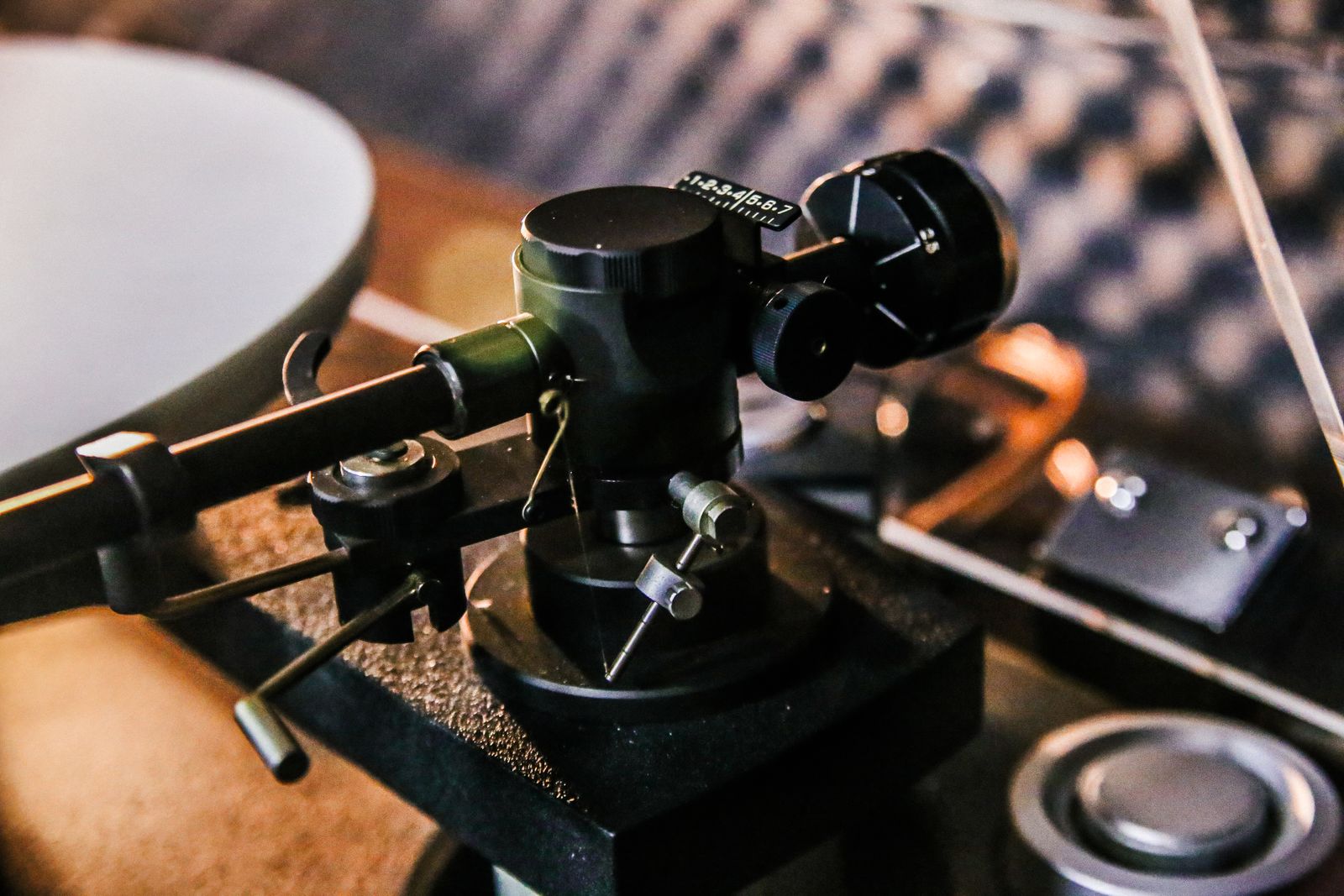
Most records that sound bad are being played on a turntable that was set up in a hurry. The good news is that it takes one evening and almost no special tools to put that right. These are the steps I follow every time I move my deck.
The five steps
- Put the turntable on a solid, level shelf away from the speakers.
- Level the platter with a small spirit level, front to back and side to side.
- Balance the tonearm, then set the tracking force the cartridge maker recommends.
- Set anti-skate to match the tracking force, as a starting point.
- Check alignment with a printed protractor and adjust the cartridge in the headshell.
Start with the shelf
A turntable picks up vibration from everything: footsteps, the speakers, the fridge door. Put it on the most solid surface you have, ideally on a wall shelf or a heavy cabinet, and keep it out of the line of the speakers.
Tracking force matters most
Tracking force is how hard the needle presses into the groove. Too light and it skips and distorts; too heavy and it wears the records. Balance the arm so it floats level, set the counterweight dial to zero, then turn it to the recommended weight. An inexpensive digital stylus scale is worth buying to check the dial.
Anti-skate and alignment
Anti-skate stops the arm pulling towards the centre. Start with the same number as the tracking force and listen for distortion on the loud, inner tracks of a record. Alignment takes patience: print a protractor, line the stylus up with the grid and nudge the cartridge until it is parallel at both points.
If it still sounds wrong
Clean the stylus with a soft brush, back to front only. Half of the problems I hear on friends’ systems are a ball of fluff on the needle.
Set it up once, properly, and you will hear what your records actually sound like.
Write the settings down on a card and tape it inside the dust cover. Next time you move, you will thank yourself.