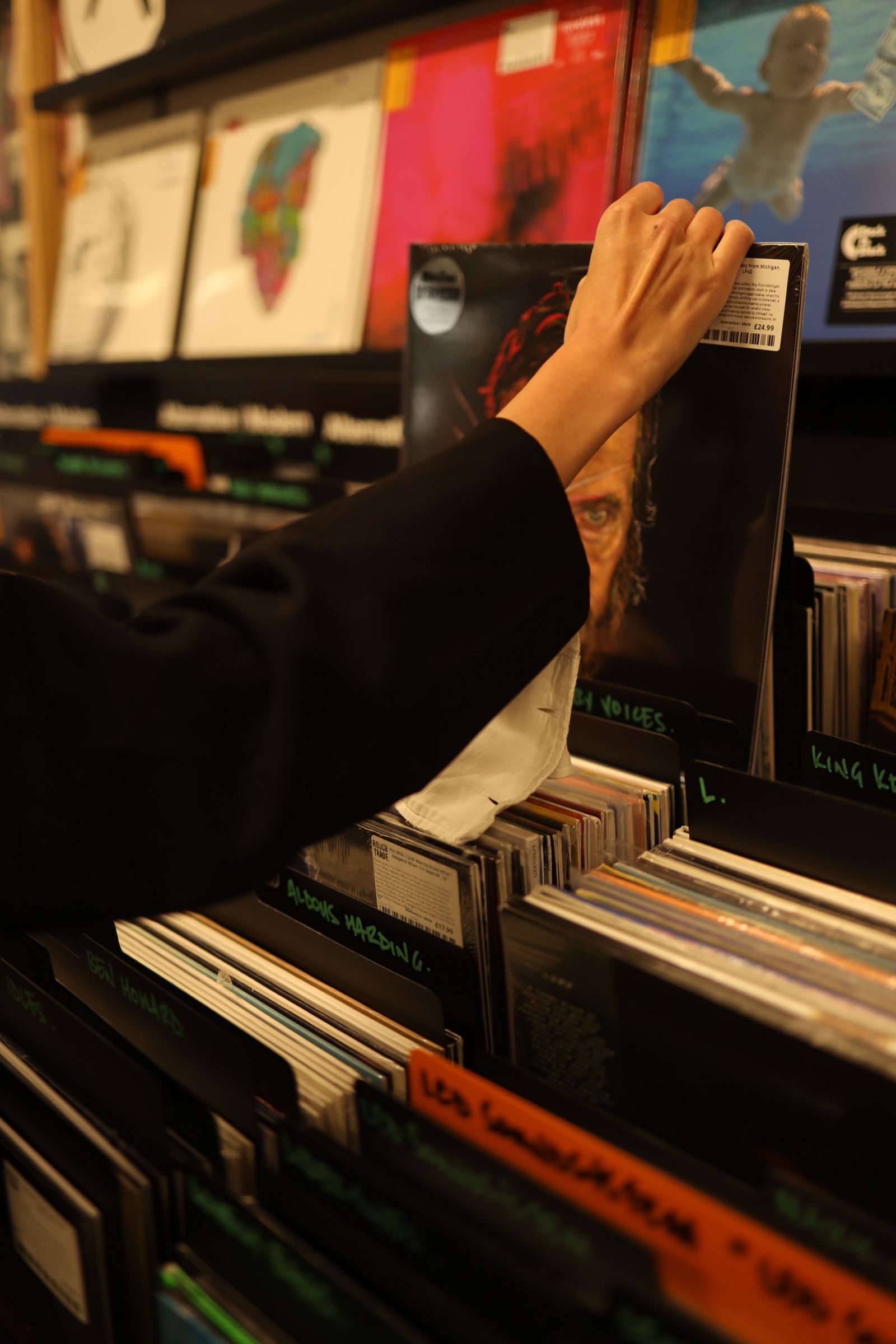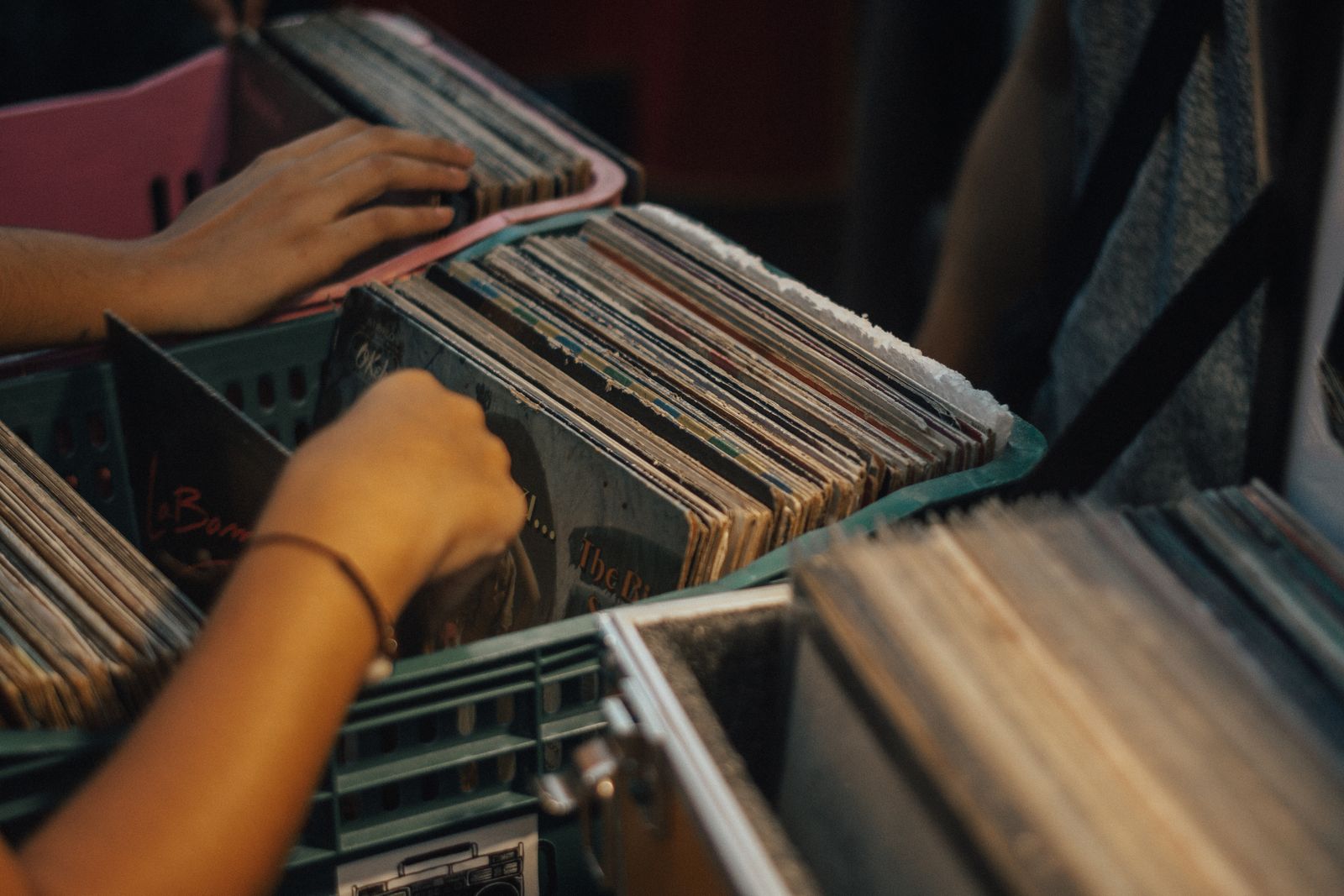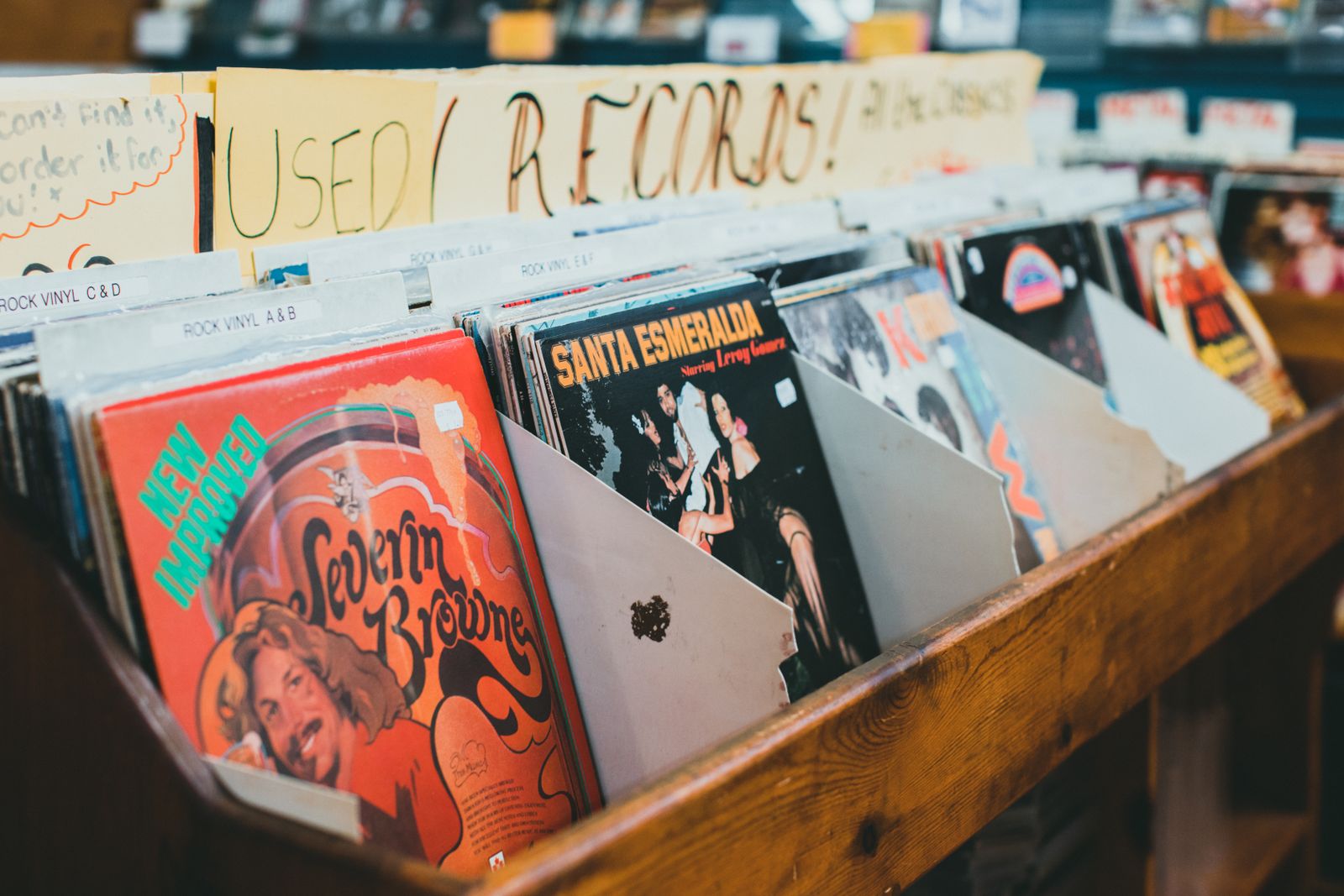
The cheap bin is where most of my collection comes from. The median price I have paid for a record is three dollars, and the best records on my shelf mostly cost less than a sandwich. But the cheap bin is also how you fill a spare room with records you never play.
These are my rules. I break them constantly.
1. Read the back before the front
A great sleeve can hide a dull record. The back tells you more: the year, the label, the players, sometimes the studio. A record with a list of session players and a small, unknown label is worth a closer look.
2. Check the vinyl, every time
Slide the record halfway out and tilt it under the light. Light scuffs are fine. Deep scratches that you can feel with a fingernail will click all the way through. Look at the edge for warps.
3. Set a number before you start
I go in with a number of records, not a number of dollars. Five is a good dig. If I have six in my hand, one goes back. It keeps me picky and it keeps the shelf honest.
4. Buy the oddities
Field recordings, radio plays, a local choir, a factory brass band. These are the records nobody else will keep, and they are often the ones I play most.
5. Ask what is in the back
Shops always have stock that has not been priced yet. Ask nicely, be quick, and do not haggle on a three-dollar record.
A record you do not play is just a heavy, expensive square.
The last rule is the one I actually keep: every record I bring home gets played, all the way through, within a week. If it does not get a second play in a year, it goes back to the bin for someone else to find.