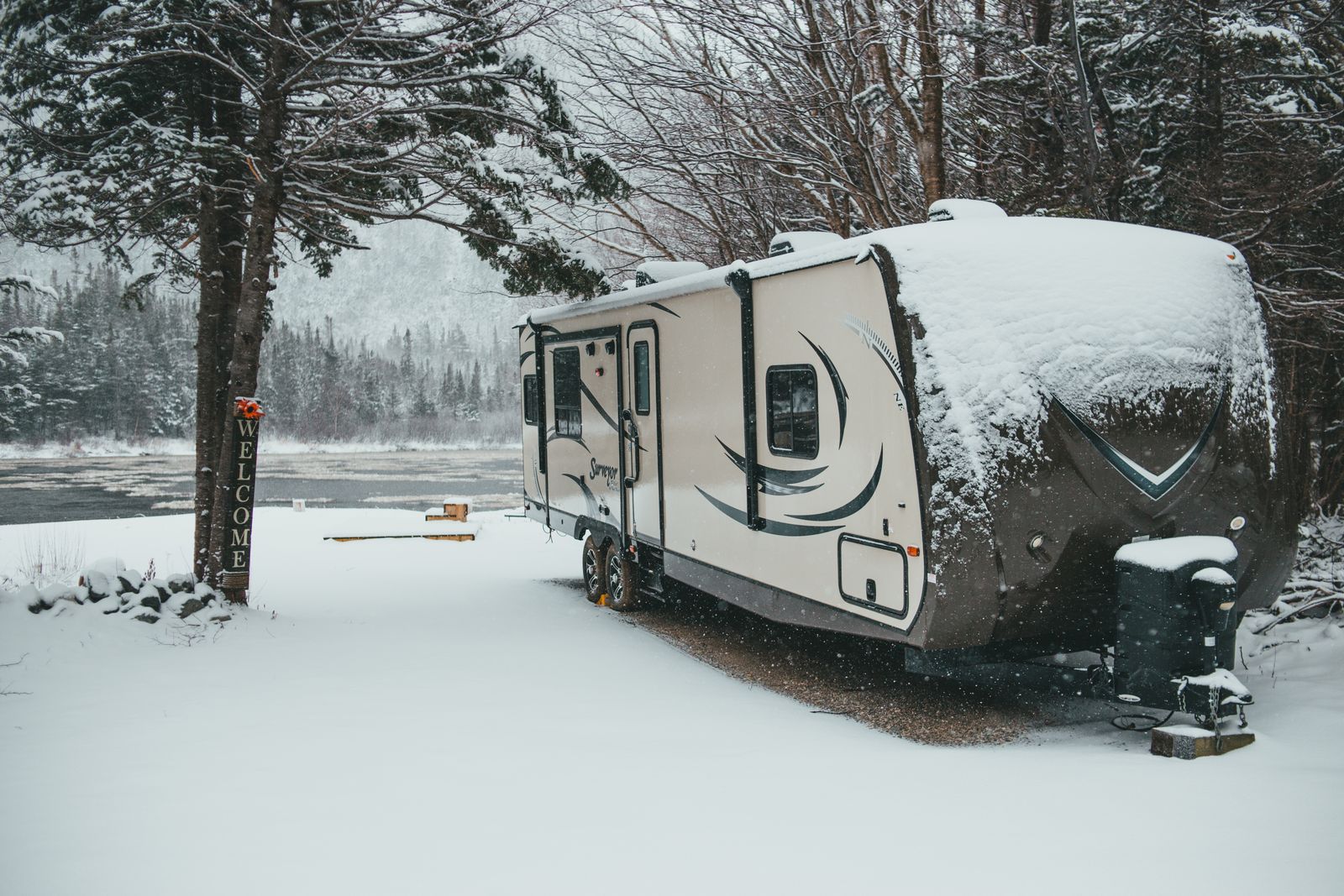
In northern Indiana the first hard freeze usually arrives in late October, and it only takes one night below 28°F to split a water line or crack a pump housing. A proper winterize takes about an hour and costs far less than one repair inside a wall.
Drain and bypass
We drain the fresh tank, the water heater and the low-point drains, then open every faucet. The water heater bypass is set so antifreeze does not fill a six or ten gallon tank for nothing.
We also take out the water heater anode while it is drained and check how much is left of it.
Blow out and protect
Compressed air at a safe, low pressure pushes the last water out of every line. Then we pump non-toxic RV antifreeze through the system until it runs pink at each faucet, the shower, the toilet and the outside shower.
Drain traps get a cup of antifreeze each, and the ice maker and washer, if you have them, get their own steps.
Everything else
Batteries are charged and disconnected, or put on a maintainer if the rig is near power. We check the roof one last time before the snow, look at the tires and set the slides in so the seals are not loaded all winter.
You get a short checklist of what we did, so spring is quicker too.
If the rig will be stored outside, we also look at the window and door seals, close the roof vents properly and suggest a breathable cover rather than a tarp, which traps moisture against the roof and the sidewalls all winter.
Booking tip
October and November are our busiest weeks. Book in September, or join the Season Plan and your slot is held for you.