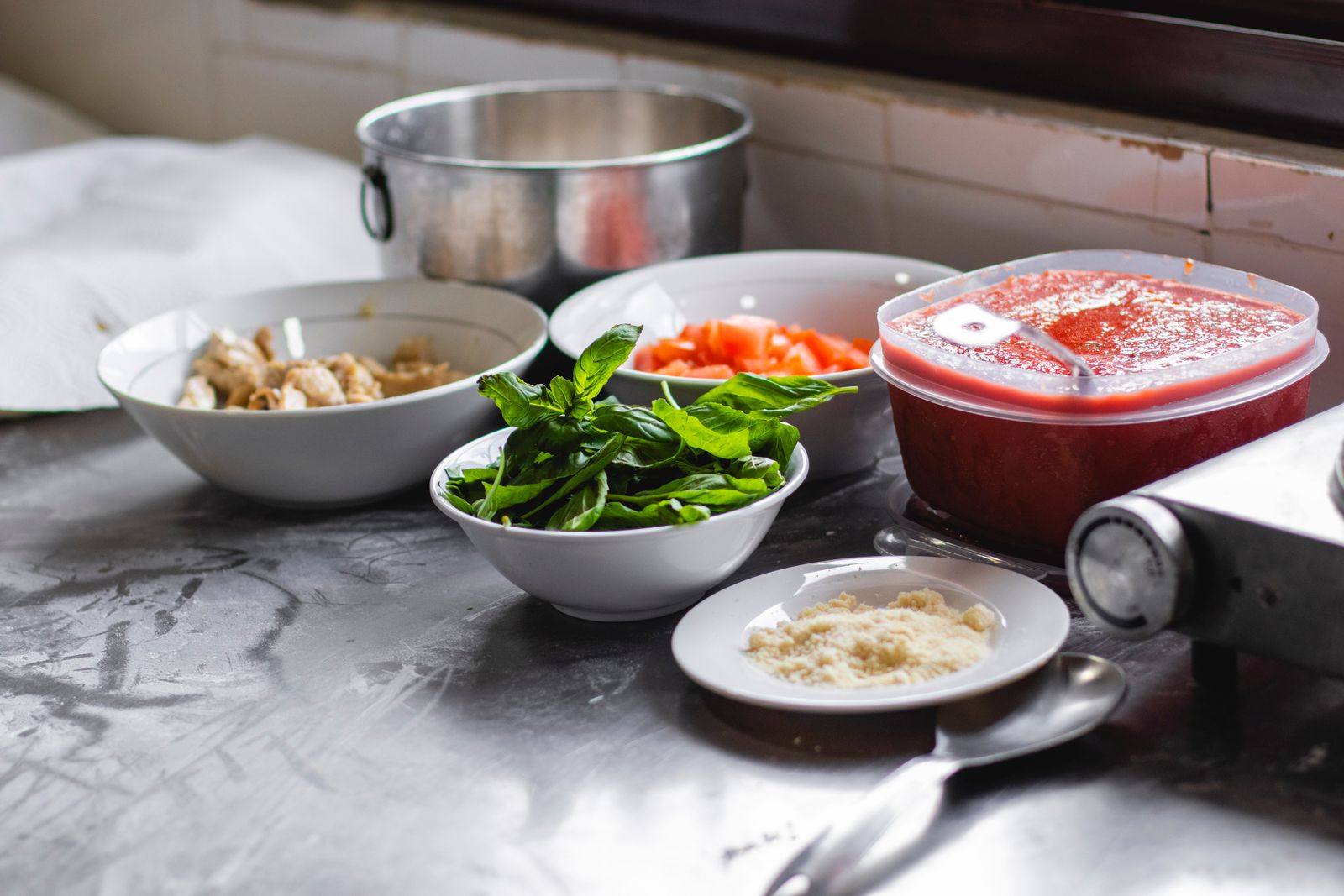
Walk into our kitchen in the morning and you will not find a pot of sauce simmering on the stove. Our sauce is mixed cold, rests in the cooler and only meets heat once, in the oven, on top of the dough.
What goes in
We start with whole peeled tomatoes packed at the end of summer, crushed by hand so a little texture stays. Then salt, dried oregano, a pinch of sugar when the tomatoes are sharp, black pepper and a spoonful of olive oil. That is all.
Why not cook it?
A pizza bakes for nine to eleven minutes at around 600 °F, and that is enough heat to cook a thin layer of sauce. Cooking it first as well would turn it dark and jammy, closer to a pasta sauce.
Uncooked sauce keeps the fresh, slightly sweet taste of tomatoes, which balances the rich sausage and cheese. It also stays thin, so it does not soak into the crust and make it soft.
The long rest
We mix each batch the day before we use it. Overnight, the dried oregano softens and gives up its flavour, and the salt draws the tomato taste together. A sauce mixed in the morning and used at noon tastes flat by comparison.
Try it at home
If you make pizza at home, try it: crush a can of good whole tomatoes, add salt, oregano and a little oil, and leave it in the fridge overnight. Spread it thinly, go nearly to the edge, and let your oven do the rest.
Keep any leftover sauce covered in the fridge and use it within three days. It is just as good spooned over eggs or stirred into a bowl of beans as it is on a pie.