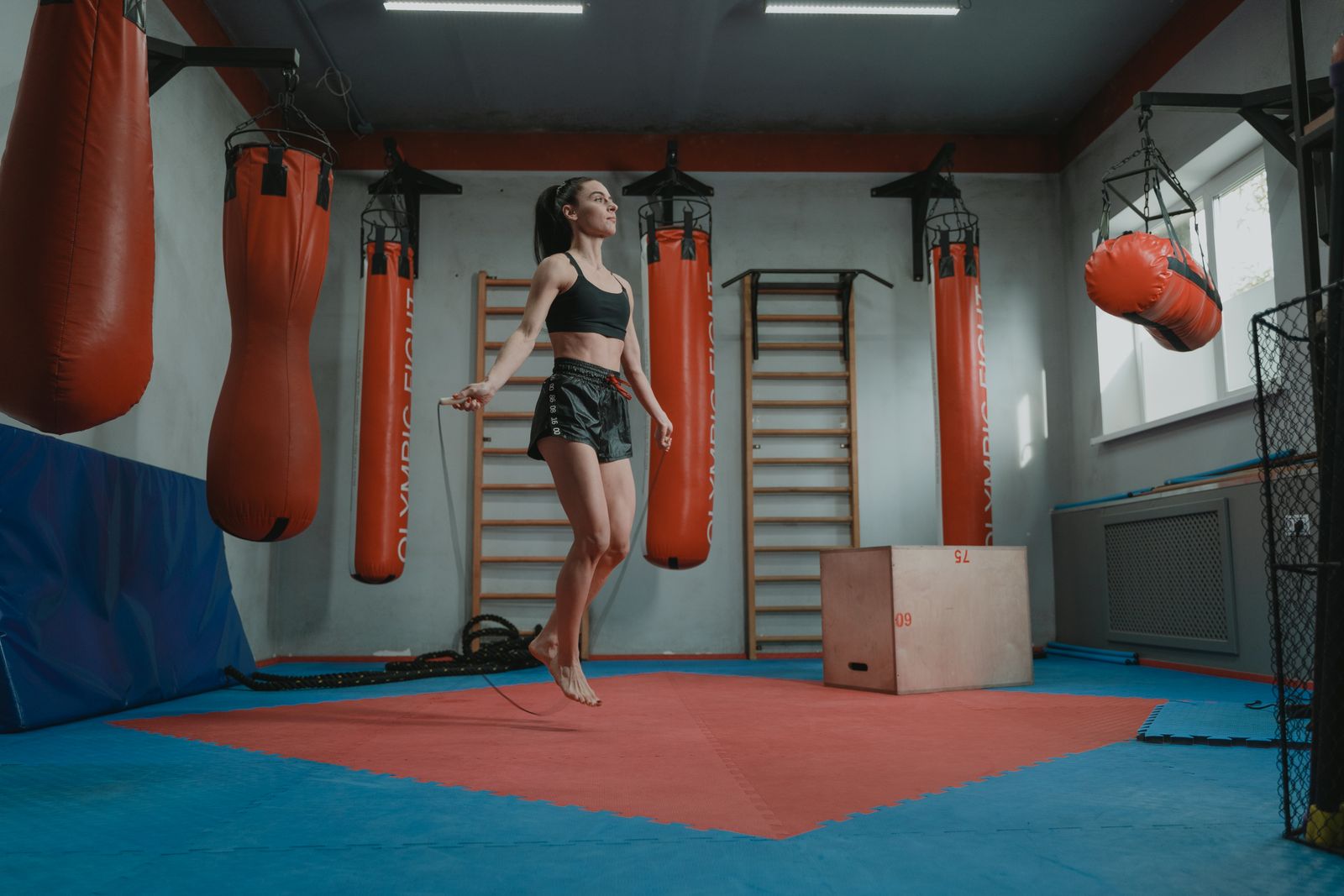
Every class at Bellwork starts with a round or two on the skipping rope. Boxers have skipped for over a century, and not because it looks good in films. It teaches you to stay light on the balls of your feet, to keep a rhythm when you are tired and to move without looking at your feet.
Choosing a rope
Stand on the middle of the rope with one foot. The handles should reach about the middle of your chest. A rope that is too long hits the floor too far in front and slows you down; one that is too short catches your toes.
A simple plastic speed rope is enough for most people. Beaded ropes are a little slower and easier to hear, which helps beginners find a rhythm. We keep loan ropes in three lengths by the door.
Three steps to stop tripping
First, turn the rope from your wrists, not your shoulders. Keep your elbows close to your sides and your hands just in front of your hips.
Second, jump low. Your feet only need to leave the floor by an inch or so. Big jumps tire you out and make the timing harder.
Third, find a steady beat before you add speed. Count it out loud if it helps. When the basic bounce feels easy, try a boxer step: shift your weight from one foot to the other, as if jogging on the spot.
When you trip
Everyone trips, including our coaches. Stop, reset the rope behind your heels and start again on the next beat. Practise a few minutes at a time; most beginners find the rhythm after a handful of sessions.
Taking it home
A rope fits in any bag, so it is a simple way to practise footwork between classes. Skip on a flat, non-slip surface with enough space overhead, and stop if anything hurts.