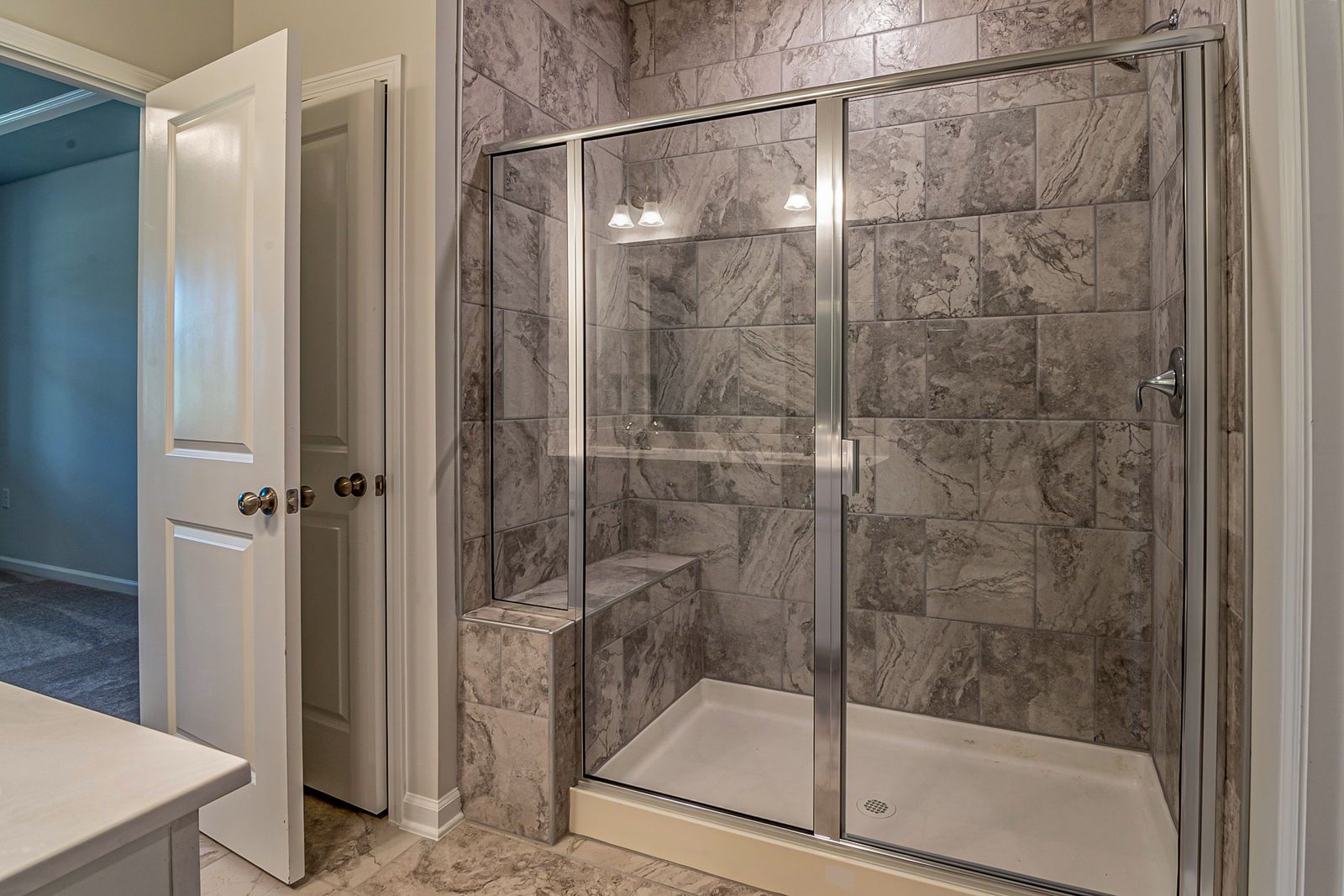
If your shower door looks cloudy a day after you clean it, you are not doing anything wrong. Much of the tap water in North Texas is hard: it carries dissolved minerals that stay behind as white spots when the water dries. Here is how we deal with it in the homes we clean.
Why soap is not enough
Hard water spots are mineral deposits, not dirt, so ordinary soap and water slide right over them. They need a mild acid to dissolve. Over months the minerals mix with soap residue into a film that gets harder to remove, which is why it pays to deal with them early.
Our method
Mix equal parts white vinegar and warm water in a spray bottle. Spray the glass and chrome, wait five to ten minutes, then wipe with a soft non-scratch sponge in small circles. Rinse with clean water and dry the glass with a microfiber cloth. For thick buildup, lay a vinegar-soaked cloth on the spot for twenty minutes first.
Never use steel wool or a scouring powder on shower glass: they leave fine scratches that hold even more minerals afterwards. Do not mix vinegar with bleach, either.
Natural stone needs care
Vinegar etches marble, travertine and other natural stone. If your shower walls are stone, keep the vinegar on the glass only, and use a cleaner made for stone on the walls. Ask us if you are not sure what your tiles are made of.
The two-minute habit
Keep a squeegee in the shower and run it over the glass after the last shower of the day. It takes less than a minute and removes most of the water before it can dry. On our biweekly visits we descale the glass and chrome, so the habit only has to do the rest.