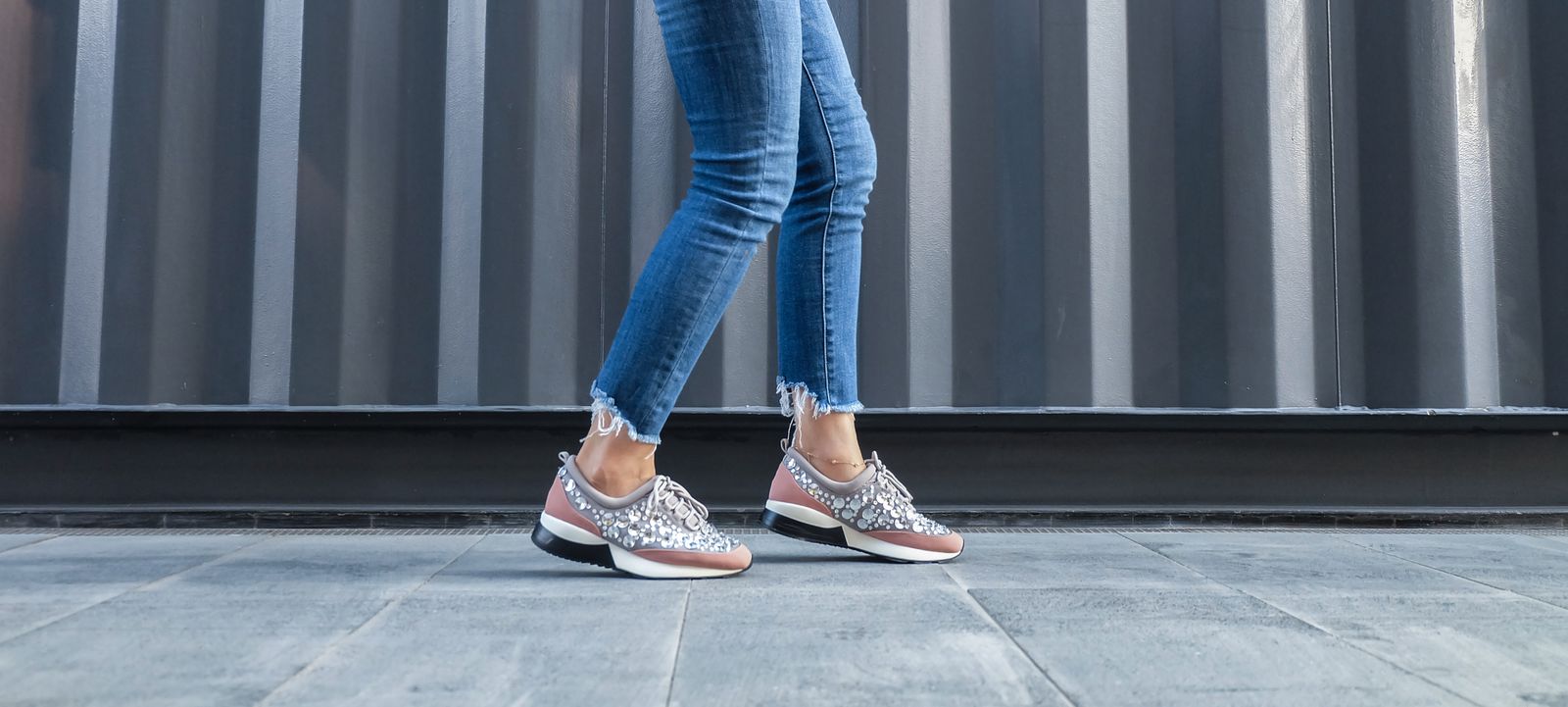
Jeans are almost always sold too long, and a standard folded hem never looks quite right on denim. The thick, slightly twisted original hem, with its worn-in fading, is part of what makes jeans look like jeans. You can keep it; it just needs a little more care at the sewing machine.
How an original hem works
Instead of folding and stitching a new hem, we cut a band above the original hem, remove the extra length and sew the original hem back on. The joining seam sits just inside the leg, a little above the bottom, and is pressed flat so it is hard to see from the outside.
When it is the right choice
It works best on jeans that have already faded and on denim with a contrast stitch that is hard to match. Stretch denim is fine too; we use a stretch stitch so the seam moves with the fabric.
On very thick or stiff denim the joining seam can be felt, and on raw denim that will still shrink and fade we often suggest waiting for the first wash and then sewing a standard hem.
Measuring at home
If you cannot come in for a fitting, put on the shoes you wear with the jeans and fold the hem up inside until it just touches the top of the shoe. Pin it, take off the jeans carefully and bring them in. We measure from the pin and check the other leg, because legs are often a little different.
Price and time
An original hem costs $22 a pair and a standard denim hem $16. Both are usually ready in five working days, or in two days with express service for $15 more. Bring several pairs at once and we hem the fourth pair free.